Sector(s)
Visit the site
Visit the siteOrganizations Involved
Community contributions
GoalGorilla doesn't just want to provide the community with a base platform for their social projects. We hope the community will get involved and contribute to the distribution, translations, etc. We don’t want the distribution to solely depend on our efforts, and to achieve this we try to be as transparent and welcoming as possible. All development is done out in the open at:
Issue queue at Drupal.org
Open Social Roadmap
End User Manuals
High Fidelity Prototype
Travis Continuous Integration
Documentation for general questions, FAQs, and more
We use a Docker Image, so contributors from the community are up and contributing in no-time.
We need your help making the platform even better! Please check out what you can do at: https://www.drupal.org/project/issues/social - Feel free to send us email at info@getopensocial.com to get involved or stay tuned through @OpenSocialHQ.
What's new? Top of the line web development and web services are now offered by the Blue Ocean Alliance. Blue Ocean Alliance is a partnership between the agencies Lemberg and GoalGorilla. Customers benefit from fully dedicated teams and the optimal mix of the best talents from around the globe. Intrigued? Learn more here.
Open Social is an online community and intranet solution based on Drupal 8. It helps organizations connect with their employees, members or volunteers, and other stakeholders.
The software is packaged in a distribution that provides many out-of-the-box functionalities. This makes it a great solution to get you up and running quickly and save hundreds, if not thousands, of hours in development and configuration.
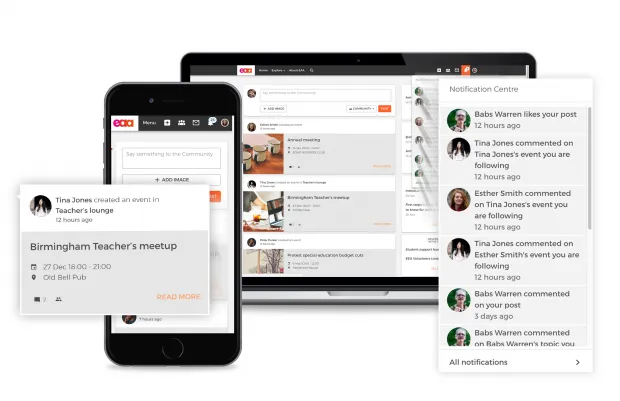
Open Social has many features, including but not limited to:
- Profiles
- Groups
- Events
- Streams
- Notifications
- Social log-in
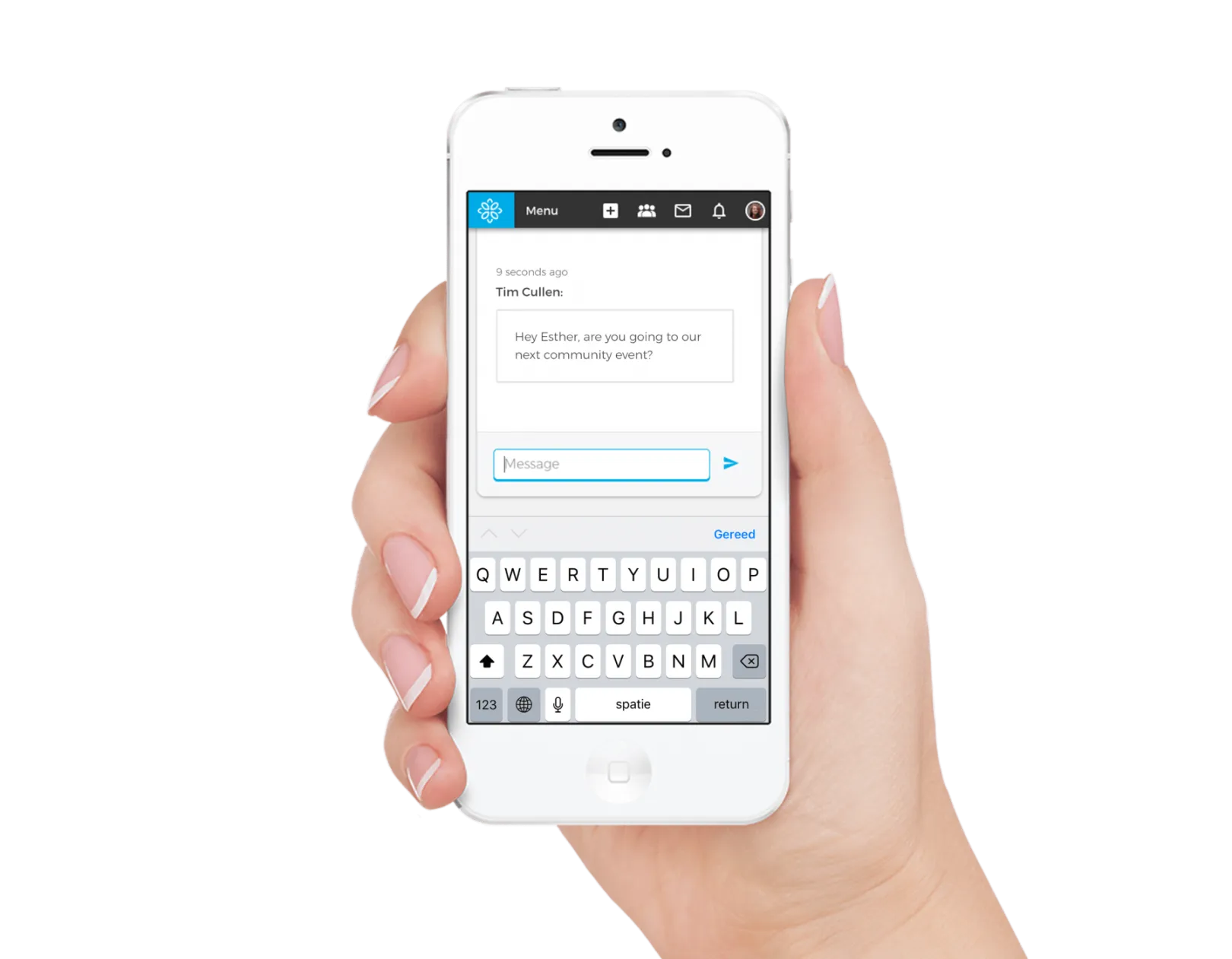
- Private Messages
- And more...
Open Social is a solution for organizations that are searching for a place to collaborate and communicate. They can either choose to work on existing social networks like Facebook, Google, etc., which operate outside the reach of an organization and may neglect user rights and data ownership. Or they can choose a closed-source alternative like Jive, Sharepoint, and others. However, these proprietary products suffer from vendor lock-in and are usually not flexible enough to customize to unique organizational needs. What else is there? Open source. That’s why Open Social, an open source software, helps organizations take back control over their software and data.
Read more about what Open Social can do on our showcase pages:
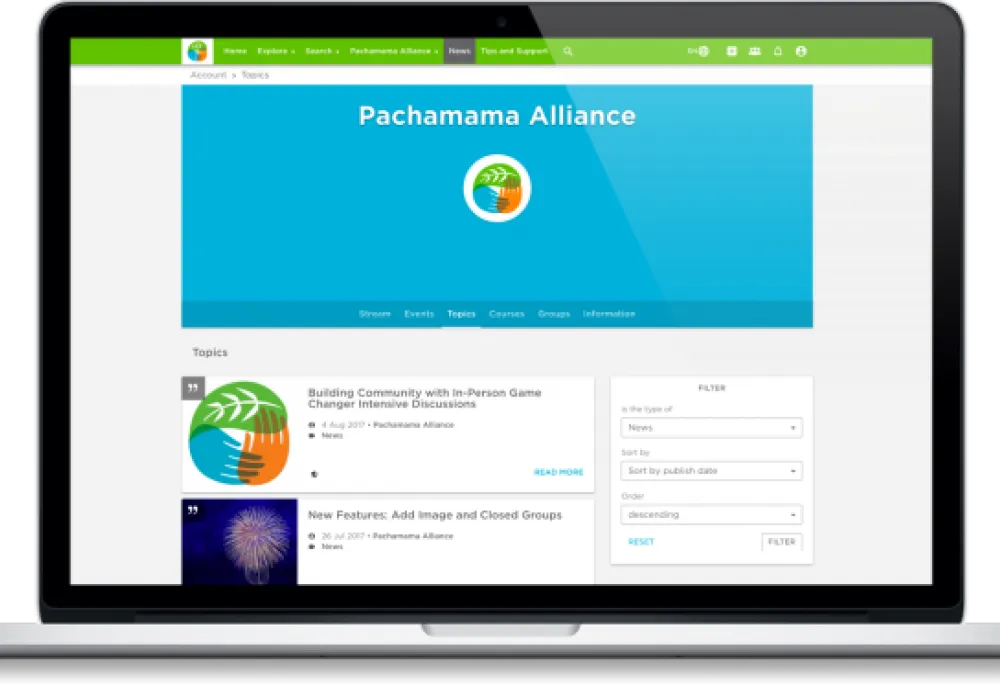
- Pachamama: empowering the indigenous people of the Amazon rainforest to preserve their lands and culture.
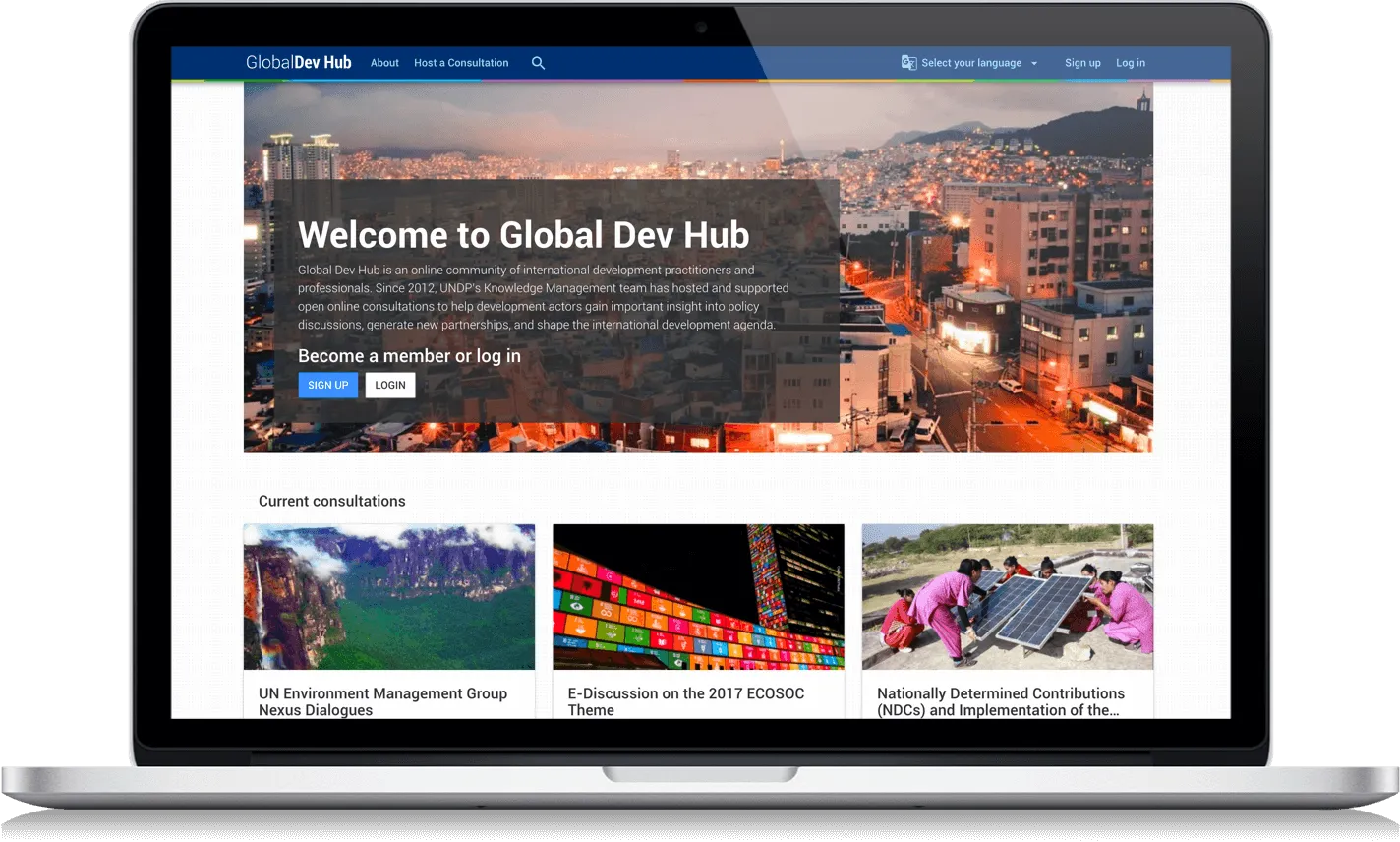
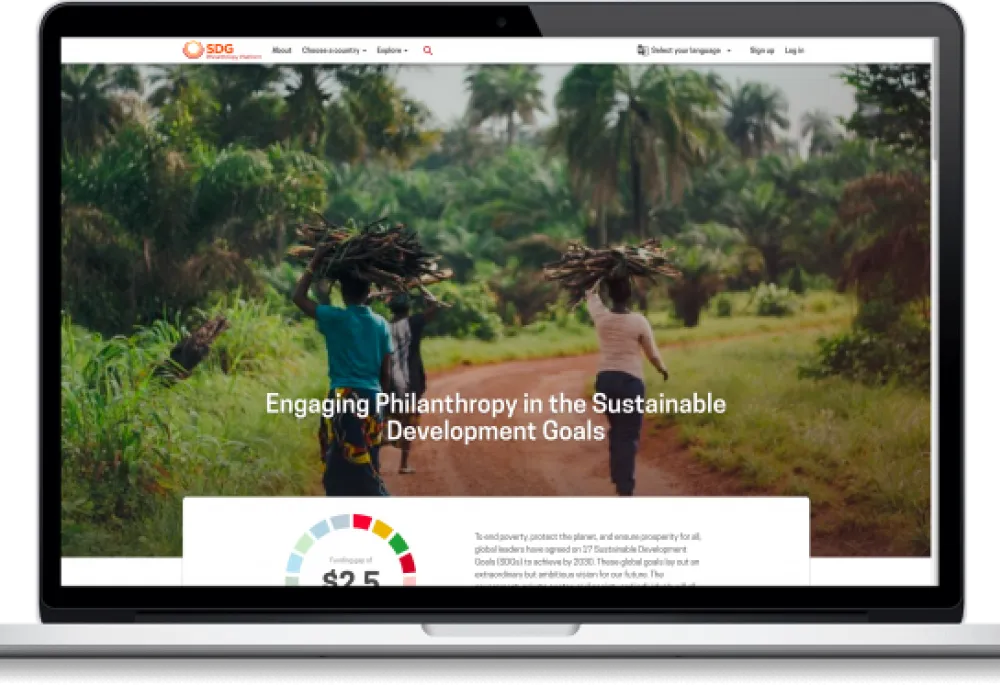
- GlobalDevHub: a UNDP project that replaces that facilitates e-Discussions on key issues surrounding sustainable development, democratic governance, peace-building, and climate and disaster resilience.
- Connecting Business initiatives: a UNDP project that improves the communication of global disaster risk reduction networks.
- Joost by Triquanta: connects NWO employees to improve scientific efficiency and professionalism.
About the project
Open Social was inspired by the Drupal 7-based online community Greenpeace Greenwire, built by GoalGorilla. The Greenwire platform helped Greenpeace change the face of volunteering and empower thousands of volunteers to become more active and make the world a greener, more sustainable place. It increased volunteering activity by 600% in the Netherlands alone.
We anticipated that generalizing and modernizing a social network distribution could benefit many other organizations.
Open Social empowers people to effectively collaborate and organize. Replacing traditional intranets, it fuels efficiency and creativity. This supports organizations to innovate bottom-up instead of top-down. The Open Social distribution exists to lay a flexible groundwork to meet these goals. In order to do so the Open Social distribution must have:
- World-class ease of use (on all devices)
- Blazing fast (perceived) speed
- Flexible customization and configuration (branding, integrations etc.)
Approach to the Design
Getting the interface right is a huge challenge. We want to make the distribution look really good out of the box and also have a theme that is customizable to an organization's brand.
To make Open Social's interface intuitively understandable for a wide range of users we use Google’s Material Design principles, and as a base theme we use Twitter’s Bootstrap. Open Social is built on Drupal 8, so we want to stay close to existing Drupal Core and Drupal modules usability patterns. Open Social users are probably used to certain conventions from existing social software they already use. A small example is the Group icon that Google uses for 'Groups', in Facebook this same icon means 'Friends'. So, when testing with real users (which we do each Sprint) the users were confused and we had to redesign a new Group icon.
Tools
Project Management
The most important project management tool that we use is Atlassian Jira (with Tempo and X-Ray add-ons). For internal team communication, we use Slack for messaging and Google HangOuts for video conferencing. Google Docs is our favorite when it comes to writing down content and extensive research.
Design
We use Axure for low fidelity prototyping. We use Illustrator for visual designs. The front-end is developed using a components strategy, which means building a living style guide based on the atomic design principle. We use Gulp for automated front-end development tasks, and Jade for rapid, high fidelity prototyping.
Development
Wow, tools and frameworks are really exploding these days. Some of our favorites for this project are: Docker, Composer, GitHub, Behat, Drush, Drupal Console, PHP Code Sniffer, PhpStorm, and MailCatcher.
Organizations
GoalGorilla
Open Social
Why Drupal was chosen
Most Drupal developers have worked on one or more projects with user-generated content. Drupal started in 2001 and is named after the Dutch word for a village (‘Dorp’). Since then, Drupal’s impact on community-focused projects has grown tremendously. For example, Acquia and Drupal recently helped Cisco save $400 million (!) USD by moving from Jive to Drupal.
The decentralized nature of social software is a huge opportunity for organizations to reinvent the way they communicate and collaborate with their target audience. Drupal does not only have a strong presence in the community and user-generated content projects around the world, but also comes with an extensive support network.
Building software that can handle large amounts of user-generated content takes time, money, and effort. The content needs to adhere to standards related to user experience, mobile access, and other complex features such as notifications and (aggregated) messaging. This is where Drupal comes in. The Drupal system of distributions offers the benefit of reusing what has been built before and expanding on it. Open Social provides a base for online communities, intranets, or social networks without a large investment. This means we have more time to focus on the development of project-specific features in record time. For example, Open Social launches complex projects like the United Nation’s GlobalDevHub within 3 months.
Technical Specifications
Drupal version:
Key modules/theme/distribution used:
- Address
- Better Formats
- Composer Manager
- Configuration Update Manager
- Dynamic Entity Reference
- Entity API
- Field Group
- Group
- Message
- Override node options (d8)
- Profile
- Redirect 403 to User Login
- Search API
- Token
- Bootstrap
- Crop API
- Image Widget Crop
- Flag
- Private Message
- Voting API
- Like & Dislike
- Swift Mailer (abandoned)
- Embed
- URL Embed
- Social API
We want organizations to use Open Social to create their own unique projects, ones that are performant and maintainable. We made a lean, mean distribution; each extra module was carefully debated in the development team. The modules listed here are all of excellent quality, well maintained, and will provide valuable functionality for any open community.
Drupal 8
In terms of development Drupal 8 has a lot of advantages over Drupal 7. Highlights for our team are: Configuration Management, Entities, Services, Event Listeners, Twig, and PHP Unit. Since we are early adopters, we submit patches and improvements whenever we can.
Some highlighted modules that we use are:
- Address - a great implementation with over 200 address formats and validation right out of the box.
- Composer Manager - temporary solution for composer integration since we are early Drupal 8 adopters (not necessary anymore after Drupal 8.1.0, so it will be deprecated.
- Group - a great new module to create arbitrary collections of content and users. It has a separation of concerns, using a full fledged Group entity getting all the richness from the Entity API in core!
- Message - integrated as part of our activity stream because it works well with tokens and translations.
- Search API - a framework for easily creating searches on any entity known to Drupal, using any kind of search engine (as Apache Solr). In our case, it allows us to build flexible searches on content (Topics, Events) and users.
- Profile - conceptually different than user account settings. With multiple profile support and private profile types, the Profile module gives great flexibility for configuring user profiles.
- Swiftmailer - We make sure our emails look just as great as the rest of Open Social with swiftmailer.
- Like & Dislike - these two modules, combined with the Voring API module, provide us with the possibility to create the perfect 'like' system in Open Social.
- URL Embed - Embed content from the most well-known social media providers such as Facebook, Twitter, and Instagram.
- Social API - Login to the community using your social media account such as Facebook / Google / Twitter / LinkedIn.
- Private Message - This module is the base for our private messaging system.