Sector(s)
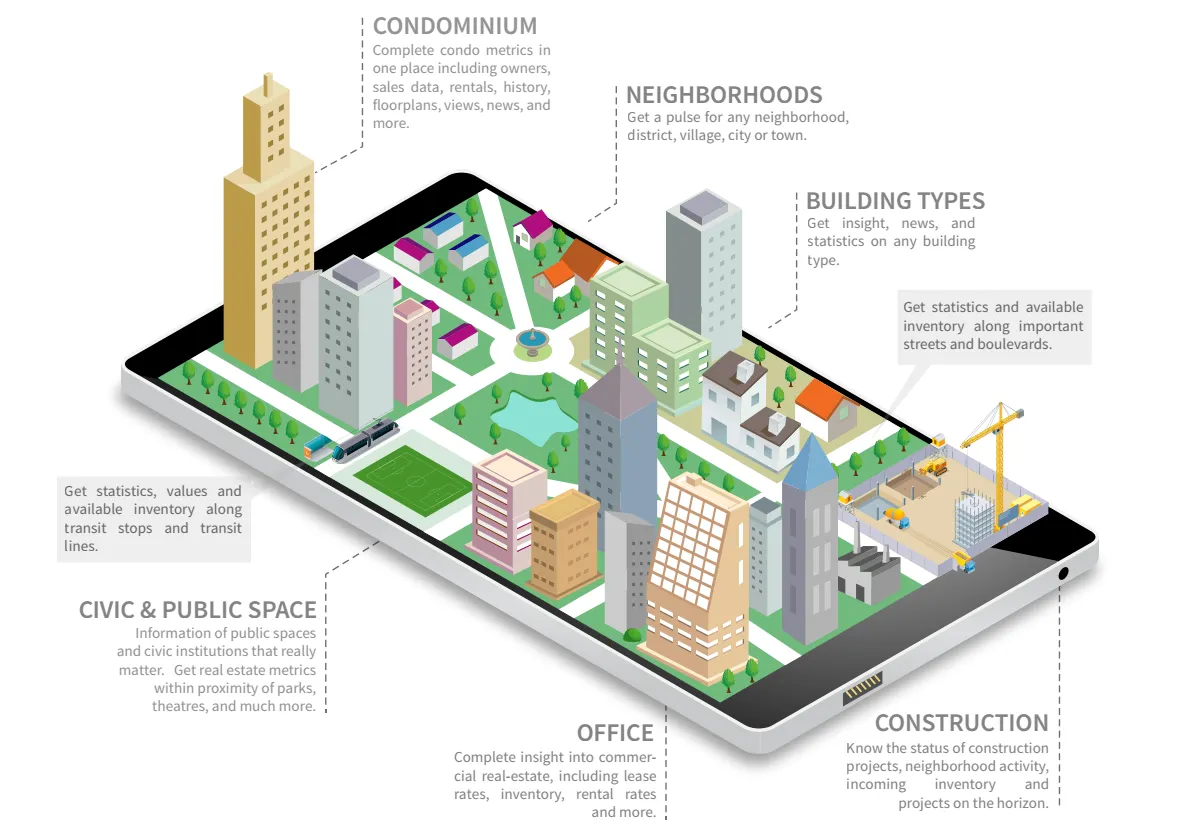
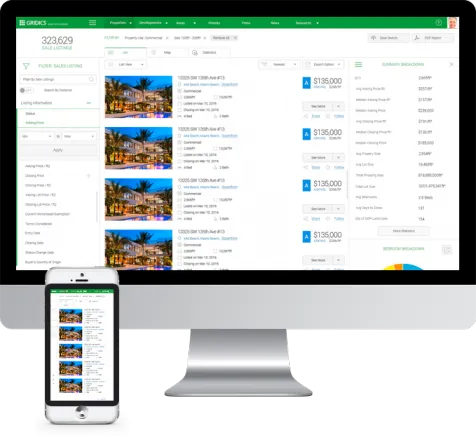
The Gridics software platform provides real estate data based on a multitude of perspectives and variations, allowing customers to find real estate the way they want it.
The site combines numerous and often disparate data sets including public records, MLS listings, zoning allowances and geospatial data with powerful filters, reporting and client collaboration capabilities to empower real estate professionals to make smarter decisions while staying at the center of their client’s online experience.
The wide variety of ways to manipulate, organize, and distill that data into easily exportable formats is awesome. It makes Gridics the source for accurate, transparent, and independent real estate news, data, and analysis for South Florida.
Gridics brings together industry specialists in various areas of real estate, business and academia, including agents, brokers, developers, architects, geographers, analysts, historians, and real estate technologists.
Big data, modern analytics, and relevant news are intelligently connected to provide millions of real-time data points, aggregate results, and relevant relationships on which to base a real estate decision.
About the project
Miami, FL – Gridics LLC, a Miami-based startup, announced the beta launch of its hyper-local real estate data and analytics platform. The Gridics software platform combines numerous and often disparate data sets, including public records, MLS listings, zoning allowances and geospatial data with powerful filters, reporting and client collaboration capabilities to empower real estate professionals to make smarter decisions, while staying at the center of their client’s online experience.
Gridics, short for Grid Analytics, was founded by three University of Miami graduate students with a mixture of backgrounds, including urban planning, real estate tech, architecture and engineering.
"We believe local professionals, ranging from appraisers to investors to agents and brokers, drive each real estate market," said Felipe Azenha, Co-Founder of Gridics. "Yet they are extremely underserved relative to other sectors when it comes to technology solutions that combine rich local data with robust analysis, reporting and productivity tools. This often translates to a poor client experience when consumers go from browsing national listing sites to working with their broker or agent to actually transact [business]."
"When consumers pick up the phone to start working with the local professionals, the data and technology experience should get better, not worse", said Jason Doyle, CEO of Gridics. "The last 15 years have been about putting real estate data online at a broad, national level for people to search. But real estate is local and consumers want deeper, more meaningful data to ensure they’re making the best possible investment decision. We believe local professionals should be the ones to deliver that experience, and we are working with the Miami real estate community to achieve that goal."
Gridics is currently focused on the Miami MSA and has partnered with the Miami Association of Realtors (MAR) to allow MAR members to easily join Gridics directly from their backend MLS system.
Thanks to Gridics, brokers benefit from agent rankings and market research, while agents now have immediate access to all properties in South Florida (not just active MLS listings) to run valuable reports, conduct detailed market analysis and collaborate with clients in one location online.
"With Gridics, we now have a technology platform serving the South Florida real estate market that
can help agents deliver a more valuable experience for their clients and give all our local citizens a powerful local real estate resource," said Jorge Guerra, Broker at Real Estate Sales Force (RESF) and the 2018 President of the Miami Association of Realtors.
Why Drupal was chosen
We are successfully running this project on Drupal 7. The whole infrastructure is built using Docker containers, such Amazon services as RDS, EC2, CloudFront CDN.
In addition to that, we have built a few of our own tools (like daemon for indexing data in Solr that that support multithreading) that allows us to manipulate data much more easily and quickly.
Technical Specifications
Drupal version:
Key modules/theme/distribution used:
- Address Field
- Advanced CSS/JS Aggregation
- Authenticated User Page Caching (Authcache)
- Charts
- Clientside Validation
- Commerce Coupon (D7)
- Commerce Discount
- Commerce License
- Commerce Stripe
- cURL HTTP Request
- Commerce Core
- Drupal RETS Real Estate Framework (dRealty)
- Entity API
- Entity Construction Kit (ECK)
- Entityreference backreference
- Facet API
- Features
- Feeds
- Field Group
- File Entity (fieldable files)
- Flag
- Flex Slider
- Geocluster
- Geocoder
- Geofield
- geoPHP
We used the set of modules stated above due to geo-specific project goals like storing geodata in WKT format, running searches by a selected shape, etc.
Another reason was use those modules was because we have a lot of relations between the different pieces of content to insure a user can find property by any of the available criteria.