Sector(s)
Our client is a leading multinational travel and tourism company headquartered in Germany, operating in 180 countries. As one of the largest tourism groups in Europe, they manage over 1,600 travel agencies, operate six airlines with 150 aircraft, and own more than 300 hotels
Key Highlights
- Develop the client's site in Drupal 7
- Built a new architecture for the website to strengthen multiple functionalities
- Integrate the site with Salesforce CRM, PayU, Zomato, and other APIs
- Improved user experience, and additional features
About the project
In 2012, the client decided to optimize its tourism business in India, and some other countries outside Europe. The business ROI from the Indian market was much lower as compared to that of European countries, including Germany and France, and the website was at the center of this business optimization process. Their website in India had multiple platforms for selling travel packages. The main challenge was to boost enquiries and sales of packages online, and bring the performance level of Indian website at par with the global one. The team decided to revamp the website and set out the following objectives from the exercise:
- Build a new architecture
- Enhance user experience and improve flow of images
- Optimize website code
- Strengthen website functionalities
- Integrate with Salesforce
Why Drupal was chosen
The project owner at the organization had prior experience working with our team who demonstrated strong capabilities and a dedicated focus on lean thinking and Agile processes for development. Based on this, their team chose to contract with us for building a Drupal 7 website. The initial development phase lasted for three months.
Technical Specifications
Drupal version:
Key modules/theme/distribution used:
The Solution
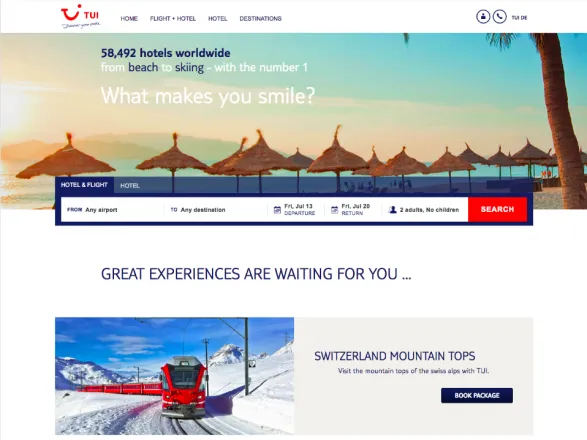
Drupal 7 Website with Custom Travel Packages
The new architecture for the website to be revamped was discussed with the project owner and rest of the stakeholders. The previous version of the architecture included itinerary packages and a few destinations as static pages on the website. The team was sure that replicating the current features in the new website would suffice.
However, there were some initial hiccups including the website design being based on the old architecture and the new design demanded changes at the architecture level. After a couple of discussions, it was decided that the architecture development should be split into multiple sprints.
The development team then started with the main features of the site. The main functionalities added were custom travel packages, payment gateway and the custom “Buy Package” option. Another functionality that was not available previously was that of “Featured Packages”, where some packages were highlighted as per the need.
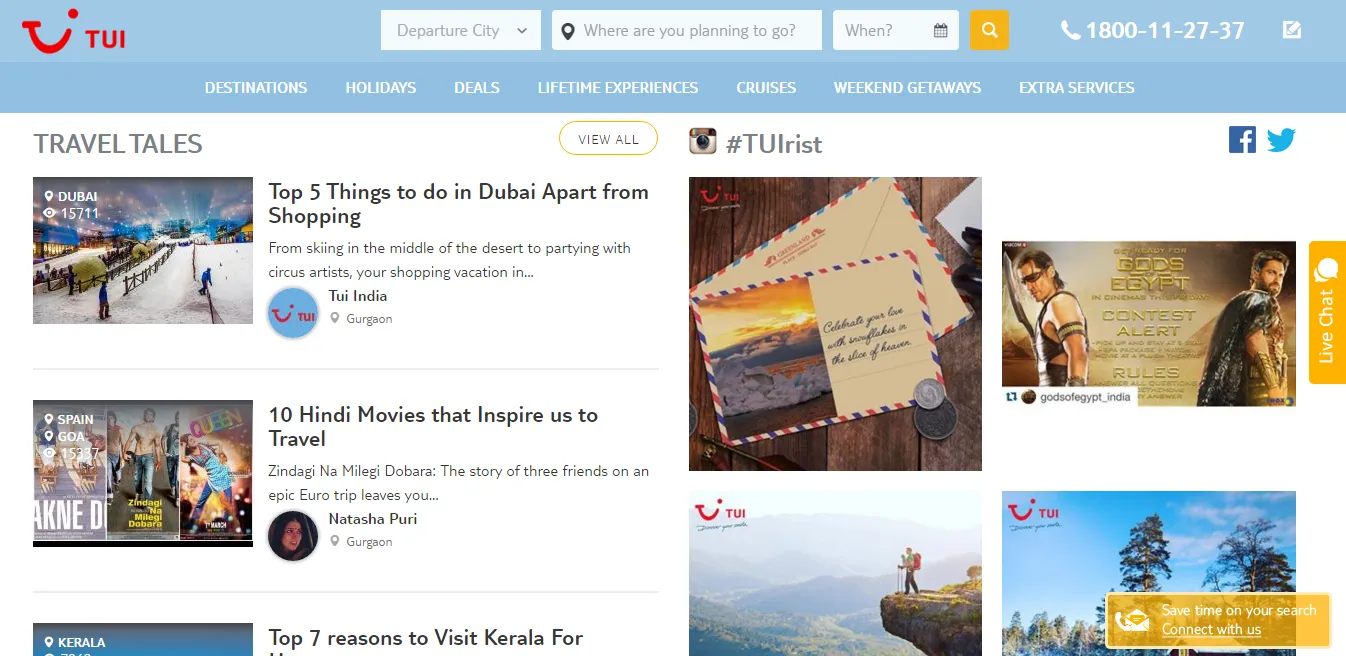
The images supporting the text also had to be improved heavily in terms of quality and design. To incorporate HD images on the website, our team created an image carousel which enabled the team to feature the images according to priority.
Some of the highlights of the project include:
Integration with Salesforce CRM:
Previously, offline packages were listed on the old website, and were sold in various Indian cities. Since the website was not very user-friendly, the sales did not see much traction. With the new, easy-to-use website, The team now also needed a way to capture the enquiries, and be able to take action on them. So our team integrated Salesforce with the Drupal 7 website. This has enabled TUI India to reach out to their customers and prospects at the earliest, and gives a much better control on their leads.
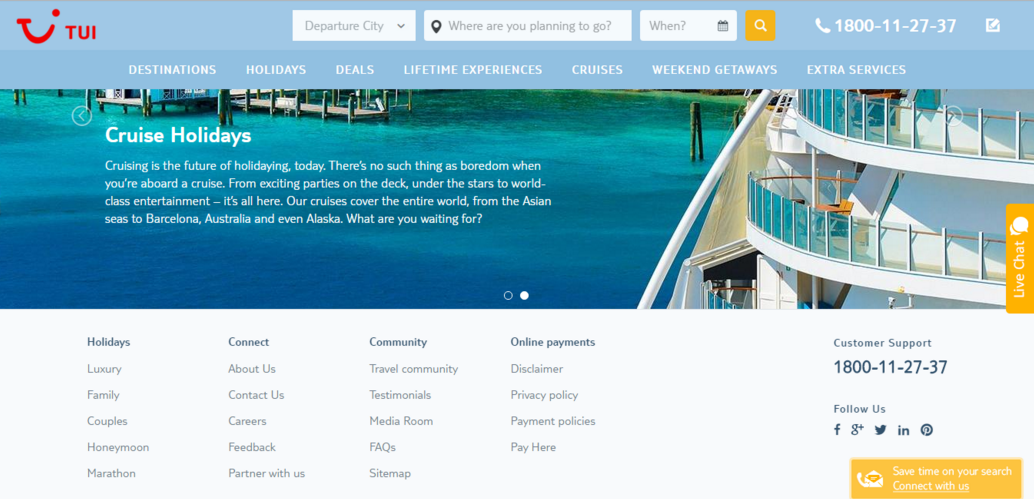
Website users often spend a lot of time in searching for the right information. In the new website, they get a “Connect with us” option. They can easily ask for information such as Destination Guides with no packages, or the next version of an expired package. They can now leave their query, and someone from the team would reach out to them.
New Payment Gateway and Integration with PayU:
Our team also smoothened out the implementation of online payment on the website. The new payment gateway was integrated using PayU. It had some unforeseen challenges. However, we developed the entire feature in just 15 days, earlier than what was estimated. This was immensely appreciated by the CEO of the organization, who was delighted to hear about the timely revision and execution.
Zomato Integration:
Every excited traveller at a new destination wants to know about the best things to do and the new attractions to visit. But one of the first requirements is to find suitable places to eat. For this, the restaurants are fetched from Zomato. The team just needs to save the longitude and latitude of every location. The ratings and reviews are pulled into the website using the Zomato API.
Besides the integrations with Salesforce, PayU and Zomato, there were two more API integrations on tui.in:
Visa Guidelines:
To keep travelers informed about the complex visa requirements during international travel, we integrated the IVA API that enabled the team to attach country-specific visa guidelines, after creating a destination guide.
Instagram Pictures:
Images on the client's Instagram profile were fetched using Instagram API, adding to the visual appeal of the new website.
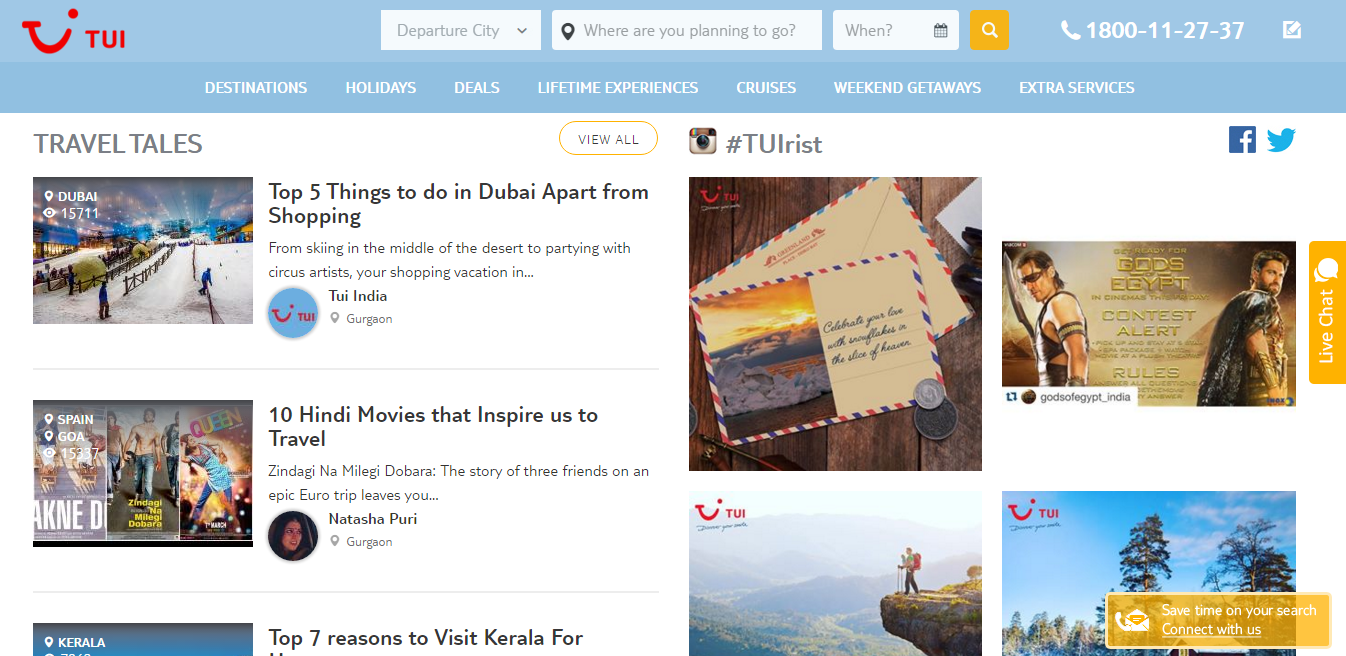
Other website features added to enhance the user experience of every TUIrist:
-
Package Coupons using Points System:
On the basis of website activity, every user can get votes from other users. These votes can then be used as points for redeeming coupons on packages.
-
Substitute Location-based Packages:
If website users search for a destination for which there are no current packages available, the “Other packages based on your search” would be displayed, which are prioritized by location. For eg: If a user found no packages for Ahmedabad, then she would be shown other packages in India. If there were no packages for India, then the user would be shown other packages in Asia.
-
Travel Story Submissions:
Besides users having access to a number of basic features, they are given an option to “Publish a Travel Story”, the blogger option for travel bloggers as well as every tuirist.
Business Benefits
The new website went live in 2012 and provided the following benefits to the team:
- Improved User Experience: The image carousel has enabled the prioritization of the HD images on website, improving its visual appeal. The Instagram API integration also adds to the UX enhancement.
- Easier Sales of Online Packages: Custom packages, added functionalities, and the new website architecture have boosted the sales of online packages.
- Keeping TUIrists Informed: The PayU and Visa integrations help users save time and effort, while the Zomato integration helps travelers find relevant restaurants, bars and cafes around them.
- Better Management of Leads: Integration with Salesforce has enabled the team to track their leads and stay in touch with them.
- Additional Features for Website Users: The points system based on user activity, substitute packages, and the blogging feature were also included in the website, thus making it a lot more engagement-driven.
Having worked with our team before, the project owner from client was sure of our capabilities, as well as the focus on business thinking and Agile processes for development. The team was also pleased with our ability to adhere to aggressive deadlines, discuss the urgent requirements with the client, optimize availability of project resources, prioritize tasks, and even push back a feature. All this was done to make sure the MVP (Minimum Viable Product) was out as per schedule. The CEO of the client's India team praised the project owner for getting the new payment gateway integrated in 15 days, and also highlighted our team's incredible work.
To explore more of our work with Drupal, check out our site.