Client: A web development agency specializing in creating custom Drupal websites for clients. They want to offer their clients a custom color picker field module to make it easier for clients to customize the colors of their Drupal websites.
Goals:
- Develop a Drupal module that adds a color picker field to the Drupal form API.
- Allow clients to customize the colors of different elements on their Drupal website, such as the header, footer, text, and background.
- Provide an easy-to-use interface for clients to select colors and preview changes in real-time.
- Ensure the module is compatible with the latest version of Drupal and adheres to Drupal coding standards.
- Provide documentation and support to the agency's developers and clients using the module.
Solution: The agency's development team will create a custom Drupal module that adds a color picker field to the Drupal form API. The module will allow clients to customize the colors of different elements on their Drupal website, such as the header, footer, text, and background.
The module will include an easy-to-use interface that allows clients to select colors and preview changes in real-time. The color picker field will use the Drupal color module as a base, which provides a range of color palettes and color wheel options for clients to choose from.
The module will be designed to be compatible with the latest version of Drupal and adhere to Drupal coding standards to ensure it can be maintained and updated easily.
To provide documentation and support to developers and clients using the module, the agency will create a user guide that explains how to install, configure, and use the color picker field module. They will also provide a support contact for clients to get in touch if they need assistance with the module.
Once the module is developed and tested, the agency will offer it as a standard feature to all clients who use their Drupal website development services. This will help streamline the website customization process for clients and make it easier for the agency's developers to create custom Drupal websites.
About the project
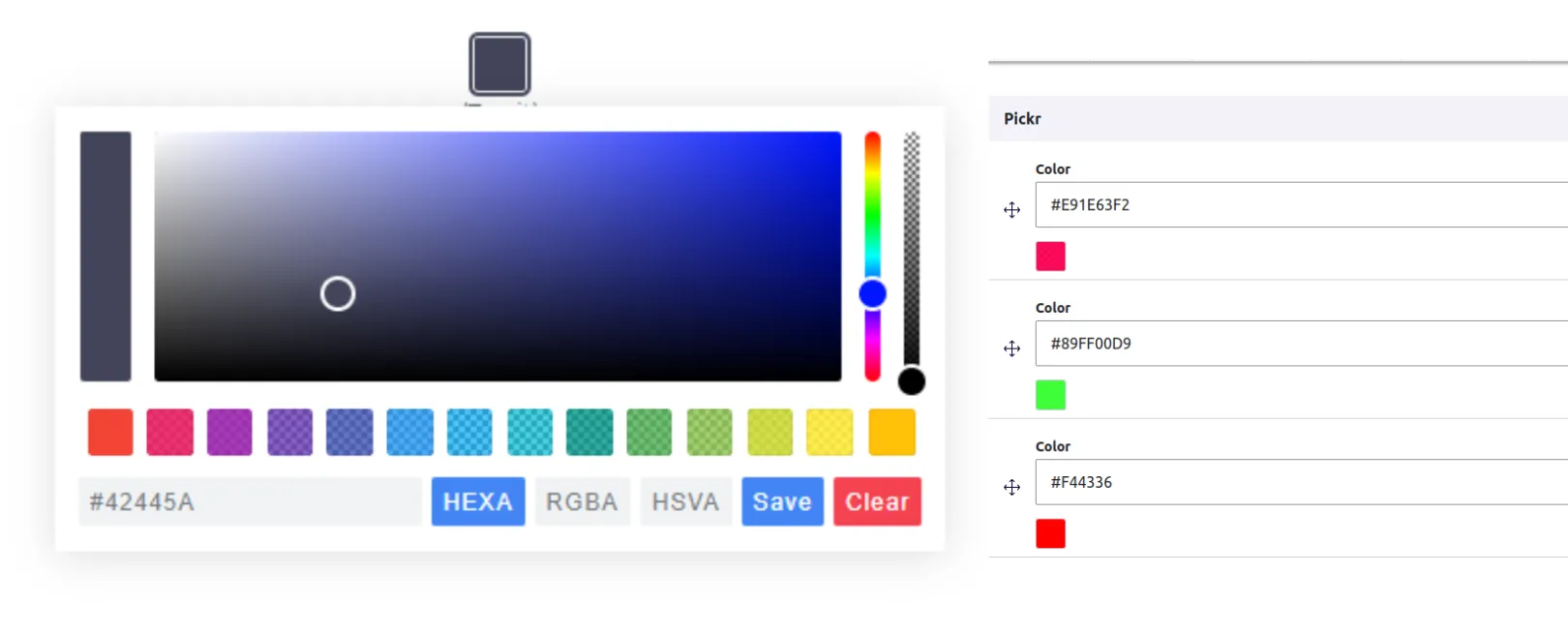
The color picker(Color Pickr) field Drupal module is a custom module that adds a color picker field to Drupal's content types and entities, allowing users to choose a color value for a specific field.
Goals: The goal of this project is to provide Drupal site builders and content editors with an easy-to-use color picker field that can be integrated into their website's content types and entities. This module aims to simplify the process of adding color selection to content fields and improve the user experience.
Requirements: To develop this module, the following requirements were identified:
- The module should be compatible with Drupal 8 and 9.
- The module should provide a configurable color picker field that can be added to content types and entities.
- The module should allow users to select a color value using a standard color picker UI.
- The module should be customizable and allow developers to adjust the appearance and behavior of the color picker field.
- The module should be easy to install and configure.
Outcome: After the successful implementation of this project, Drupal site builders and content editors will have access to a user-friendly color picker field that can be used to select colors for specific fields in their content types and entities. This module will simplify the process of adding color selection to content fields, improve the user experience, and make it easier for developers to customize the appearance and behavior of the color picker field. Overall, this module will enhance the functionality and usability of Drupal websites.
Why Drupal was chosen
Drupal is a popular and powerful content management system (CMS) that was chosen for a variety of reasons, including:
-
Flexibility: Drupal is highly flexible and customizable, which makes it a good fit for a wide range of projects, from small websites to large, complex applications.
-
Community: Drupal has a large and active community of developers and users who contribute to its ongoing development, provide support, and create add-ons and modules to extend its functionality.
-
Security: Drupal has a strong track record for security, with a dedicated security team and regular updates to address any vulnerabilities.
-
Scalability: Drupal is designed to be scalable, which means it can handle a high volume of traffic and content without compromising performance.
-
Multilingual support: Drupal has built-in support for multilingual content, making it a good choice for websites and applications that need to support multiple languages.
-
Open source: Drupal is open source software, which means it is free to use and can be modified and distributed by anyone. This makes it an affordable option for businesses and organizations of all sizes.
Technical Specifications
Drupal version:
Choosing modules, themes, and distributions for a Drupal project can be a complex process that involves considering a range of factors, including project goals, budget, timeline, and technical requirements. Here are some reasons why specific modules, themes, or distributions might be chosen:
-
Functionality: Modules are typically chosen for their specific functionality, such as image galleries, form builders, or e-commerce features. The decision to use a module will depend on whether it meets the project's specific requirements.
-
Compatibility: Modules and themes must be compatible with the version of Drupal being used, as well as with other modules and themes being used on the site. Compatibility issues can cause conflicts and affect the site's stability and performance.
-
Security: Choosing secure and reliable modules and themes is crucial for the overall security of the Drupal site. Modules and themes with a strong security track record are preferred, and regular security updates should be applied.
-
Community support: Modules and themes with an active community of developers and users can provide better support and resources for troubleshooting issues and customization.
-
User experience: Themes and distributions are chosen based on their visual design and user experience. Themes that are responsive, accessible, and visually appealing can enhance the user experience and engagement.
-
Budget and timeline: The budget and timeline of the project can influence the decision to use pre-built distributions or to develop custom modules and themes from scratch. Using pre-built distributions can save time and money, while custom development can provide more control over the site's functionality and design.
In summary, choosing the right modules, themes, and distributions for a Drupal project requires careful consideration of functionality, compatibility, security, community support, user experience, budget, and timeline.