Sector(s)
The Judicial Council of California manages the largest court system in the country, including 58 Superior Courts that serve each of the 58 counties in the state.
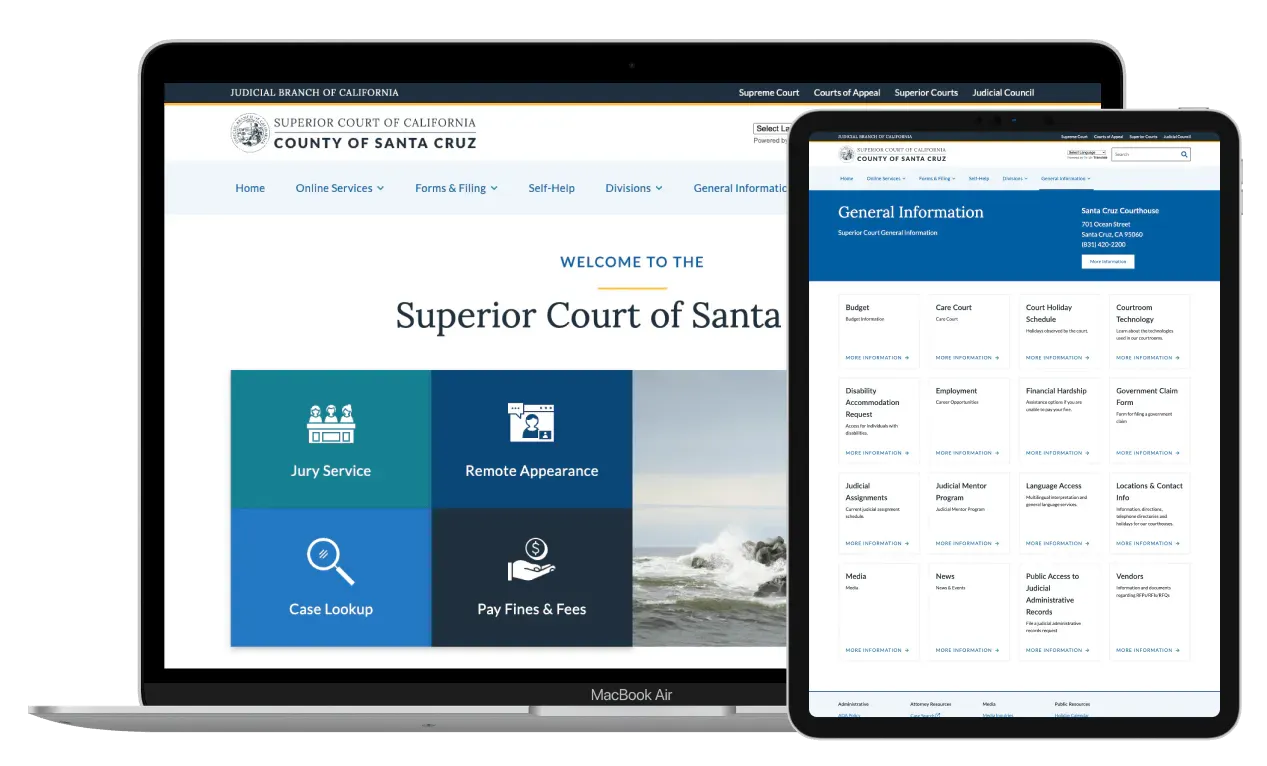
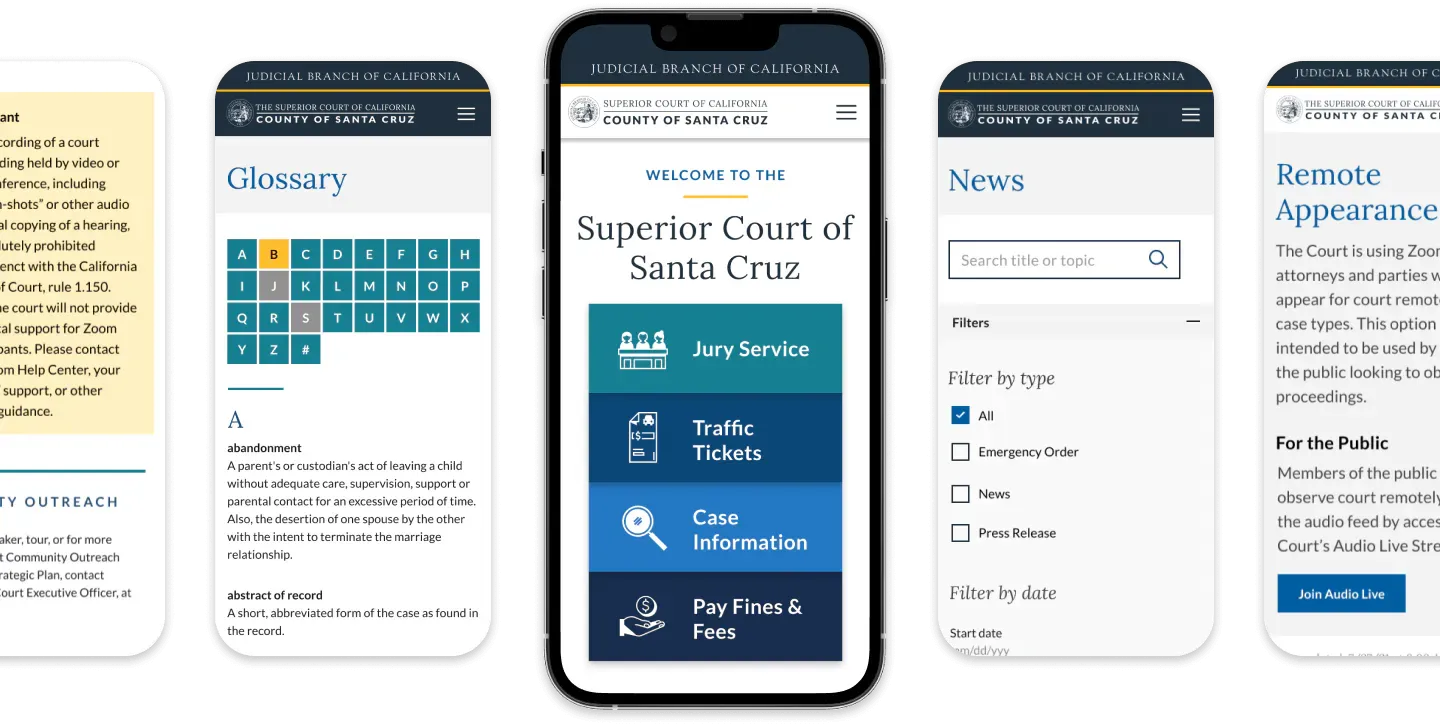
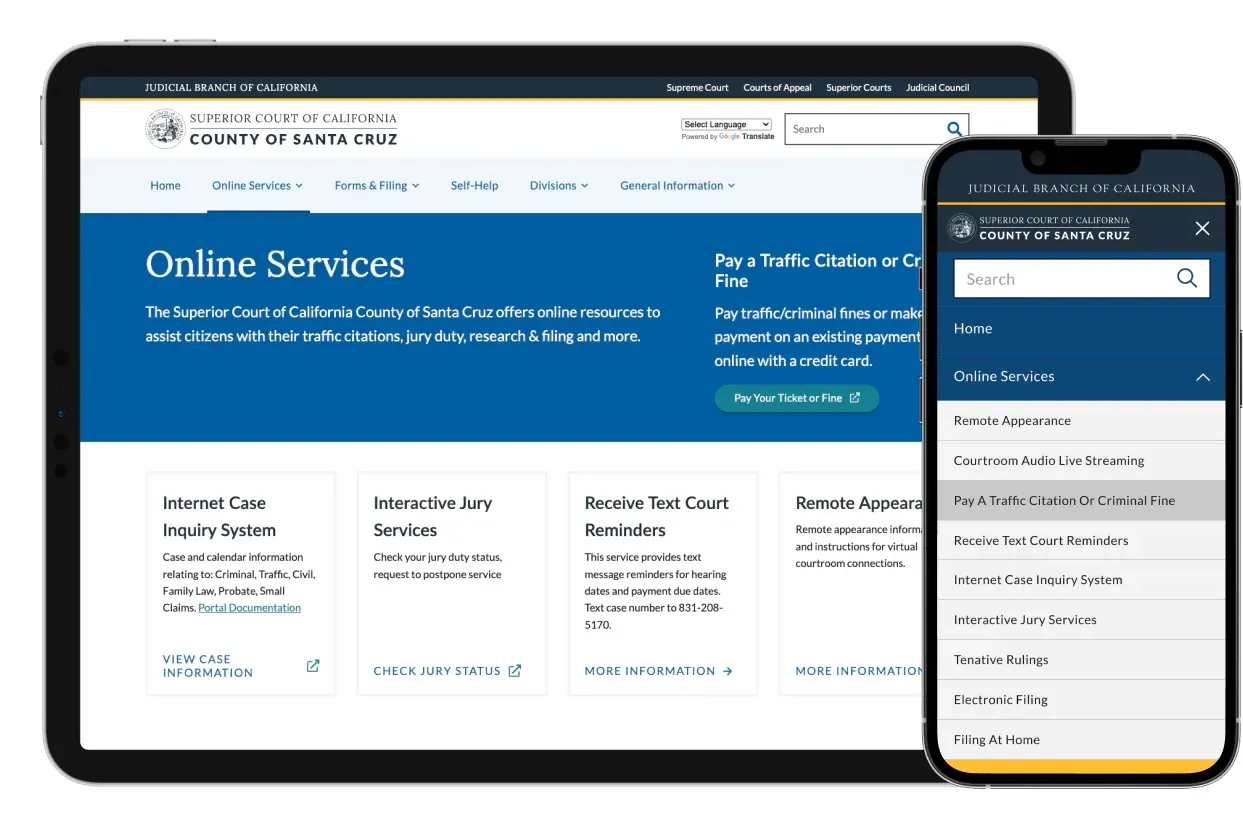
Chapter Three upgraded 44 court sites from Drupal 7 to Drupal 10. We used Storybook (Pattern Lab) and a flexible component design so that all sites share infrastructure resources, but each court has autonomy over its own site.
About the project
Content Editors and Audiences Should Always be a High Priority
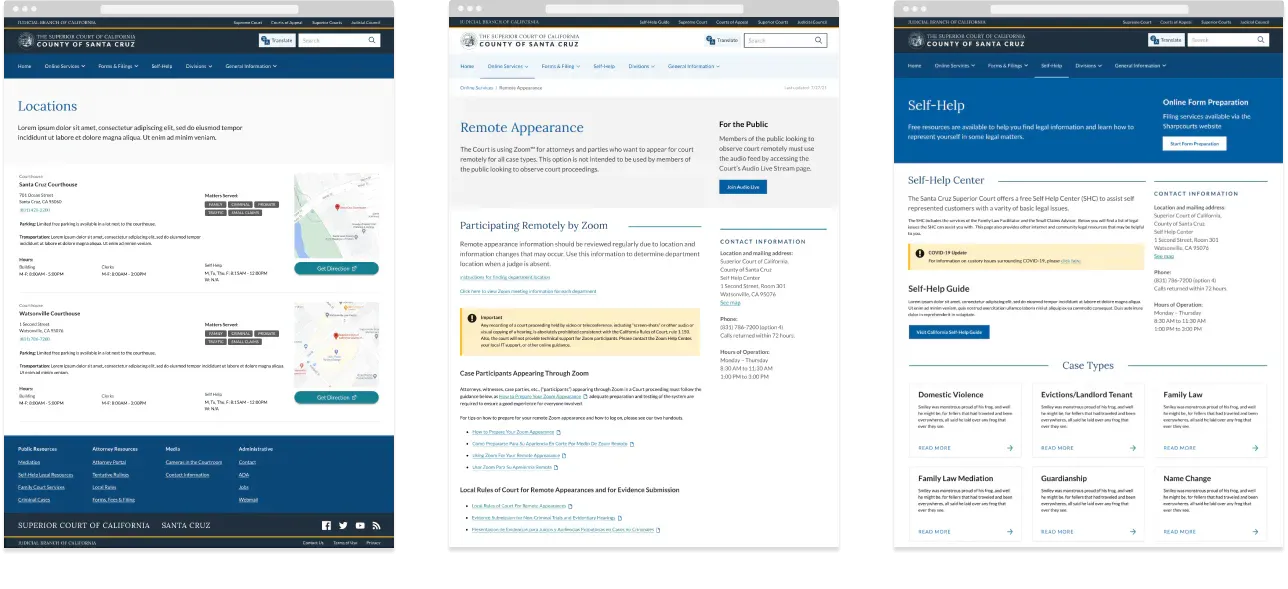
Courts could easily be sold on the benefits of shared resources, but needed reassurance that the system was going to be easy to use, extendable, and provide enough useful options for creating and managing content. By creating flexible and simple components like accordions, asides (for "related information"), locations, side by side text and image elements, we could build out straightforward, readable, and approachable content for court users, especially the general public that needed information presented cleanly and clearly.
A Collaborative Build and Ongoing Support Relationship
The platform now supports over 40 California Superior Court sites, and much of the maintenance work is handled by the JCC's in-house web team, with support from Chapter Three. Our long, productive relationship here also extends to work on other court websites, such as the state's recently launched Supreme Court site as well as the upcoming redesign of the statewide administrative hub for the Judicial Council, at Courts.CA.gov, where we're contributing strategic, design and development consultations and technical support.
Why Drupal was chosen
A few years ago the California court system faced a daunting set of challenges.
- They had an expensive, confederated model of hosting and development
- Many sites on a legacy content management system that was no longer supported
- Drupal 7 sites needed an upgrade
- A need for a unified design system that allows for customization and independence while making maintenance easier and more comprehensive across dozens of sites.
Our base technical approach included:
- Drupal 9/10
- Storybook (Pattern Library)
- Shared Hosting Platform
- Flexible Component Design
- Bi-weekly Code Deployments
Even in a unified state court system, the court sites in California needed to maintain their own identities while embracing the efficiency of shared resources and hosting. Some courts were on an existing shared infrastructure, others were not. Some used Drupal, others didn't. Even elements like paying parking tickets or going to small claims court can be somewhat bespoke experiences from court to court, both in content structure and 3rd party integrations.
Because these individual county courts retain a great deal of autonomy over their websites, technology, content and vendors, encouraging court sites to the new shared infrastructure required selling the benefits of this shared approach, being open to discussion with the courts about individual implementations, acknowledging some modest constraints, and committing to long-term expansion and modification of the initial templates and feature set.
Technical Specifications
Drupal version:
Key modules/theme/distribution used:
- To make the system easy to use, extendable, and with useful options for creating and managing content
- To create flexible and simple components like accordions, asides (for "related information"), locations, side by side text and image elements