Sector(s)
Header Image: Paul Blakemore / The Paraorchestra and friends / Mayfest 2018 (c)
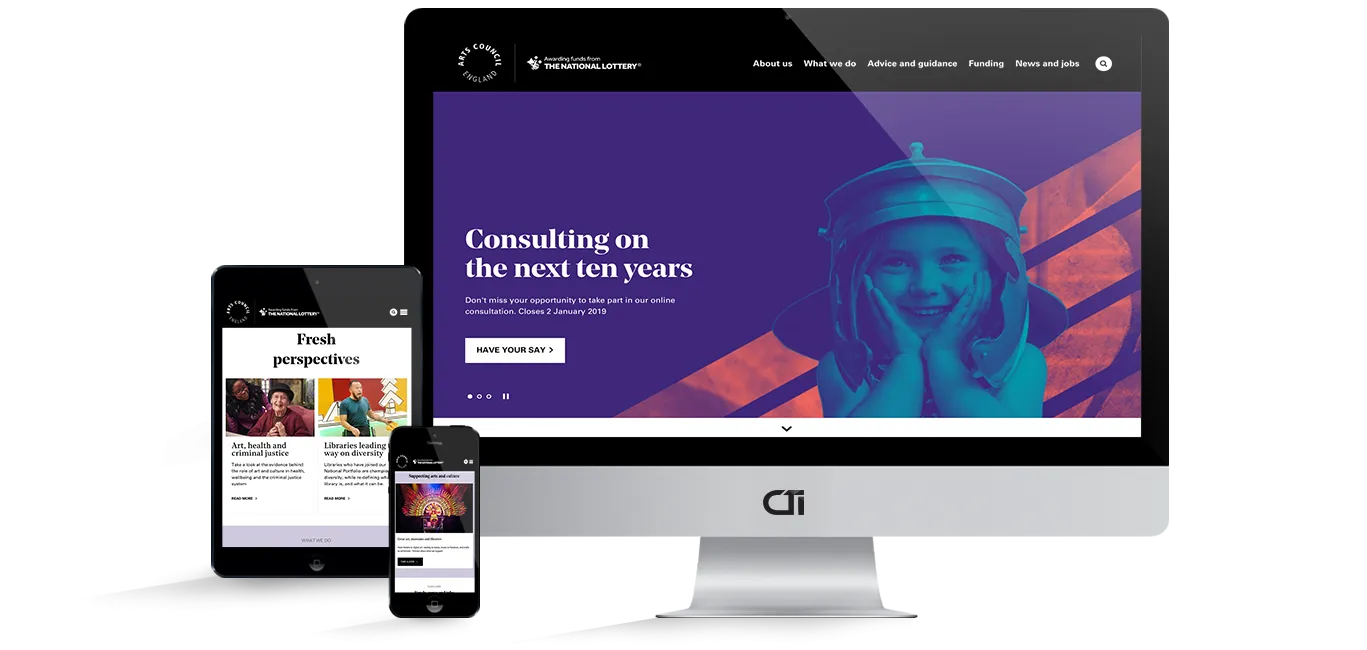
Arts Council supports cultural activities across England in arts organisations, museums and libraries. Their website serves as an authority on arts and culture and provides a space for job listings and community blogs.
Between 2015 and 2018, the Arts Council have invested £1.1 billion of public money from the government, and an estimated £700 million from the National Lottery, to help create art and culture experiences for everyone, everywhere. Their website acts as a secure hub for groups to apply for this funding and helps groups around the country to realise their potential.
About the project
Arts Council England had an existing Drupal website developed by a previous agency. Since the launch several new modules have become available opening opportunities for greater flexibility and creativity, allowing the potential to tailor structure and content of web pages delivering messages more effectively to each audience.
This case study is an example of how, working with the right partner, ongoing development and support of an existing Drupal site can be transitioned to another agency, refactored and improved and continue to meet the evolving needs of an organisation.
Choose a development partner adhering to Drupal.org coding standards. Use highly adopted contributed modules and extend them according to Drupal APIs. This pays dividends in terms of future flexibility and allows other developers to interpret work.
Over the 3-month project, we focused on delivering two main areas of improvement:
- Increasing control, for Arts Council to edit their website. To do this we needed to:
- Augment the existing CMS, enabling greater flexibility
- Empower content managers, with more freedom to edit text and video
- Improving user experience, when visiting the site. To do this we needed to:
- Update the menu navigation
- Organise content to be best available for users’ needs
Flexible Content Management System
Through Continual Development, we implemented a new flexible, modular component-based CMS. This provides more control for the content managers at Arts Council.
Drupal’s modular content management system utilises paragraphs that allow editors to create text, input images, embed videos and more. The component-based design removes barriers to entry for contributing to the website. It also removes the need for coding knowledge when editing content on web pages, and reduces dependency upon developers, allowing clients to keep publishing in-house.

With Drupal’s native support for capturing content in a structured manner through Content Types, we incorporated fields tailored to suit specific needs. We created Content Types for the new Landing Page and Homepage, with the later addition of a Blog Landing Page.
Because Drupal is flexible and extensible you can add features iteratively: We created Content Types for the new Landing Page and Homepage, with the later addition of a Blog Landing Page.
These provided the skeleton for a basic page, including elements like: title, introduction and URL. Beyond that, we provided the ability to assemble pages from a set of available component styles. With these templates, content editors can ‘build’ compelling and interesting pages, whilst maintaining consistent brand integrity.
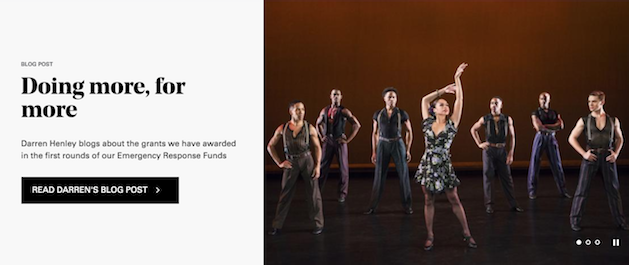
The components (paragraphs) we created were:
- Home Page Gallery
- Showcase
- Double spotlight
- Featured content
- Full Text
- Header
- Navigation Spotlights
- Navigation Spotlights List
- Quick links
- Slides
- Spotlight element
Each component type can be added to a page any number of times, in any order. Additional components can be developed in the future as the organisation's content requirements adapt and change.
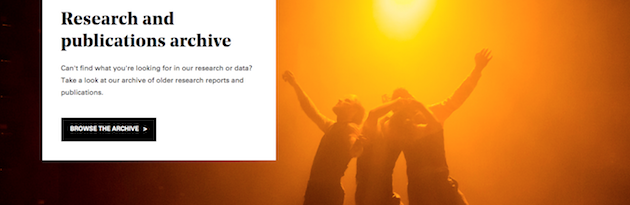
These components allow creative freedom while complying with accessibility and usability standards almost subconsciously.
Paragraphs is a suite of modules allowing content managers to create page layouts using components rather than be tied to rigid form based layouts.
User-Centred Navigation
We take a user-centric approach to all of our projects. To create a navigation structure that delights users, it must be built with them in mind. Therefore, in late 2017, we asked almost 100 everyday stakeholders of Arts Council to take part in creating the navigation. We used Card Sorting and Tree Tests to find out what users expected from the navigation and applied their opinions to best practices, ultimately creating the best navigation for everyone.
Individuals were asked to journey through the existing navigation in order to reach specific pieces of information; this is called Tree Testing. We investigated which areas they clicked on the most, how successful they were at finding the information, and how often they had to backtrack to find the information.
Drupal's flexible site navigations can easily be adapted, by content managers, based on feedback from user testing using exercises like Card Sorting and Tree Testing to improve usability. A well configured site allows this without developer skills.
Card Sorting was then used to give insight into how users structure information in their own mental models. Users were asked to sort cards containing the topics on Art Council's navigation, to discover what areas they associated with each other. As a result, we were able to discover which topics were most often associated with other groups and which topics were considered too similar. This also provided insight to review the names of topics where their purpose was often misconstrued.
In addition to providing the premise of the global site navigation, these activities also presented the basis for the on-page navigation.
We implemented three forms of on-page navigation, to function as a secondary aid to the global navigation. On each page, content managers can set the following criteria, to help users get the most out of their visit:
- the breadcrumbs of the page
- the content spotlights
- the footer carousel
Application Optimisation - Eligibility Self Assessment Test
The application process for funding on the Arts Council website previously experienced a high abandonment rate. The existing form was unclear about what was needed from applicants before they started. As a result, the primary method of grant application received thousands of incomplete submissions each year.
To improve the process, we designed an eligibility gateway that encourages users to confirm whether they have all of the information they need before starting the process. Ultimately these pre-application details make the experience more efficient and enjoyable for users.
Before considering rebuilding an entire site: consider if there are improvements to design patterns and user experience that can achieve similar outcomes with greater ease. Drupal's architecture promotes separation of front and back end function to permit this route well.
Each funding type is now separated and provides four key areas of information:
- Key information - the status, dates, and type of grant
- About the fund - more information about why the fund exists and who it’s from
- How to apply - eligibility information and FAQs
- Successful applicants - previous examples of how the grant has benefited projects around the country
Scalable Support During High Traffic
Mid-year, Arts Council release the successful funding grants for the next period causing a potential influx of traffic. We implemented a scalable, cloud-based hosting solution to provide Arts Council with extra support during these times of peak traffic. The solution will scale up virtual instances during peak trading periods and scale them down again automatically, with zero downtime.
We’ve never worked with an agency that is so transparent, accountable and open.
It feels like we’ve been given a brand new website since CTI took over its development.
Daniel Smith
Marketing Communications Manager, Arts Council England
Results
The successful interface changes to the applications funnel have achieved a total abandonment decrease of -75.13%, from 90.3% to just 22.46%.
Whilst maintaining a consistent level of traffic YOY, goal completions have risen by a massive 167% with a conversion rate increase of 153.33% from 12.32% to 31.21%.
167% increase in goal completion
75% decrease in application abandons
We provide both Critical and Reactive Support to the organisation, becoming the extension of their digital team. This ensures maximum availability when they need support. They also benefit from an ongoing allowance for developing and implementing a roadmap of digital initiatives, via our continual improvement service.
(Results 1st Jan - 5th July 2017 Vs same period for 2018)
Why Drupal was chosen
All public sector bodies and publicly funded organisations across England must comply with government legislation relating to accessibility. As a leader in the creative and arts sector, Arts Council England need a content management solution which allows them to communicate in a visually inspiring way.
Drupal has a rich library of core features and modules to exceed these core requirements. In addition, the open source ethos promotes both code and knowledge sharing amongst peer organisations which leads to the sector being able to remain innovative whilst investing proportionately less money over all.