Sector(s)
Team Members
Project Team
The site was built by two developers (@afreeman and @jayroberts), theming by @frankyonnetti, and project management by @michaelnicholson.
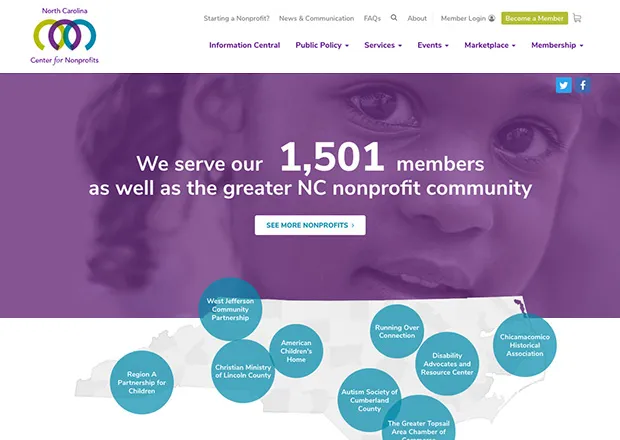
The NC Center for Nonprofits is a state-wide agency that provides consulting and advocacy services to the nonprofit community in North Carolina through a combination of online tools, agency networking events, and various resources including training materials, nonprofit job listings, and volunteering opportunities.
Serving North Carolina nonprofit organizations since 1990, the Center has always served as a valuable asset to the nonprofit community. Around 2012 the Center migrated their website to Drupal 6, including a complex integration with Salesforce. The site was developed through a collaboration between a Drupal development agency and internal staff resources, with Center staff taking over maintenance after initial deployment. Over the next six years, the website increased in complexity, largely through the addition of custom and mostly undocumented code, including the Salesforce integration.
Much of this complexity was driven by internal business process requirements that were not supported by off-the-shelf Drupal 6 modules and significant customizations were made to attempt to match the Center's desired workflows. These customizations created technical debt that proved difficult and costly to maintain, sometimes resulting in broken features that required manual data-entry or duplicate work by Center staff. With limited staff and development resources, these broken features made it a struggle for the Center to manage core member interactions (e.g. registration, membership payment, etc.).
Facing Drupal 6 End-Of-Life (EOL), the Center turned to DesignHammer, a supporter of both the Drupal and North Carolina nonprofit communities, for assistance. A full-service website strategy, design, development and support business, DesignHammer proved to be an ideal vendor due to their extensive experience with Drupal Salesforce integrations, with custom administrative workflows, and in improving user experience.
With all of these significant issues combined, including poor user experience, incomplete integrations requiring frequent manual data entry, and developer involvement required to make even trivial changes to the modules hardcoded onto the site, the Center recognized an opportunity to not only upgrade to a supported version of Drupal and reduce technical debt but also to improve user experience for both members and Center staff.
About the project
Goals
DesignHammer began with a planning and discovery process to assess the organization’s business needs, existing website content and functionality, current back-office workflows, projected future requirements, and common member complaints. Where significant technical requirements were encountered, proof-of-concept development was completed to validate implementation strategies. This information was synthesized into site requirements and used to build out a project plan and timeline. The NCCNP team and DesignHammer elected to use the waterfall project management methodology, as both parties agreed that a linear timeline was more appropriate for balancing the project’s budget, time, and labor requirements.
Discovery and Planning started in January 2017 and took 4 months to complete. This included compiling specifications for major site features, documenting the site’s current Salesforce integration, content migration planning, and consulting work around streamlining the website experience for both end users and internal staff. During discovery the DesignHammer team identified the following as core goals for the project:
- Enhance member experience and free up Center staff by providing tools for members to self-serve for common tasks.
- Improve workflows of common website tasks to better align with the needs of the member organizations
- Increase Member enrollment and improve member retention
- Provide working replacements of several broken features on the old site
- Reduce the amount of staff time required to manage data
- Reduce or eliminate workload associated with manually porting data to Salesforce
Goals of the new system included individual accounts per actual user, and a new content type ('member') that would represent the member nonprofit; users would have to be tied to that member node, and some specific users in the member node needed the ability to edit the node and approve new users to associate with the member node (users with this authority may or may not include the actual owner/creator of the node). This allows better tracking of individual user activity, no more shared passwords, ability for users to change to different member organizations (with appropriate permission), etc.
Requirements
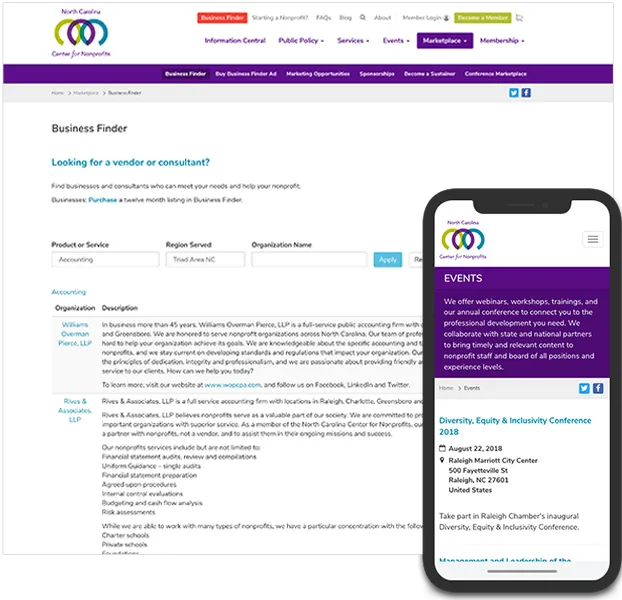
Members of the Drupal 6 site were limited to one Drupal user account per organization via shared login, which resulted in increased staff overhead for both the Center and member organizations as well as additional security concerns over sharing login credentials. All of the marketplace features on the site, such as their “Business Finder” (ad-buying directory), relied on an outdated custom eCommerce implementation, and the incomplete Salesforce integration. This meant that manual data entry was required to get relevant data from the website to Salesforce. Addressing and correcting these issues on the new site became a primary requirement for the project.
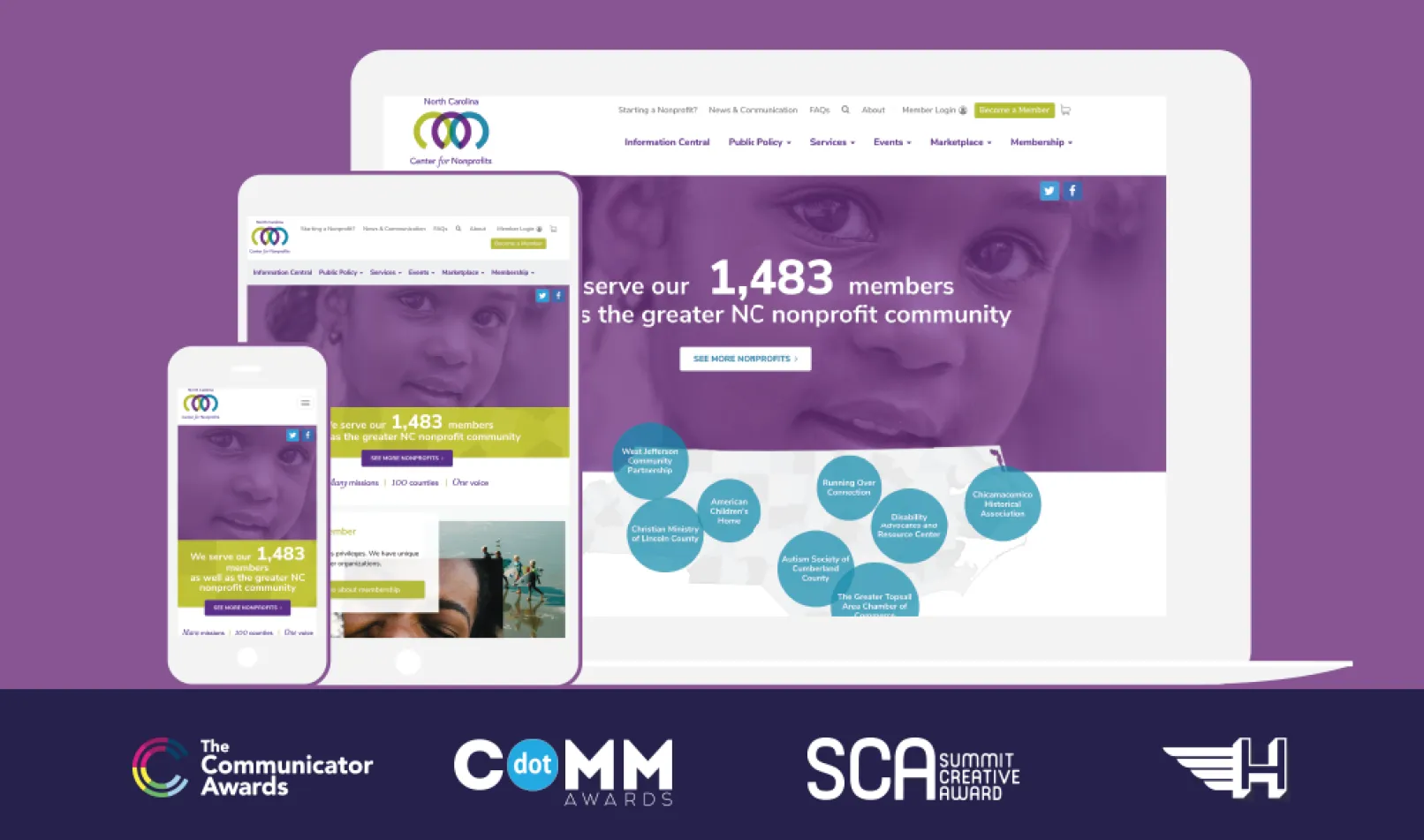
Site development and design work began in May 2017 and the site launched 9 months later. The biggest challenges encountered during the build hinged on the membership system reimplementation. DesignHammer concluded that switching from a system of shared logins to individual user accounts with various levels of access based on their association with member organizations would greatly improve nonprofit members’ ability to self-serve for routine tasks.
Outcome:
Switching from the shared login system to individual user accounts with various levels of access did greatly improve nonprofit members’ ability to self-serve for routine tasks. Not only did it improve the end-user experience, but it greatly reduced internal workload for Center staff as members were now able to manage all aspects of their membership and related content.
Other notable improvements include:
- Mobile support via responsive theme
- New site built to Drupal SEO best practices
- Reduced administrative overhead by enabling member organizations to administer their registration, renewals, organization details, job posts, associated user accounts, and other routine administrative tasks previously handled by Center staff.
- Reduced service fees by switching payment process provider.
In the four months following deployment of the new site, the North Carolina Center for Nonprofits tracked a 21% increase in the use of Job Boards, as well as a 7% increase in organizational membership.
Most importantly, with the new website working as a resource multiplier rather than an overhead liability, staff members are now better able to allocate their time helping member organizations and supporting the Center’s mission as opposed to being inundated with website-related customer support emails and phone calls.
Why Drupal was chosen
Drupal provides comprehensive support for Salesforce integration, as well as powerful eCommerce tools. With regards to members-only content, Drupal also offers granular user role-based permission functionality. The decision to use Drupal was based on the Center’s prior experience with Drupal, the existing amount of members-only content, as well as the state of available modules capable of driving membership management, content buying, job boards, and other features on the site.
DesignHammer considered both Drupal 7 and 8 for the new website, but some essential contributed modules had not been ported or were not yet production-ready for Drupal 8. This being the case DesignHammer selected Drupal 7 with Drupal Commerce and Salesforce Suite, leveraging a combination of migration and custom import tools to transfer the Center’s existing member data and website content.
Technical Specifications
Drupal version:
Key modules/theme/distribution used:
- DesignHammer considered using the Springboard distribution of Drupal for the integral Salesforce integration support, but decided the increased maintenance associated with a distribution, over Drupal 7 core with select modules, would not provide a positive ROI.
- DesignHammer opted to leverage the Salesforce Suite to handle the need for bidirectional data synching between Salesforce and Drupal.
- Commerce was selected because of available node purchase with expiration features and ready integration with Salesforce Suite.
- Webform was chosen to drive user-facing forms due to available Salesforce and Commerce integration options.
- Bootstrap is a solid base theme with a great grid system that saves time when theming for mobile, tablet as well as desktop.
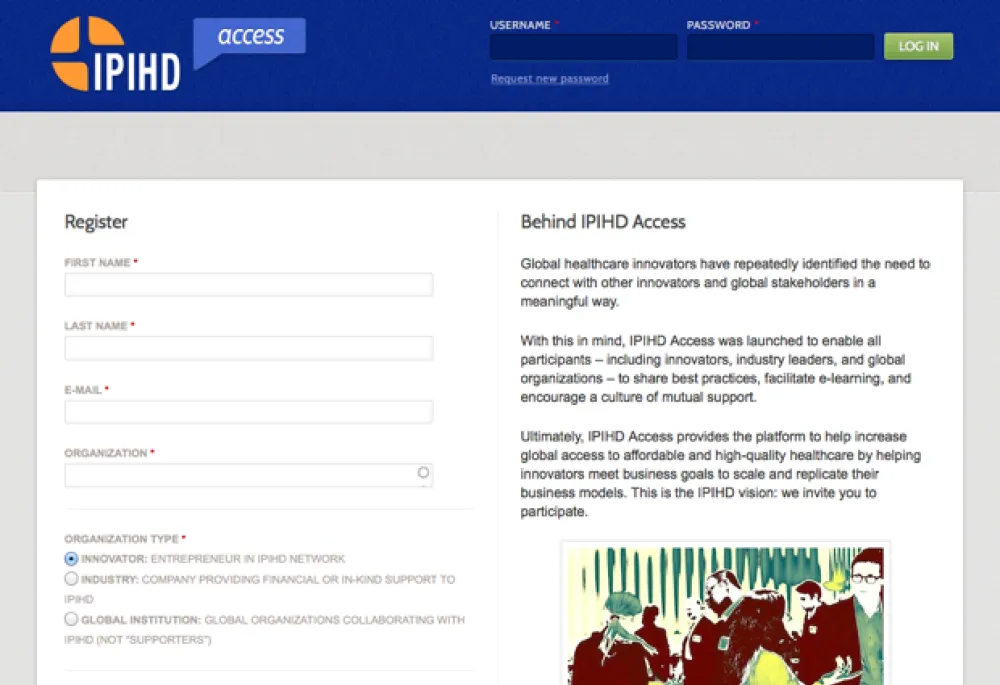
- The miniOrange SAML IDP module was used to provide SSO services using the Drupal user store to authenticate access to a third-party community provider.
- The site was distributed via git deploy in accordance with industry best practices.