Sector(s)
Team Members
Project Team
Project Lead, Product Owner, Channel managers, Infrastructure Specialists and Architects from Erasmus University Rotterdam
Team members without Drupal.org account: Jules Ernst and Milton Rangazas
Visit the site
Visit the siteOrganizations Involved
Community contributions
Because Drupal 8 was still quite new at the time of execution of this project, existing modules often needed improvement. During the project over a hundred patches have been created and submitted to get rid of growing pains.
Contributed
- Drupal 8 core patches submitted
- Many Drupal 8 modules patches submitted
- Views_reference module improved
While the initial project has concluded, ongoing efforts now focus on refining and improving the system. The university is committed to contributing custom-made, yet universally applicable modules to the Drupal community as part of our ongoing commitment to development and enhancement.
Recent contributions include:
- Ckeditor5 entity browser
- AJAX Placeholder
- Easy Responsive Images
- Entity Tracking API
- Entity Information
- Views Reference Field
- Node Revision Delete
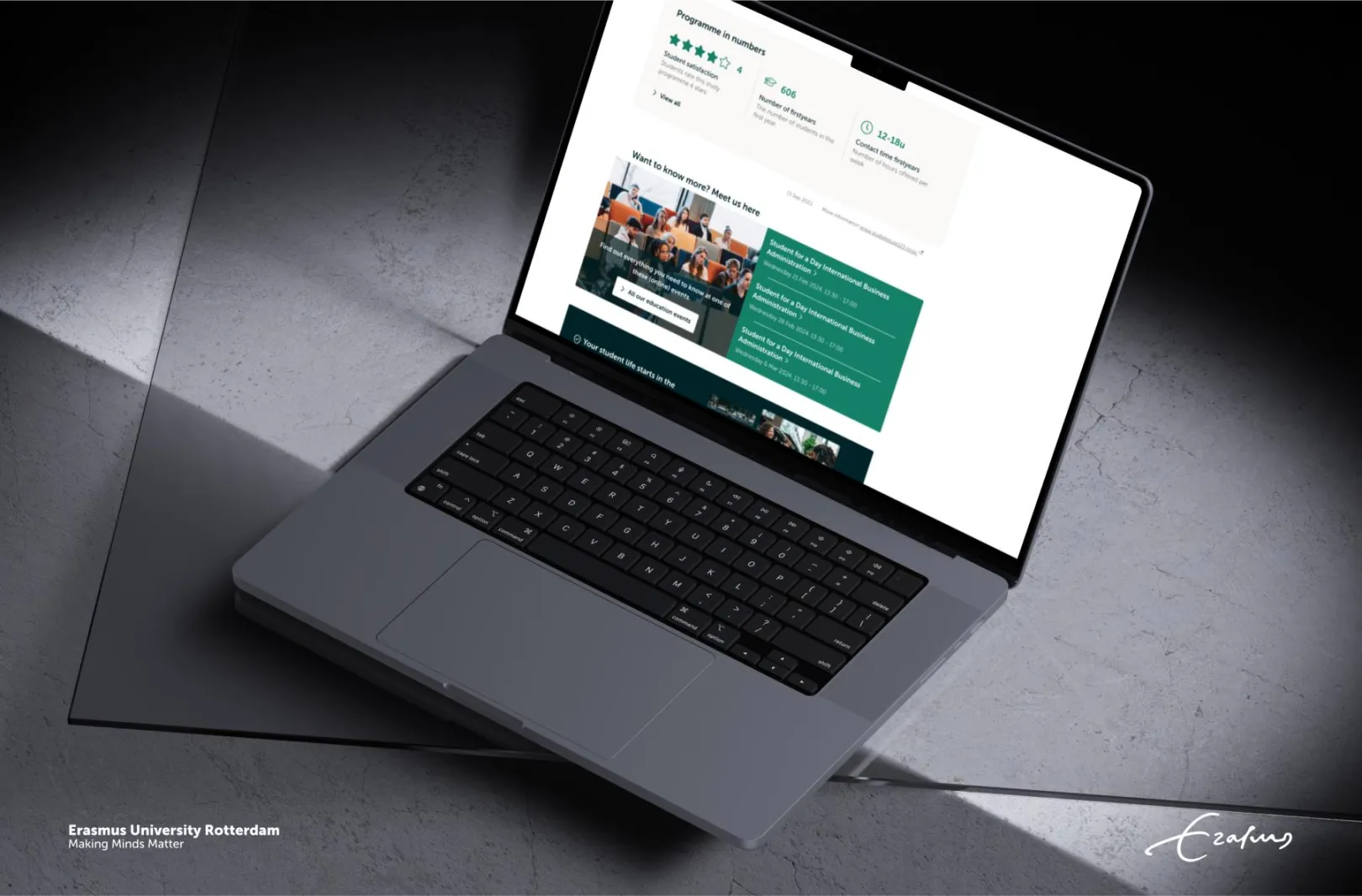
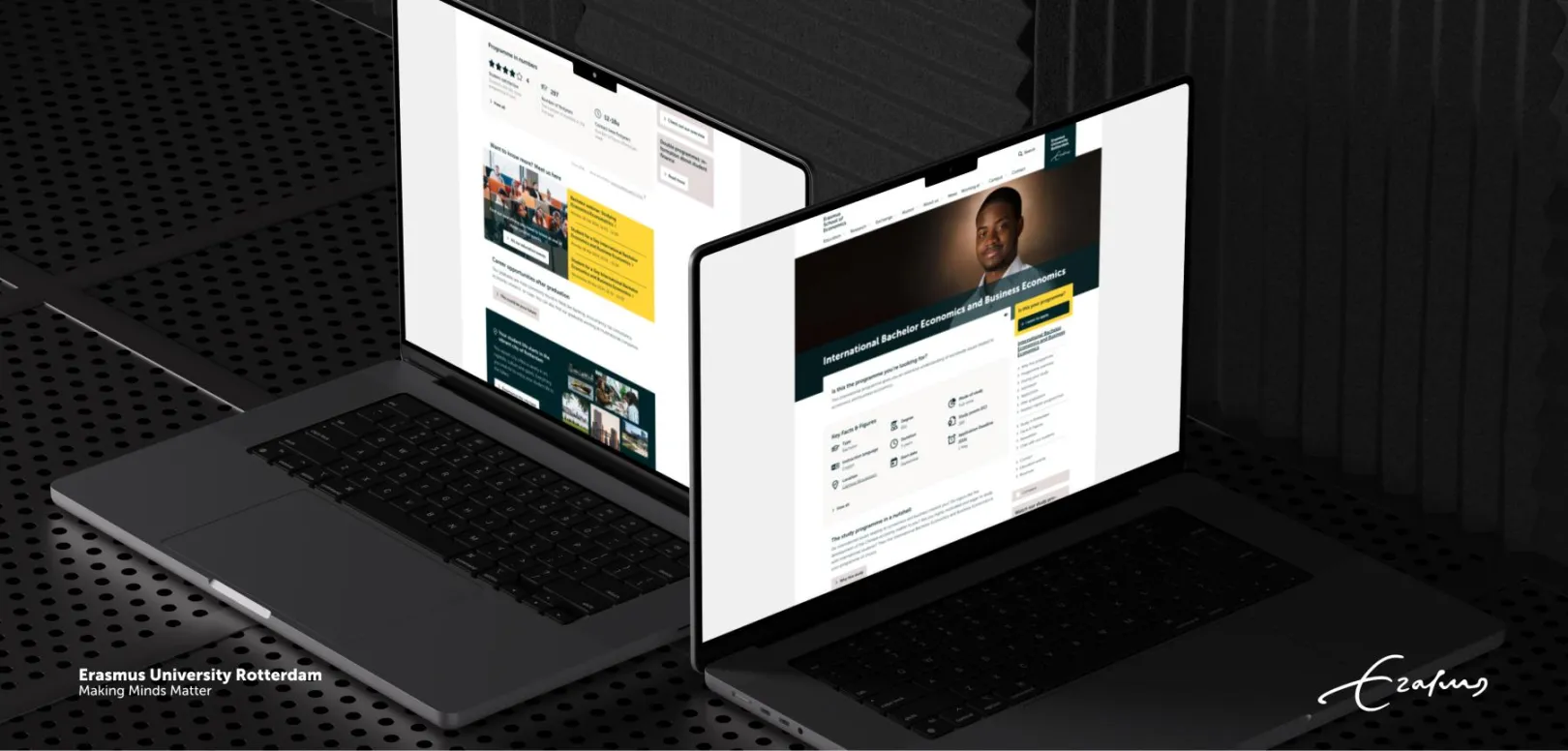
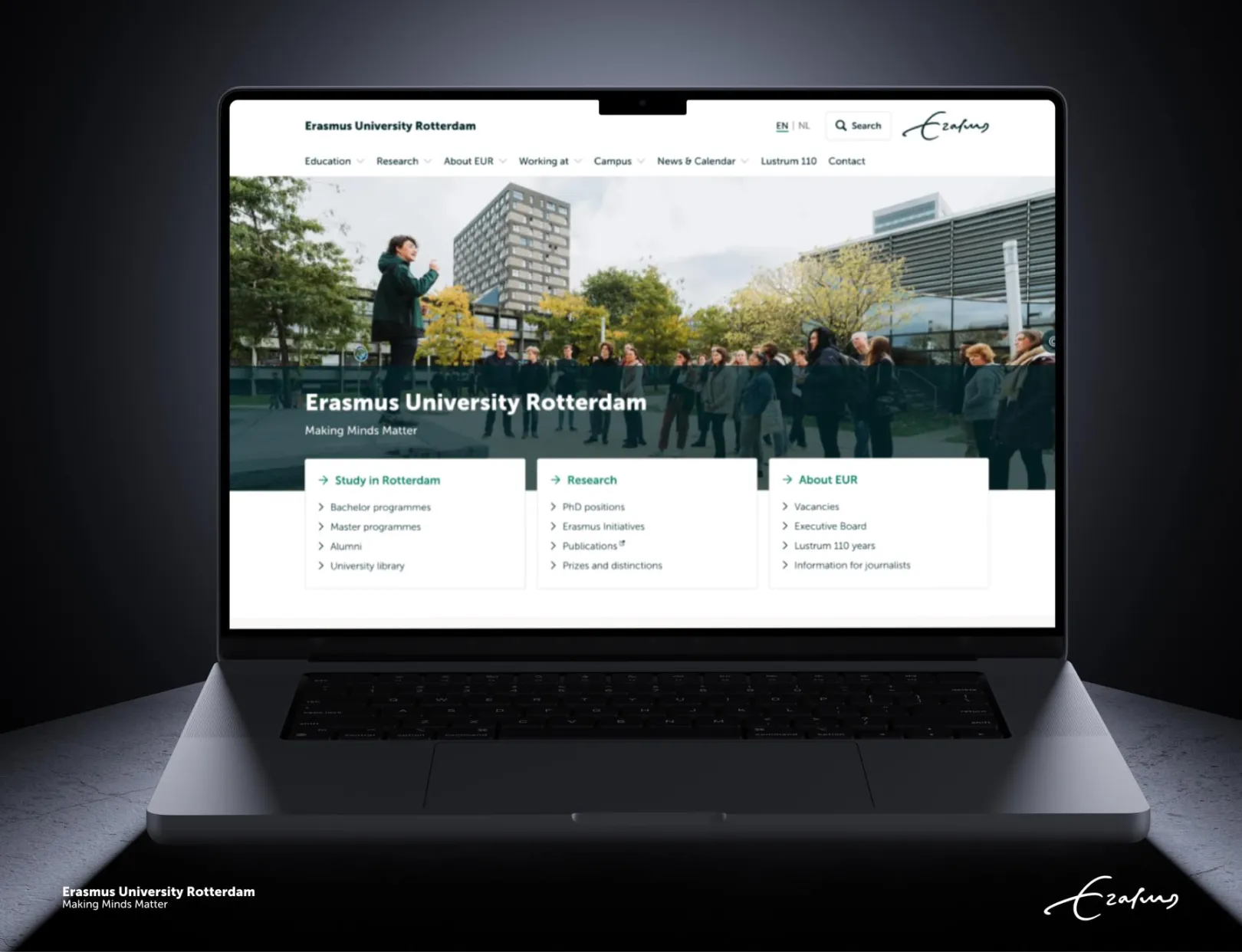
Drupal agency iO successfully delivered the largest Drupal 8 project in The Netherlands for Erasmus University Rotterdam. In only 10 months a complete new, secure, future-proof and user-friendly Drupal 8 platform was accomplished. This platform, currently operating on the latest Drupal version 10, replaced the outdated TYPO3 system and consists of the primary eur.nl website, along with 8 new websites for the faculties and 9 new websites for the institutes. Erasmus University Rotterdam is positioned in the top 3% of best universities in the world.
About the project
Reasons for a new CMS
A new Content Management System for Erasmus University Rotterdam was necessary because the existing CMS offered insufficient options for realising the university’s specific business requirements and wishes. Examples include a stronger user experience, strengthening of the Erasmus University brand, more effective student recruitment, and development of its research profile in the Netherlands and abroad. The new website would help achieve these organisational goals. And with the new website, the university could achieve its ambition to provide the online visitor with the right content, on the right channel, anytime.
Goals
The objectives that have been set for the project:
- The old system (TYPO3) had to be switched off latest at December 31, 2017.
- Newly installed CMS Drupal 8 as basis for multichannel and -content strategy.
- Migration of relevant external and internal content: from 80,000 pages to approximately 20,000 pages.
- An improved cross-organisation editorial model: shared roles, editorial formulas and ways of working.
- Implementation of ‘specials’, such as forms management, FAQ’s and Payment function.
- Improved navigation structures and mobile first. The new website has to be scalable on all devices.
In April, 2017 on campus a team of 18 Drupal developers, designers, testers and an architect started working on the project.
Outcome
All objectives have been achieved within time and budget.
- The new website was launched on December 11, 2017
- The website consists of the primary website and 8 new websites for the faculties and 9 new websites for the institutes. For example: https://www.eur.nl/en/ese/, https://www.eur.nl/fw/, https://www.iss.nl/, https://www.mastercitydeveloper.nl/, https://www.ihs.nl.
- The complete new Drupal 8 platform is delivered within 10 months. 80,000 pages and 20,000 media items have been reviewed and reduced to 12,000. Initially through automated migration, but subsequently each page was checked and improved by a team of 30 editors.
The new website consists of:
- 22 Content Types
- 37 Paragraph Types
- 2 languages
- 21 Site Contexts (subsites for the faculties and institutes)
- 7 roles
- 5 webservices
Challenges
The main challenge turned out to be dividing the website in one main site with ‘subsites’ for the faculties and institutes, but with reuse of content. The different subsites have their own navigation menu, language (English/Dutch), color, logo, design and a clean URL for findability. All those specific characteristics have to be taken into account, but in the meantime the accessibility of content is very important as well (eg the minimum colour contrast ratio requirements for visually impaired). Furthermore the faculties and institutes want to share content but at the same time want to be able to add content to it. Because this results in different sources with similar content, search engines could impose SEO penalties.
These different aspects all together (shared content, bilingualism, security, SEO, customised design per site, workability, accessibility) formed the biggest challenge.
Why Drupal was chosen
Erasmus University Rotterdam chose to have its new website platform built in Drupal. Drupal fitted the requirements and technical infrastructure best. Key principle for the project was to manage multichannel content in one CMS, which makes it possible to use content (that is created once) in multiple websites and channels.

Technical Specifications
Drupal version:
Key modules/theme/distribution used:
Groups
We used the Groups module to distribute the ownership of the content across different editorial teams, each having its own group of content to maintain. We also created custom modules to be able to add other content than nodes to a group, like media and polls.
Paragraphs
We used Paragraphs to enable flexible content generation in combination with restrictions to be able to use the content on all screen sizes. For example, we allow media inside WYSIWYG fields. Within the project we created various paragraph types to support a wide range of content opportunities for the editor.
Viewsreference
We used the Viewsrefence module to create a paragraph type that can include various views of the existing content of the site. This way we can easily reuse content within other pages using the filtering options provided by our custom made Viewsreference plugins.
Search API SOLR
Using SOLR as the backend of our search options and as the backend of the various views on the website that contains a lot of content, made a huge performance difference.
Memcache
Using memcache for caching tables created a big performance gain.
Varnish
Using the varnish caching server saves a lot of valuable requests to our Drupal environment.
ReCaptcha & Honeypot
While we have various webforms on the website these modules prevent a lot of spam messages.
Bigmenu
Having a big menu structure is hard to manage. We used Bigmenu to make the menu structure workable again.