For over 100 years The Wildlife Trusts (TWT) have been caring for Britain's wildlife. This UK-wide group of local wildlife charities now looks after 2,300 nature reserves, supported by a combined 800,000+ members, The Wildlife Trusts' UK website acts as a central hub for 46 local trusts, by managing content on nature reserves, volunteering, events, and member activities across the country.
TWT appointed CTI Digital as supplier to deliver a new Drupal 8 based platform for the nationwide web site and to act as framework for bringing local trusts into a single harmonised system.
About the project
Client's goals
The Wildlife Trusts' primary concern is the conservation of wildlife in the UK, so their digital experience had taken a backseat. This project sought to address that by delivering on the following goals:
- To create a new mobile-friendly experience for Wildlife Trust website users
- To share content between Wildlife Trust websites using a customisable website template
- To recruit volunteers
- To encourage more people to take action for wildlife
- To increase online memberships and donations
Together we believed this could be achieved through a more responsive website for mobile users and a fluid customer journey between trust websites.
Localisation of trust websites
We rebuilt the central and local websites to provide the option of local trusts to take up a more united front, raising consistency as users navigate across each trust. The interface and branding were aligned using custom Drupal modules, to allow flexible design for each local site, whilst maintaining consistency. Page owners can personalise their logo, strapline, and colour scheme from a predetermined selection, allowing personalisation whilst maintaining structural and stylised architecture. This increased cohesion for visitors viewing multiple trust websites.
We also implemented an intuitive component-based page structure to allow content creators to easily manage a mixture of media, text and widgets, whilst still maintaining template consistency across pages. In order to allow admins to easily customise Drupal's Views pages (by default, not a content-editor-friendly UI itself) we created a custom entity to make editing the header region of all Views pages easy.
Centralised Content Management
The Wildlife Trusts’ sites need to present a huge amount of content, in a way that is logically-arranged and easily-navigable for the end user.
As such, we wrote a bespoke code solution to allow for migration and content sharing between sites. This proved particularly useful for universally relevant content, including; Nature Reserves, Events, Species and Habitats, Actions and "My Wild Life". From the national level, down to the local sites, content is canonicalised and can be selected or switched off as appropriate to avoid duplication. This also provided an easier way for individual trusts to personalise and catalogue the content that was most important to them, whilst maintaining structural, stylised consistency between subpages.
Read in more detail how this was achieved on our developer blog.
Empowering Local Trusts
The custom branding tools and central hub decentralise the control of content distribution and give individual trusts the power to manage their own website. Whilst content comes from one place, the easy distribution and management mean that local trusts are no longer dependant on a central provider and can tailor a more relevant service.
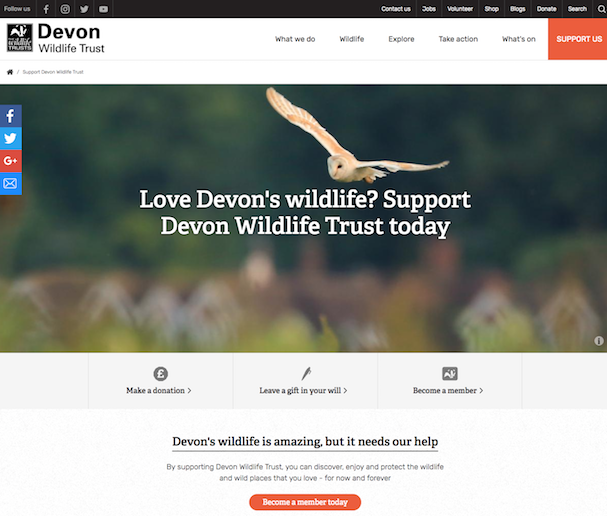
Empowering local trusts to manage, post and edit their own content means they can promote the information that their community wants to see, when they want to see it.
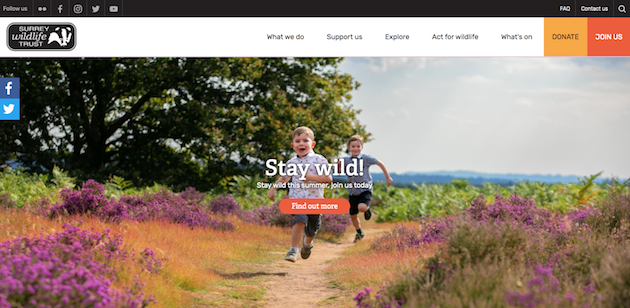
The members of the Wildlife Trusts are what keeps the organisation alive, so it’s a great win to be able to provide them with specific content relevant to their local area. This improves the experience of users up and down the country and their relationship with the trusts.
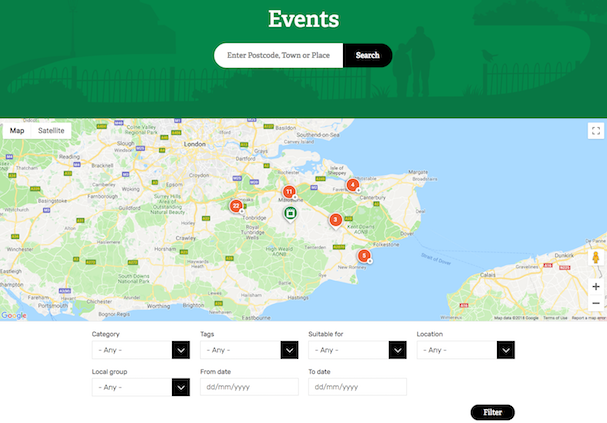
User Journeys
We improved the user journey, by returning global results from all Trust sites when users search by location. This removed site restrictions and allowed users to access all the information relevant to their location. Ultimately, by connecting the digital presence, we helped to promote the essential nature of the trust network as a whole.
Finding a Nature Reserve
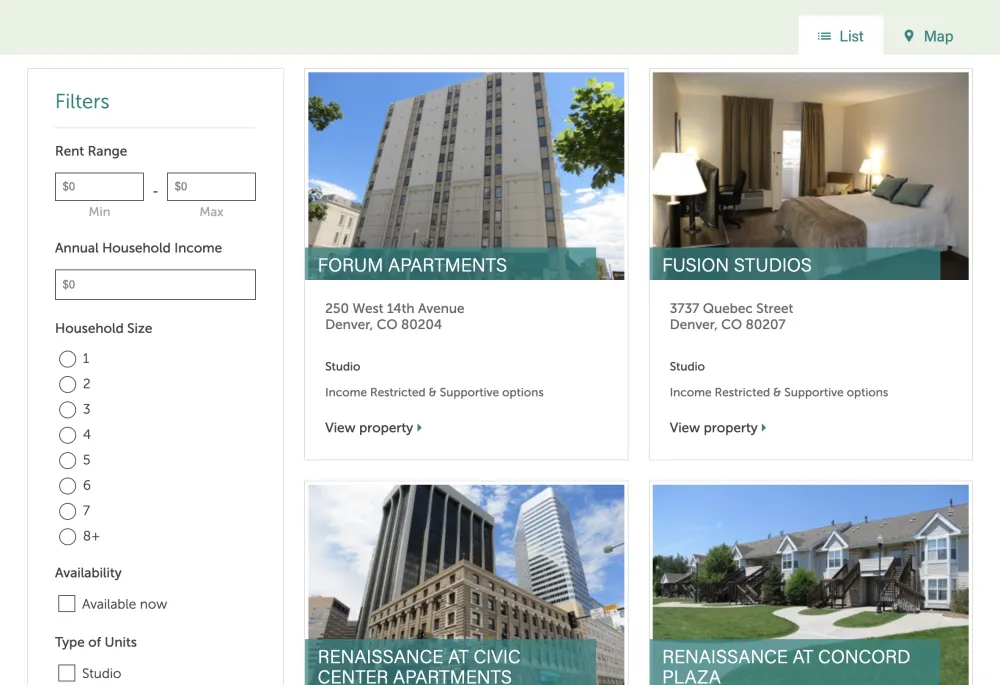
With over two-thousand nature reserves to choose between, we needed to present a vast array of options in an interactive and user-friendly fashion. The ‘Find a Nature Reserve’ page integrates Google maps with a postcode search function and a range of filtering options, to help users find their ideal day out.
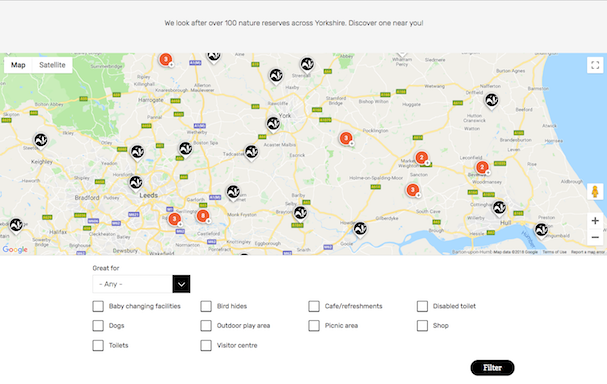
Information from local trusts is pulled together into a centralised location, and then can be filtered by location, facilities and “great for…” suggestions, to target specific wildlife types.
The filtering system involves a variety of tick box and drop-down options, which all adjust the map and list view on the central site, before linking through to the individual local sites for further information.
Mobile Optimisation
One of the primary functions of the website is for identifying species whilst on the move. Therefore, it was essential that the website had responsive images, providing quicker navigation on mobile and tablet for the everyday adventurer.
The Results
After just over a year working on the project, the National Wildlife Trusts site was launched in May 2018, with the Surrey site following a couple of days later. To create a consistent and seamless user journey, the wider trusts’ sites are planned for staggered release, to join these newly launched sites with an updated appearance and fully-functional interface.
We are pleased with the way Drupal has enabled us to develop our new network of Wildlife Trust websites. Millions of people visit our websites each year and we hope it’s easier for people to find information on how they can get involved, support their Wildlife Trust and take action for wildlife.
Adam Cormack, Head of Communications at Wildlife Trusts.
The end result is an interactive and engaging site, to boost involvement with and enjoyment of everything that The Wildlife Trusts support. The new page style is cascading through the site, simplifying and modernising the way that key information is portrayed.
Why Drupal was chosen
The Wildlife Trusts is a federated organisation with 46 local trusts operating with a high degree of autonomy. Drupal has highly evolved available features allowing the CMS to be configured to allow local trusts freedom whilst maintaining a level of central oversight.
Flexible page layouts
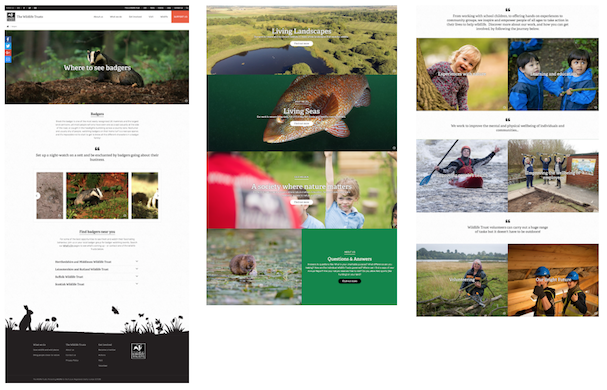
You will notice the site features extensive use of video and rich media, all accomplished through simple to use intuitive interfaces built with Drupal's powerful Paragraphs module. Rather than create rigid page structures, editors assemble layouts from a library of available components.
Rather than create rigid page structures, editors assemble layouts from a library of available components - using Drupal Paragraphs
They are able to create varied and visually interesting content whilst maintaining brand consistency, supporting accessibility and delivery across multiple devices.
Welsh language
There are currently 5 Welsh trusts, so we wanted to ensure that their users were also accommodated. Drupal has out of the box support for Welsh language translation enabling Welsh speakers to view the sites in their chosen language with ease.
Drupal has out of the box support for Welsh language translation enabling Welsh speakers to view the sites in their chosen language with ease.
Fast mobile experience
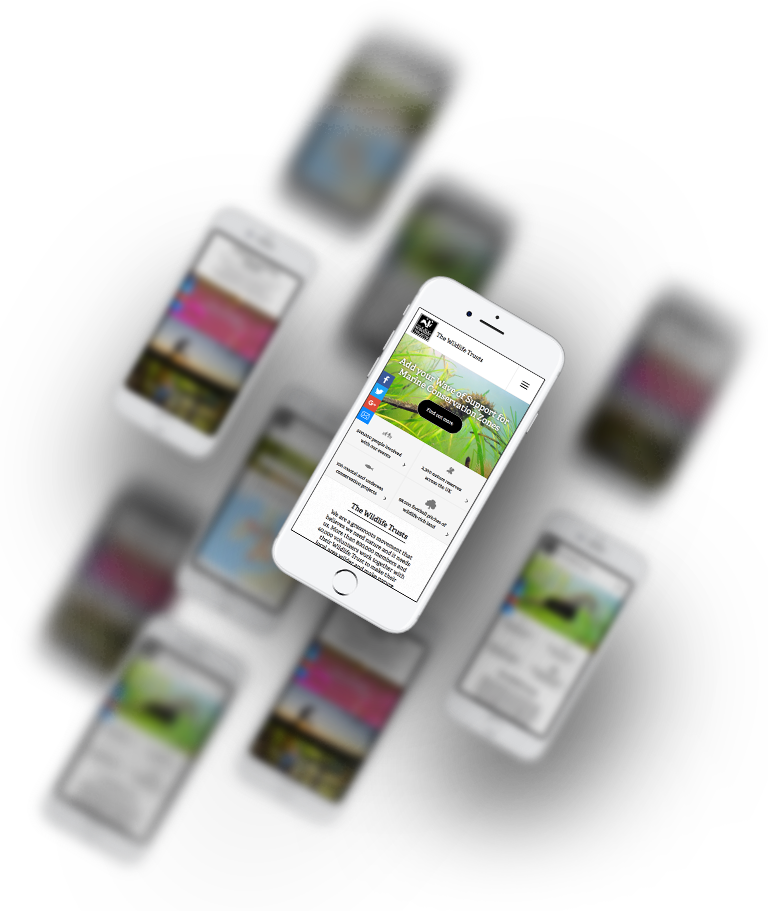
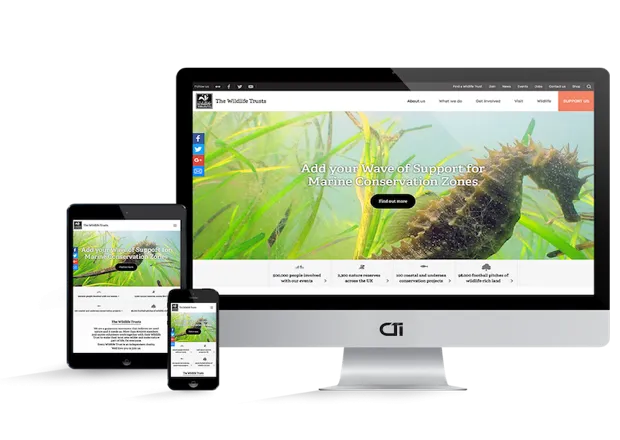
One of the primary functions of the website is for identifying species whilst on the move. Drupal contributed modules provide the ability to have responsive images, providing quicker navigation on mobile and tablet for the everyday adventurer without additional complexity for content managers.
Technical Specifications
Drupal version:
Key modules/theme/distribution used:
Paragraphs
TWT wanted to offer maximum freedom to content editors for page layouts. It was also important to have an information architecture which was scalable to suit both small local trusts and the national presence. The paragraph module was ideal for this use case.
JSON API
Content needed to be searchable by location: nature reserves, events, jobs, etc. As you might expect, the national site needed to know about all of the content that existed on the regional sites. Rather than expecting administrators to manually duplicate content, we used migrate from Drupal 8 core and jsonapi modules to share content between the sites. Read our blog for more details.
We used migrate from Drupal 8 core and jsonapi modules to share content between the sites.