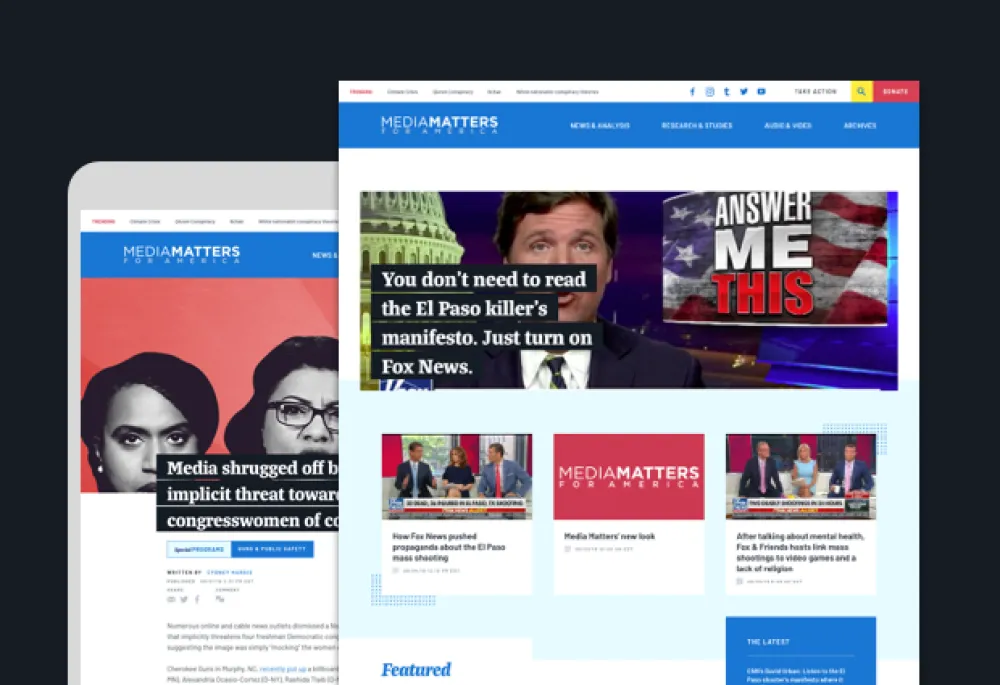
The Guttmacher Institute is a leading global research organization for sexual and reproductive health and rights. For decades, the institute’s reporting, data and analysis have informed public policy and shaped perspectives all over the world. The Guttmacher Institute believes good policy starts with credible research and seeks to make that research widely available to those who need it the most.
By the time of this project, the Guttmacher communications team had already transitioned to using the web as its primary communications channel. Its savvy, diverse audience – comprised of journalists, policymakers, researchers and human rights advocates – used guttmacher.org to access in-depth reports, peer-reviewed journals and datasets. But the organization’s fast-growing content offering was outpacing the capabilities of its proprietary web publishing system. The Guttmacher Institute needed a digital platform to beautifully deliver its content, provide flexibility and facilitate innovation – both now and in the future.
About the project
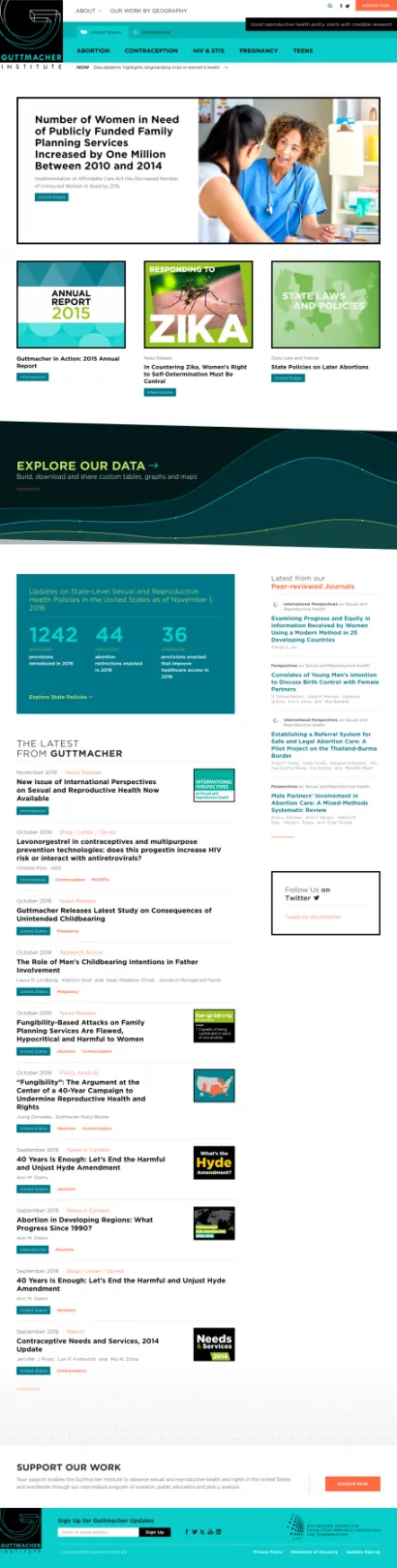
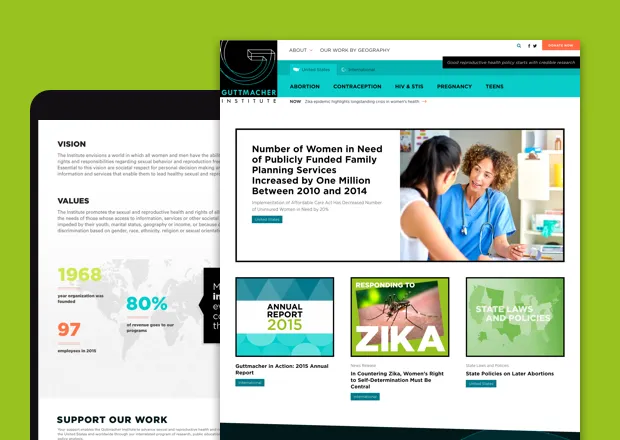
It was clear from day one that redesigning guttmacher.org would be all about its content. The Guttmacher Institute publishes long-form articles, peer-reviewed journals, fact sheets, state policy information and statistical datasets across a broad spectrum of reproductive health topics. Their previous navigation was no longer serving their needs or the needs of their users. We identified high-value pages and user interactions, simplified navigation and rethought its complex collection of categories.
We crafted a content strategy that:
Brought the organization’s most important topics into sharp focus
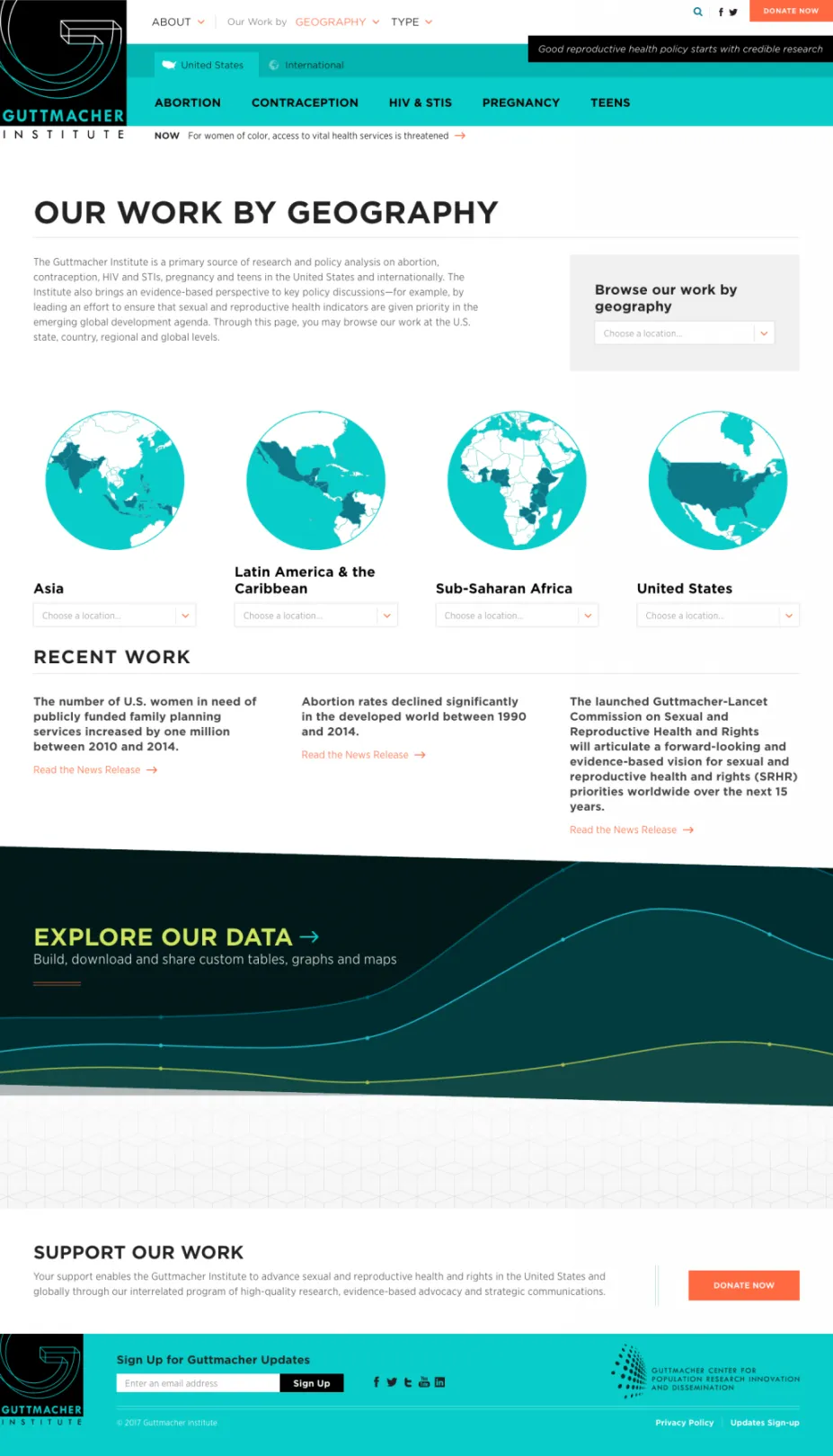
Prioritized geography as a way to find content
Facilitated content discovery
Fostered meaningful user interaction with Guttmacher’s datasets
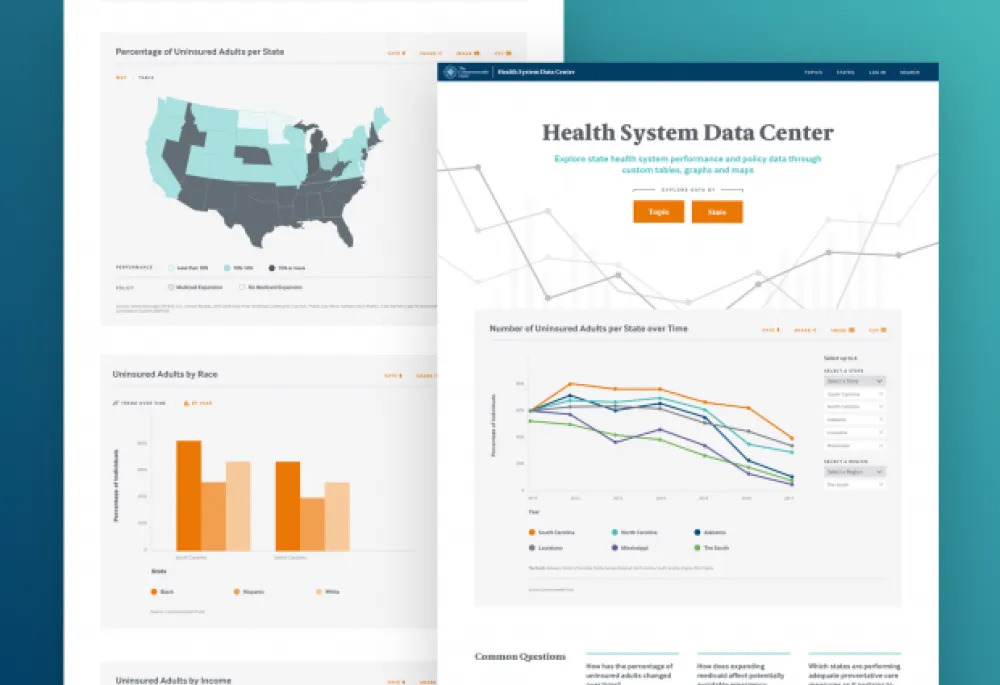
Guttmacher’s published datasets represent a huge percentage of the institute’s digital content. An interface was crafted that allowed users to select the format most relevant to their specific uses – from simple tables to interactive trendlines and maps.
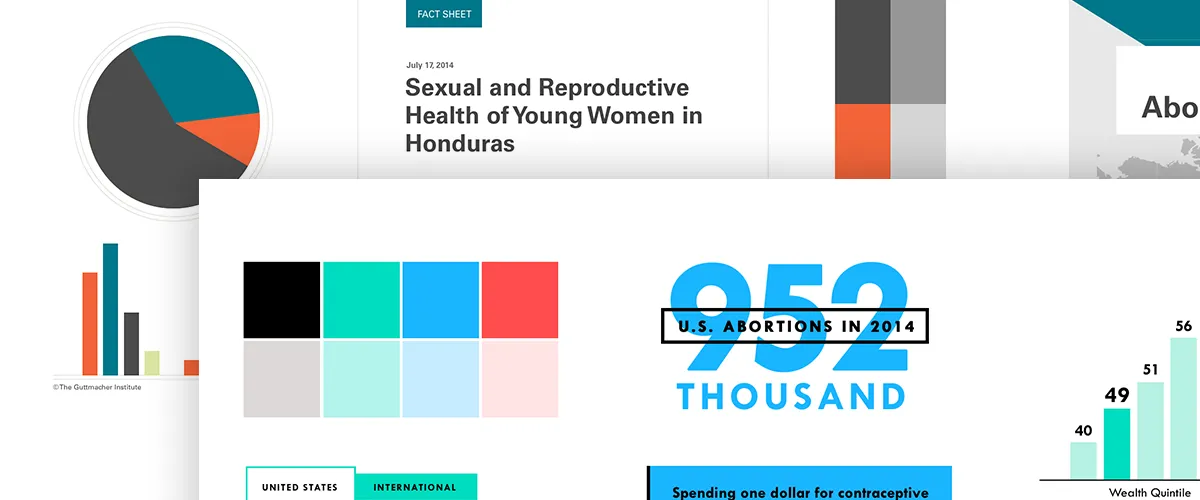
In the creative process, it was important to create scalable design systems – not just individual page designs. We helped establish a visual framework and style guide to standardize infographic designs produced by the institute’s communications team.
Bold, clear typography – with strong contrast and generous whitespace – provide clear content hierarchy and support a pleasant, uncluttered reading experience.
Why Drupal was chosen
The flexibility of Drupal helped to effectively migrate more than a decade’s worth of content and data. By utilizing the Migrate module, we were able to push thousands of pages into Drupal with ease. We developed standardized spreadsheets for importing content using the Feeds module, allowing Guttmacher staff to directly manage a number of specific migrations leading up to – and even continuing after – launch.
Technical Specifications
Drupal version:
Key modules/theme/distribution used:
A robust search solution was critical to the success of the project. Guttmacher’s content is used by reporters, researchers, policy advisors, and subject matter experts. Apache Solr provided a highly customizable, faceted and weighted search that search webpages and file uploads.
Guttmacher monitors reproductive rights across the globe, in order to tell their story they needed to render maps using data. The Leaflet module quickly connects Drupal with a library for building interactive maps, minimizing the need for custom code.
Nodequeue (and Entityqueue in Drupal 8) is an extremely handy utility module that gives content editors the ability to aggregate arbitrary content in a completely manually-set sorting order. This module is used for selecting featured content on the Guttmacher site.
Adding a meta description as well as other meta tags in the head of your page is best practices SEO. The metatag module allows you to add these tags to nodes as well as pages generated by Views or Panels.