Sector(s)
Team Members
Project Team
The entire project has been done by one person. I am essentially a journalist and not a techie by any measure. I have learnt Drupal over the years through trial and error. I chose Drupal 7 simply because I am not yet familiar with using Composer which is mandatory for Drupal 8.
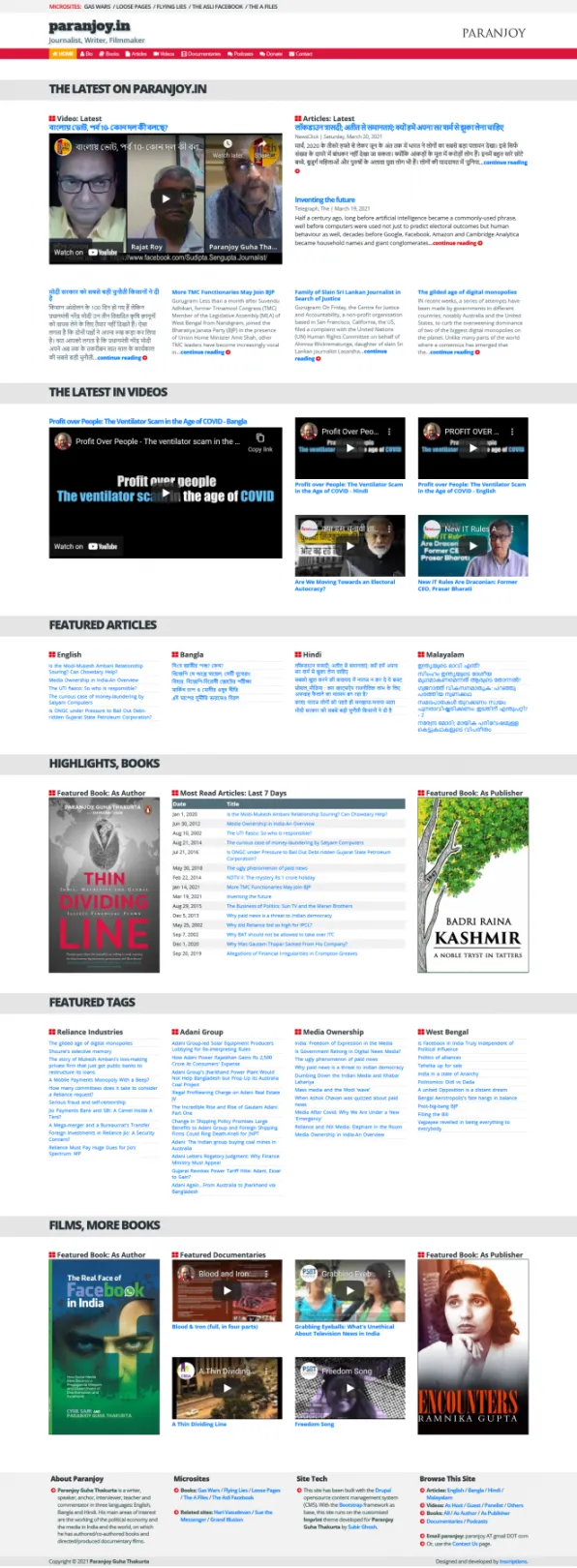
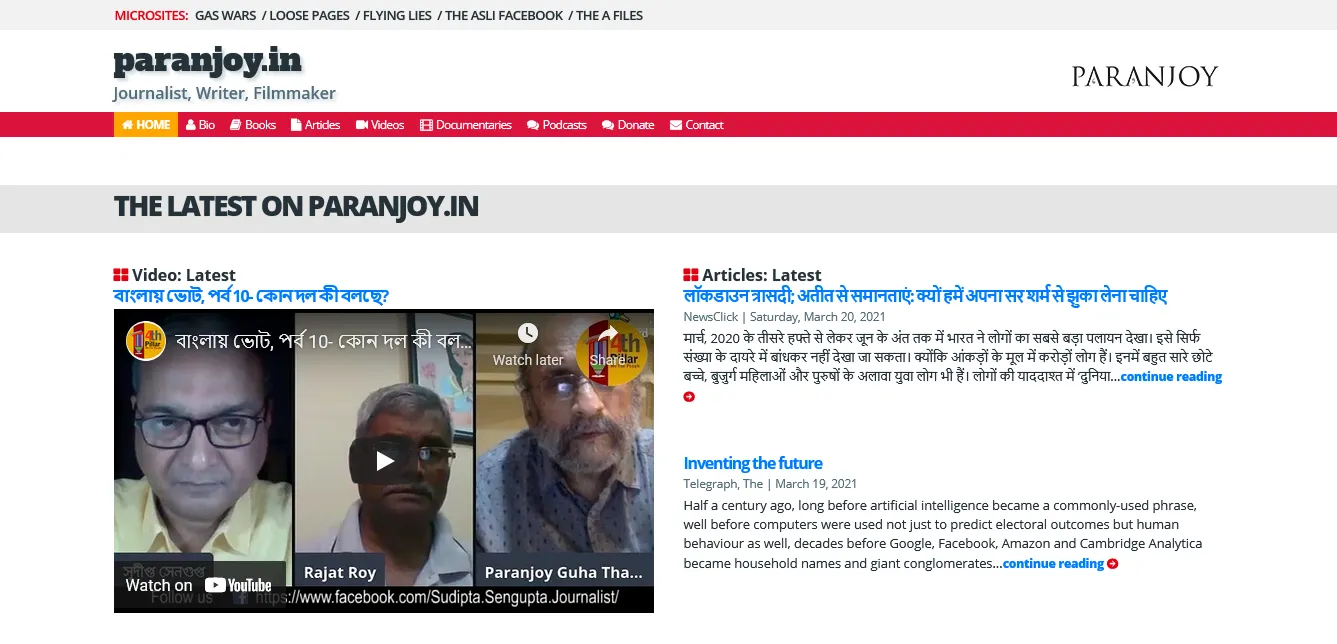
Paranjoy Guha Thakurta is an Indian journalist and writer. His main areas of interest are the working of the political economy and the media in India and the world, on which he has authored/co-authored books and directed/produced documentary films. The paranjoy.in archives his work. Guha Thakurta also has a bunch of other websites, mostly homepages of books written or published by him.
Since the latter were becoming unweildy and the sites seemed all over the place, it was proposed that it would be a better to bring all of them under one umbrella and have some kind of thematic continuity.
[UPDATE: This case study was for D7. All the installations have since been upgraded to the latest version of D10. The design remains the same. Well, almost.]
About the project
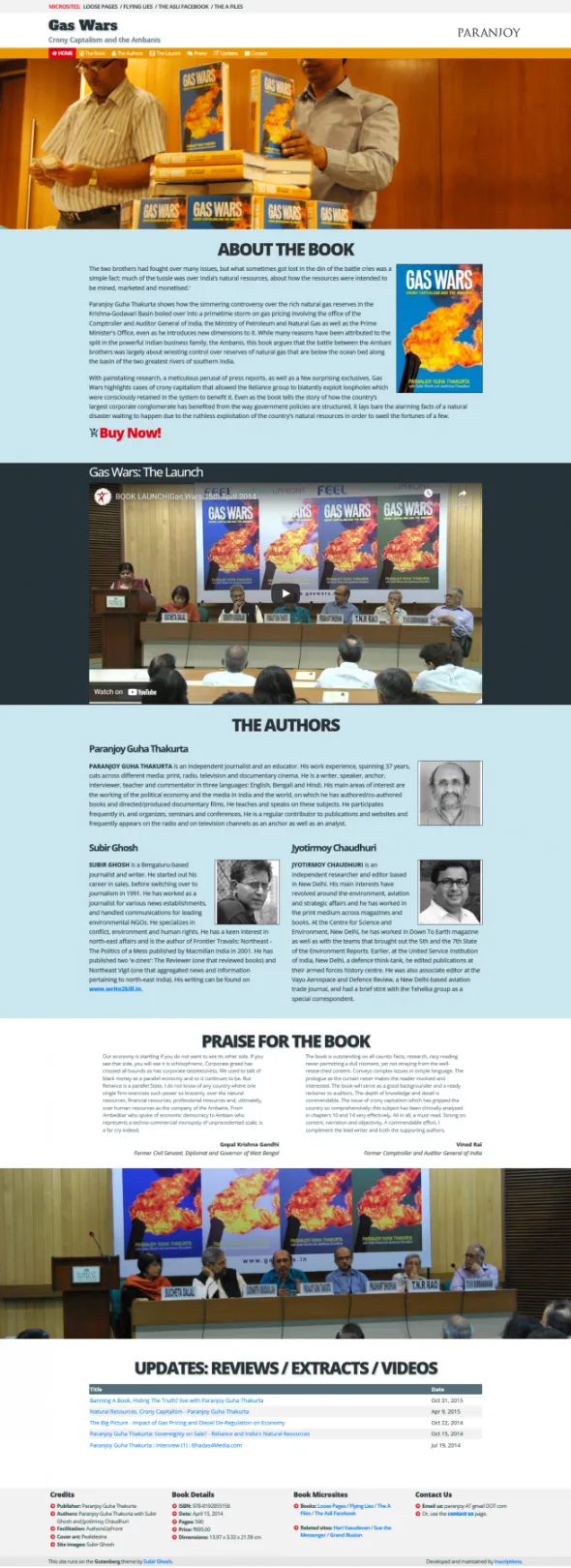
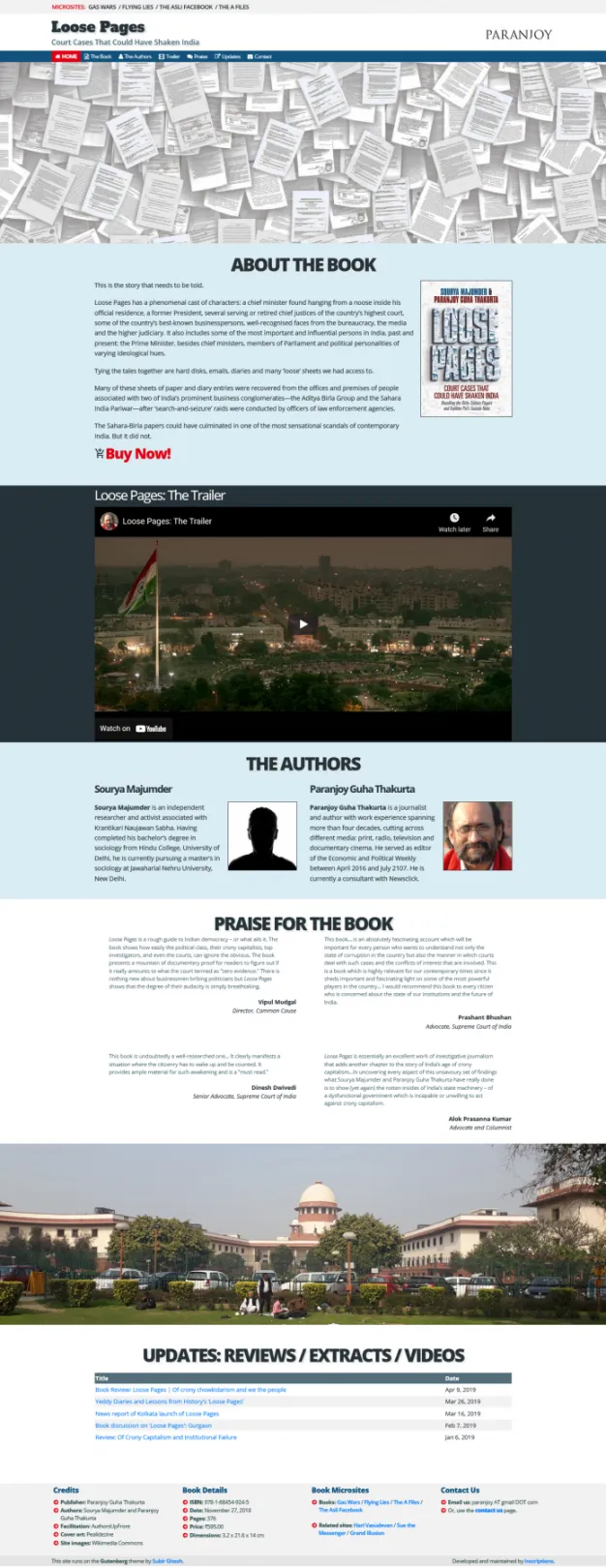
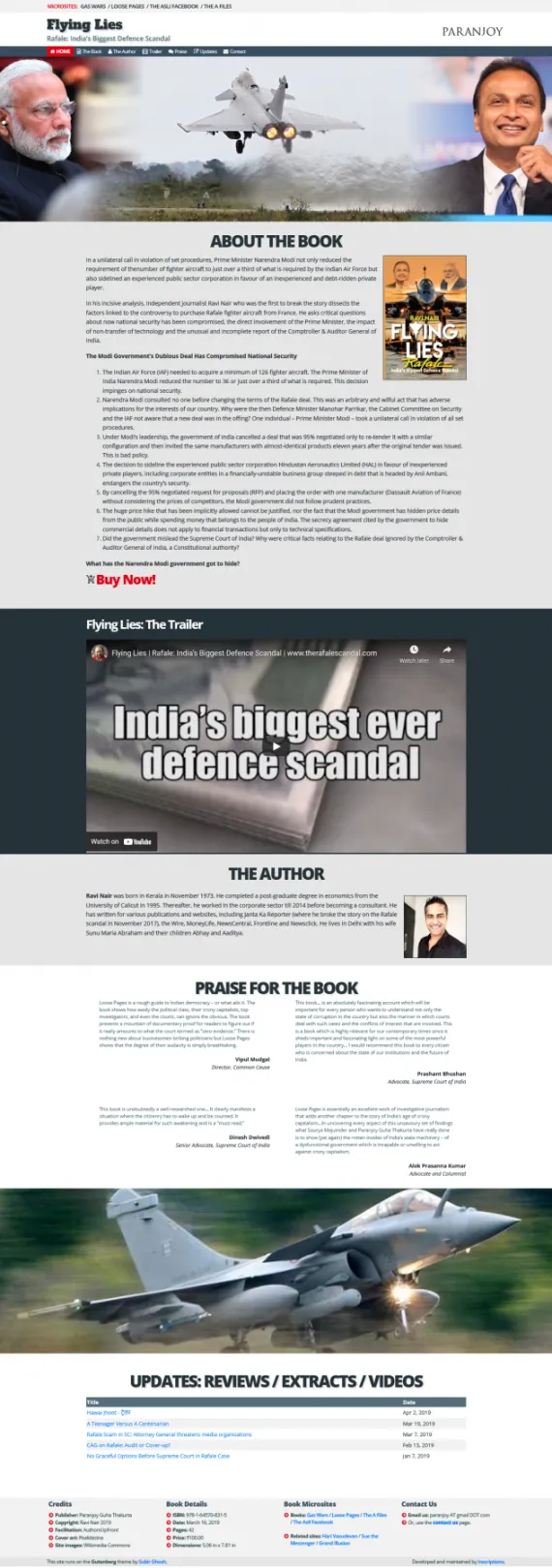
Overall architecture: There were six distinct websites in all--the primary one (paranjoy.in) and five other standalone websites, all installed on individual domains. The five ancillay websites were converted into microsites on individual sub-domains. This was done using Drupal's multi-site functionality. Two of the earlier sites were static HTML sites which had to be converted into Drupal sites.
The sites/microsites:
- paranjoy.in: primary site
- gaswars.paranjoy.in: Microsite of bok titled Gas Wars
- loosepages.paranjoy.in: Microsite of book titled Loose Pages
- flyinglies.paranjoy.in: Microsite of book titled Flying Lies
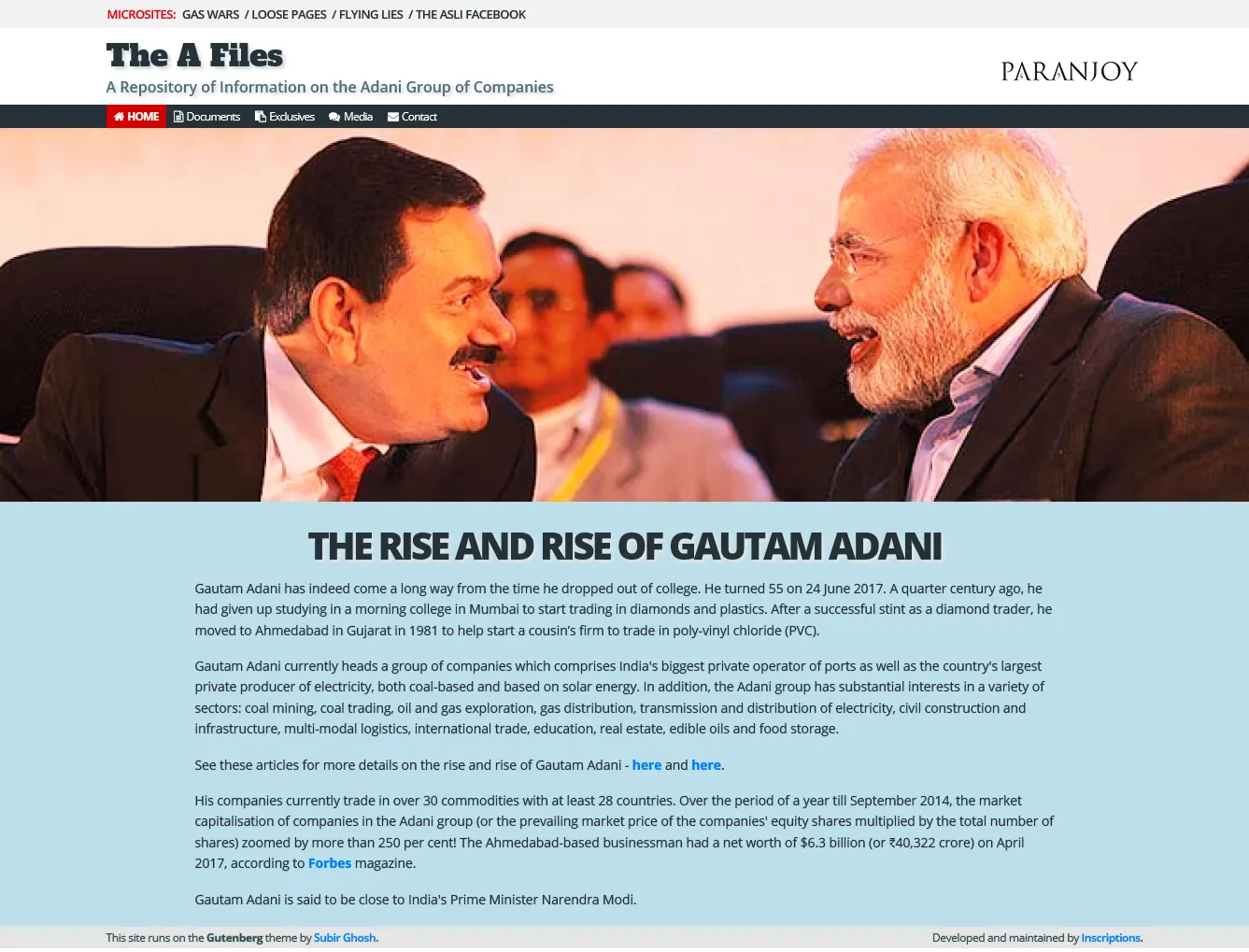
- theafiles.paranjoy.in: Repository of info on the Adani Group
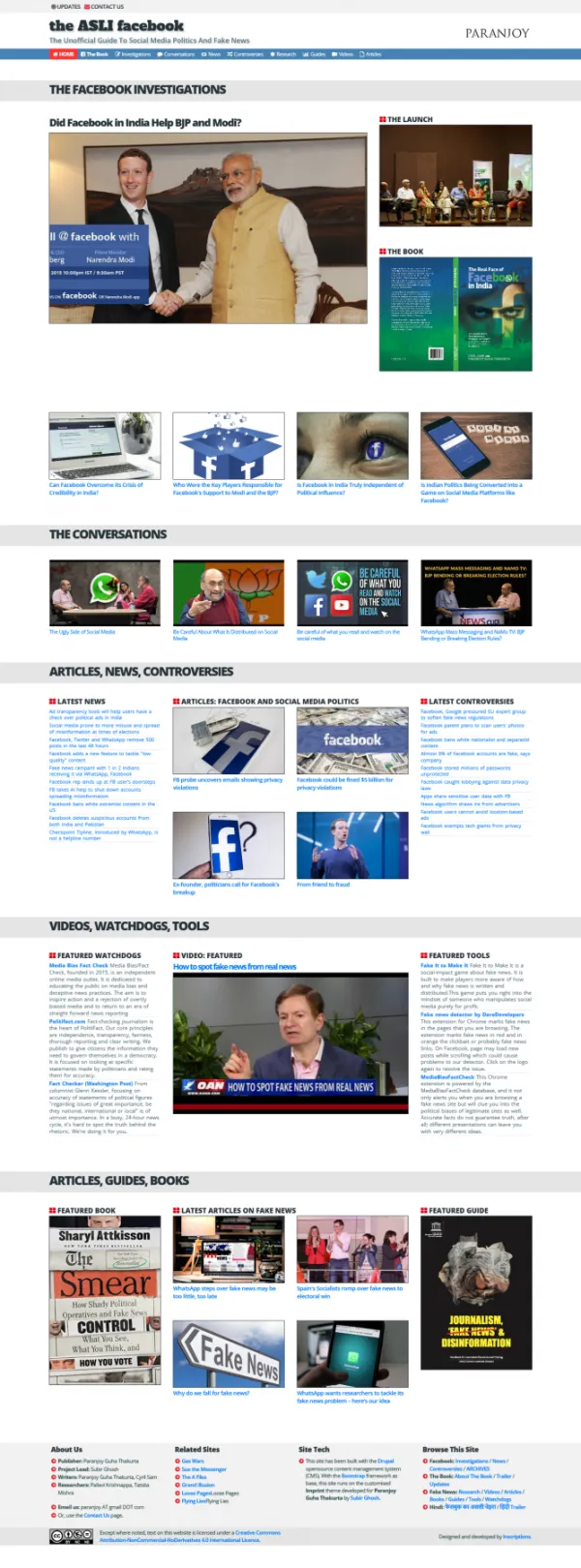
- facebook.paranjoy.in: Microsite on book titled The Real Face of Facebook and also pertaining to the Facebook/WhatsApp comine as well as fake news
Thematic continuity: The question of thematic continuity was on top of the mind whule redesigning and restructuring (a little bit) all the sites. It was decided that the thematic continuity would primarily be in the form of the masthead areas, footer areas and font styling. Colour could vary a tad, and so could the column grid.
Rebuilding themes: This was the first thing that was done. Now, there is one base theme, one sub-theme and four sub-sub-themes. All the earlier CSS files were more or less properly ordered and named, and therefore it was not all that difficult to get them in order. Some minor renamings had to be done, of course. For instance, on one site the article lists were named "article-list" and on another it was "articlelist". These aniomalies were the first to be rectified and synchronised.
Using CSS variables: Using SASS/SCSS was considered initially, but this idea was dropped in favour of using CSS variables. Most of the variables (both colours and other font styling elements) are defined in the base theme. Therefore, it became easier to fix all the sub-themes and sub-sub-themes.
Module usage: Each site had its own usage and need for different modules (though 2-3 book sites were quite similar). These were sorted out by uninstalling a lot of needless modules. and re-confuguring exisiting ones so that all were identical (to the extent possible).
DS layouts: All the sites make extensive use of the DS+Views combination. And each had its own set of DS layouts. This was a bother since lots of names overlapped and created havoc in the displays. Therefore, these were taken up on a site by site basis. There were DS layouts that had indetical names by different displays, and there were view modes that were identical but used differently. This probably took the most time to get sorted out.
Node reference: Publications/channels (which are referenced in Articles, Videos, etc) are individual content types. Entity Reference module is use to reverse-reference them.
Order of the sites: The primary site was taken up first. And then the rest of the sites were taken up one by one. This includes the two HTML sites (mentioned earlier) which had to be converted. Since these had to be done from scratch, they did not cause problems except for the fact that it took some time to populate the two respective sites.
Time taken: It took about seven days to get everything in order.
Framework: The sites are built on the Bootstrap framework backbone.
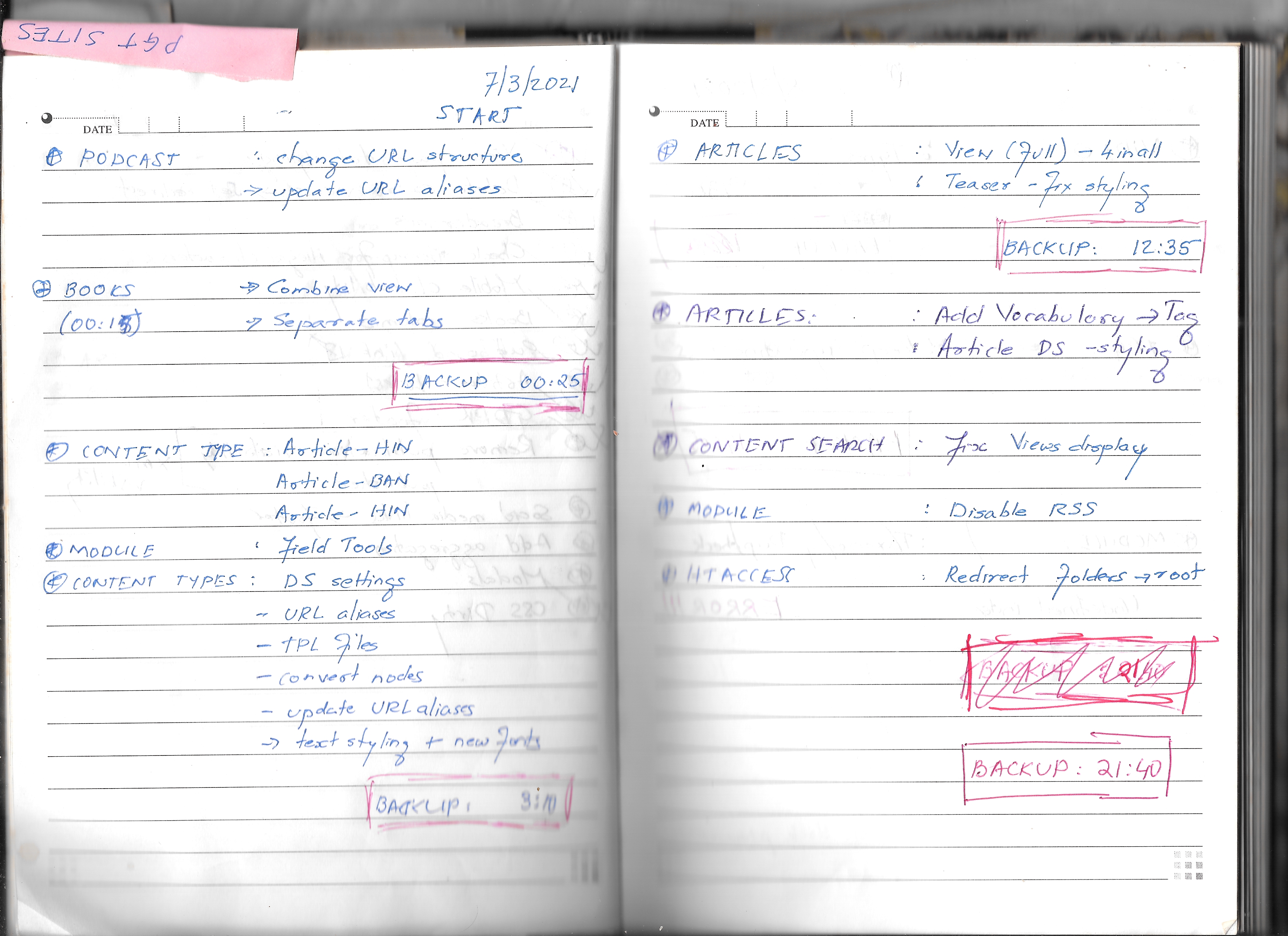
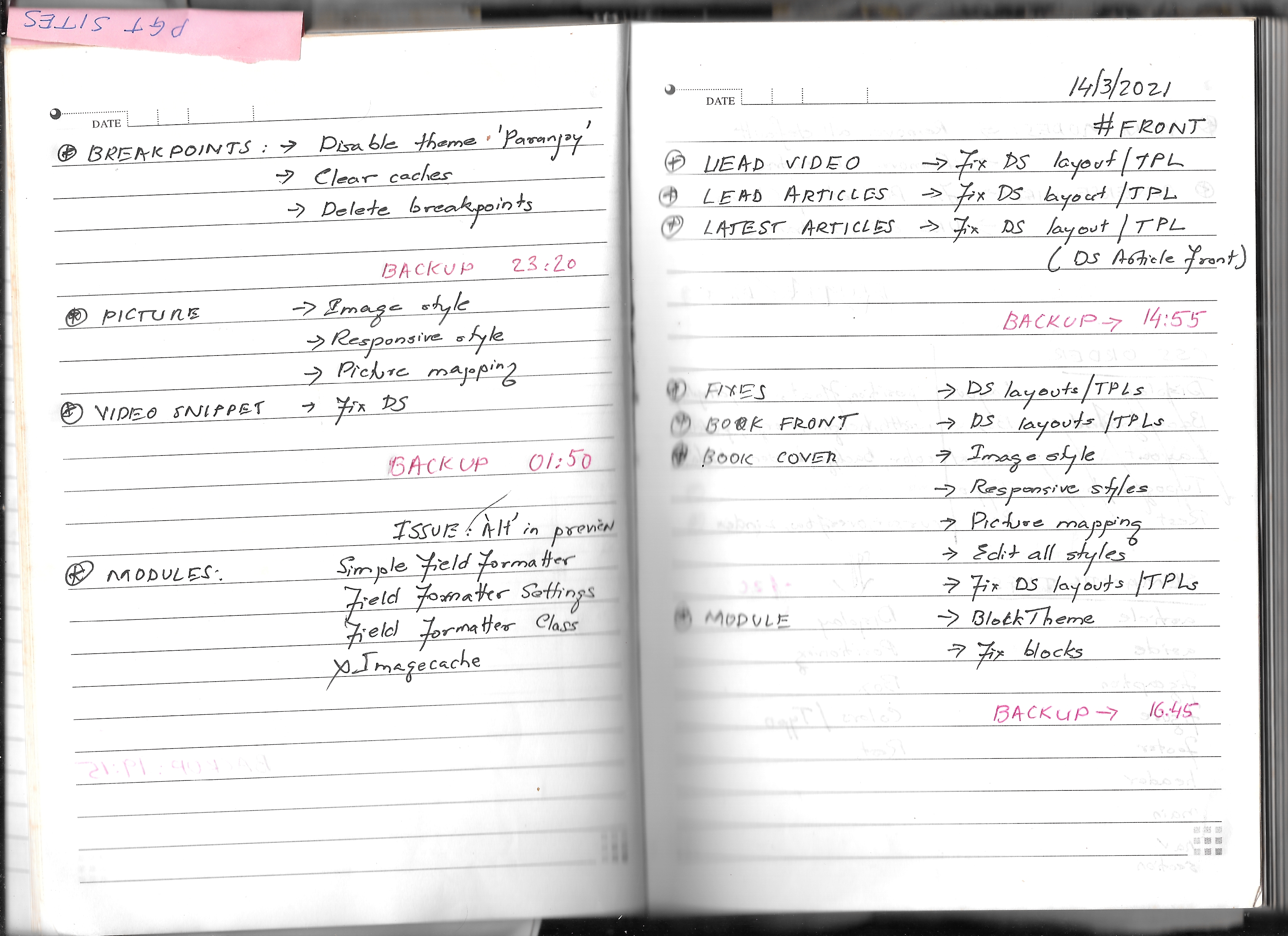
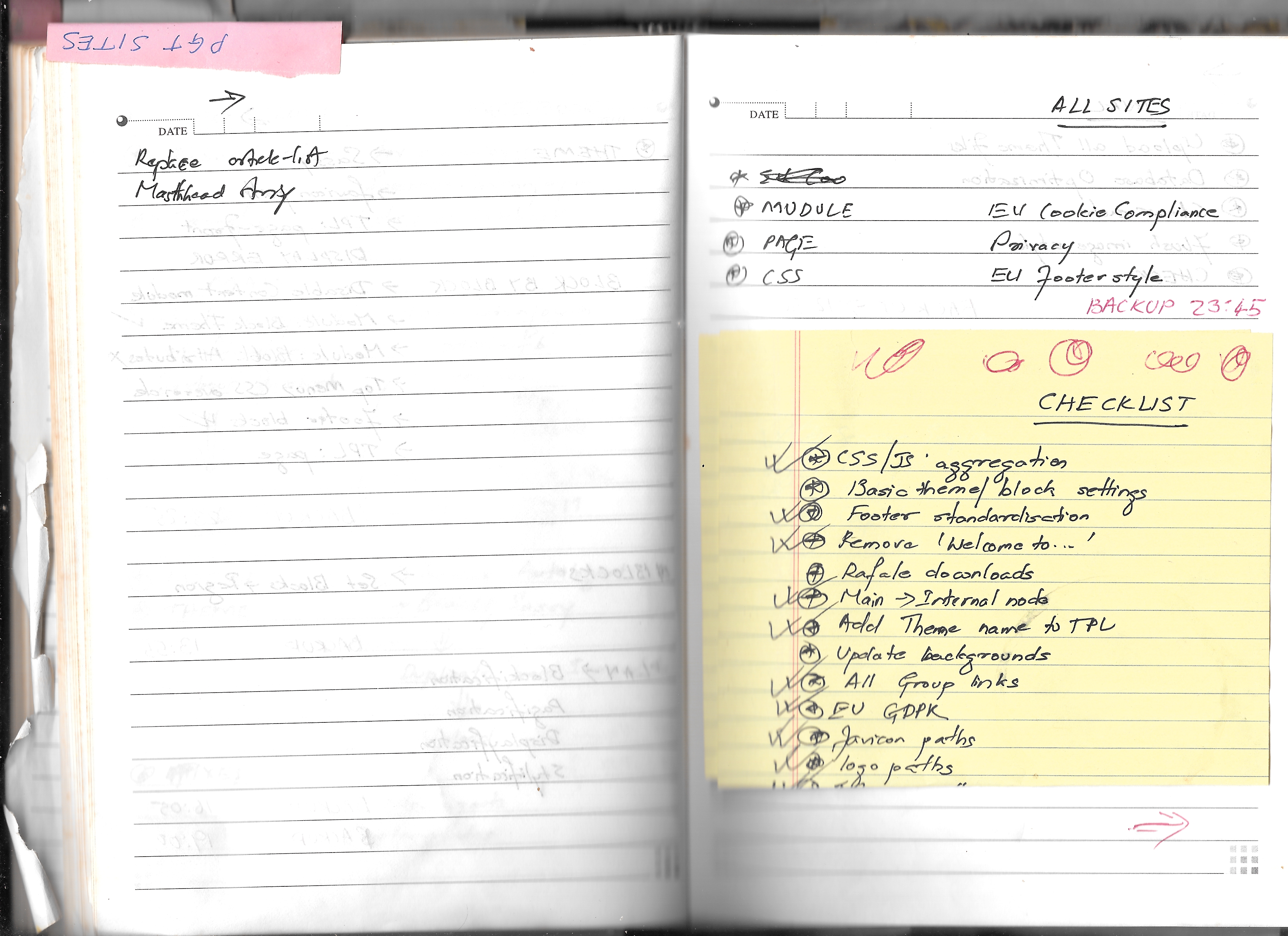
Log: A logook was maintained throughout. Some samplers below
Why Drupal was chosen
It was a natural choice. I don't see the closest competitor WordPress to be remoely doing what I was trying to achieve.
Technical Specifications
Drupal version:
Key modules/theme/distribution used:
The site and the microsites make extensive use of the DS + Views combination. The overall funcionality of all the sites and microsites depend on what/how/where we want to display elements and blocks.