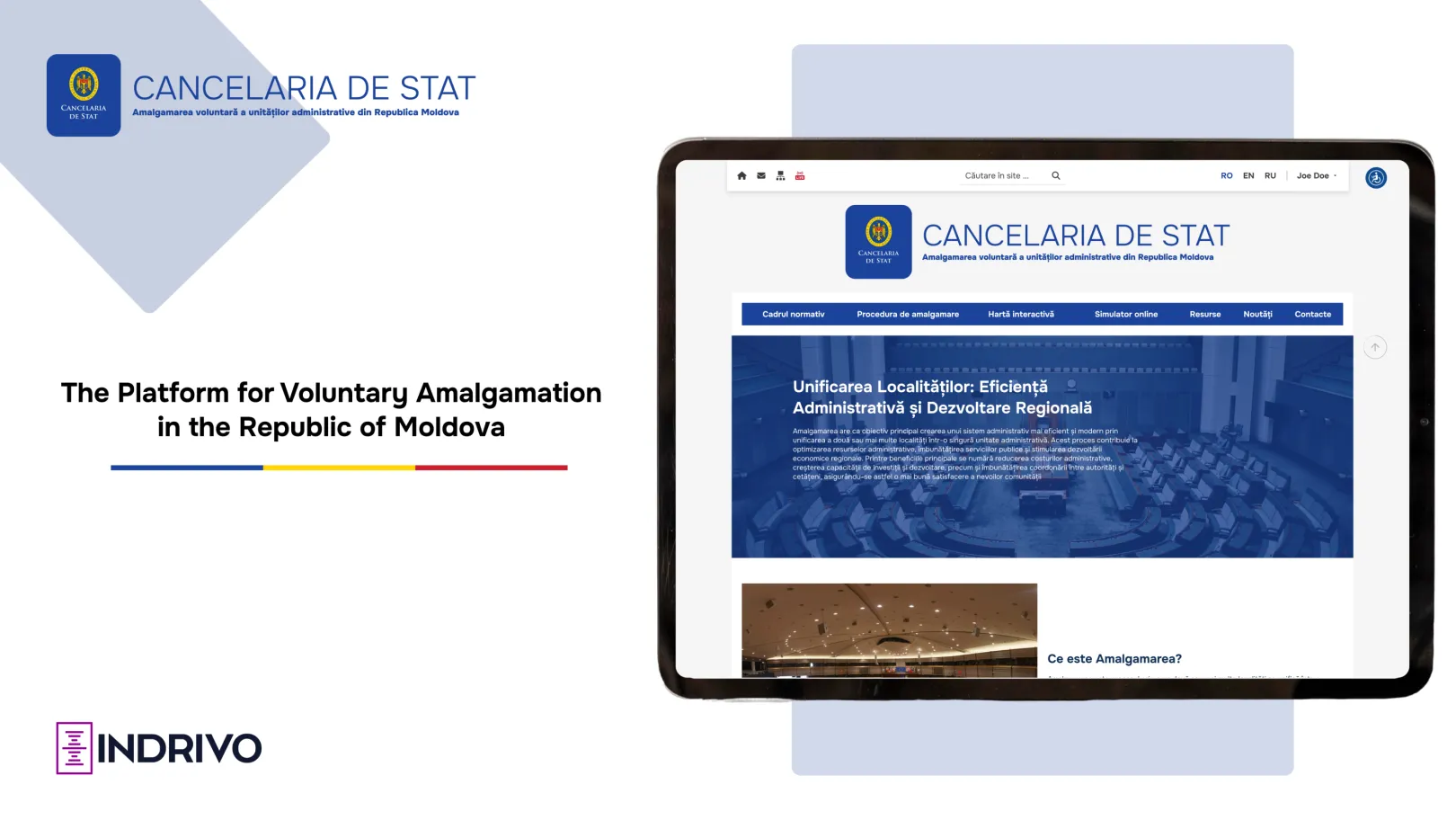
Voluntary amalgamation is a process through which two or more Administrative-Territorial Units (ATUs) in the Republic of Moldova choose to merge to improve administrative efficiency, access to resources, and the quality of public services. This initiative addresses the excessive fragmentation of local administration and the difficulties faced by small localities in managing resources and ensuring essential services for citizens.
However, the voluntary amalgamation process has often been surrounded by uncertainty, a lack of transparency, and limited access to information for both citizens and authorities. To address these challenges, a digital platform was created to centralize information about the amalgamation process, provide an interactive map to track progress, and offer easy access to relevant documents and official resources.
Business Objectives
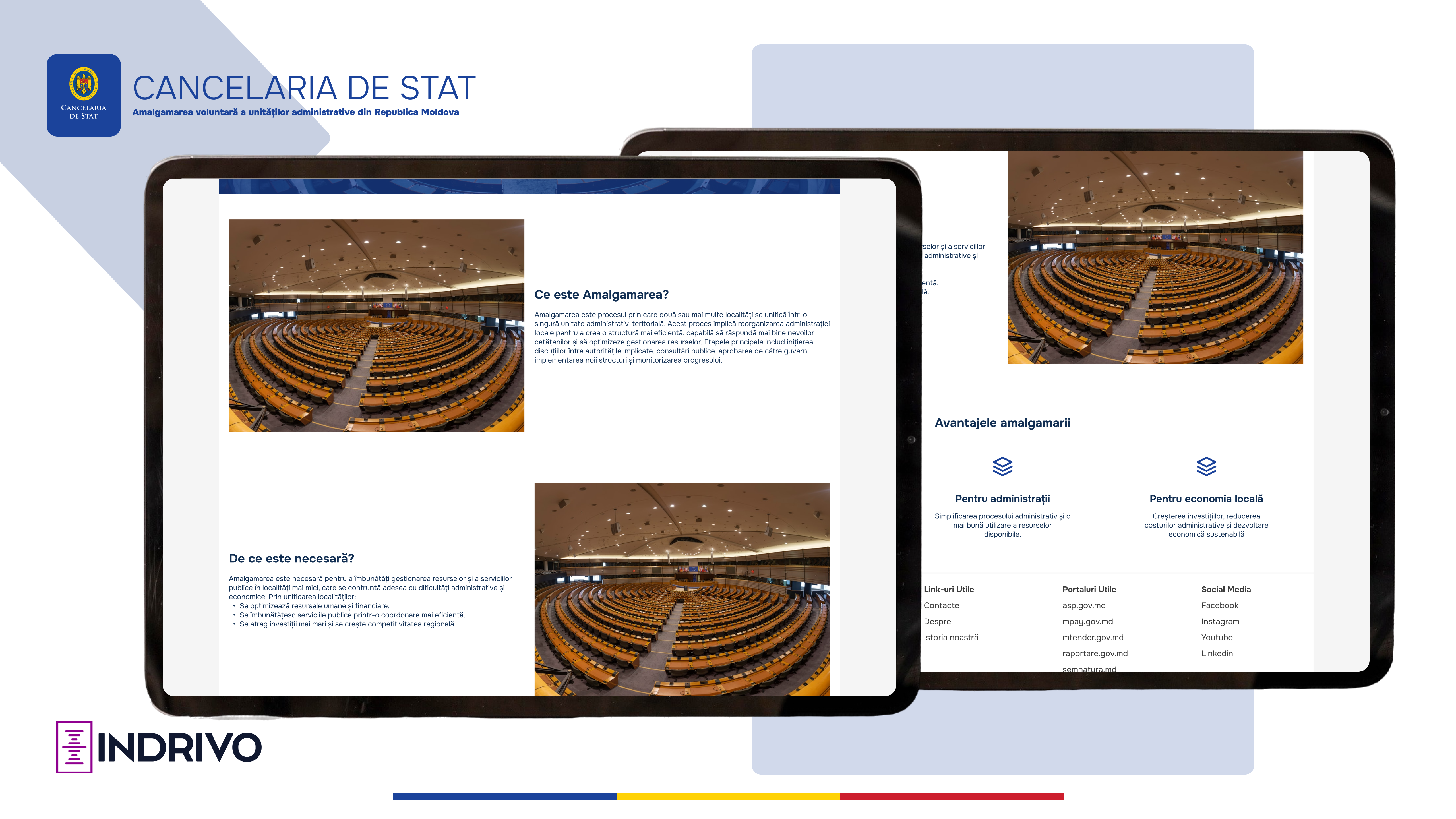
The platform was designed to achieve several key objectives:
-
Enhance transparency by providing a centralized source of information about the amalgamation process.
-
Improve accessibility to relevant documents, policies, and updates for both authorities and citizens.
-
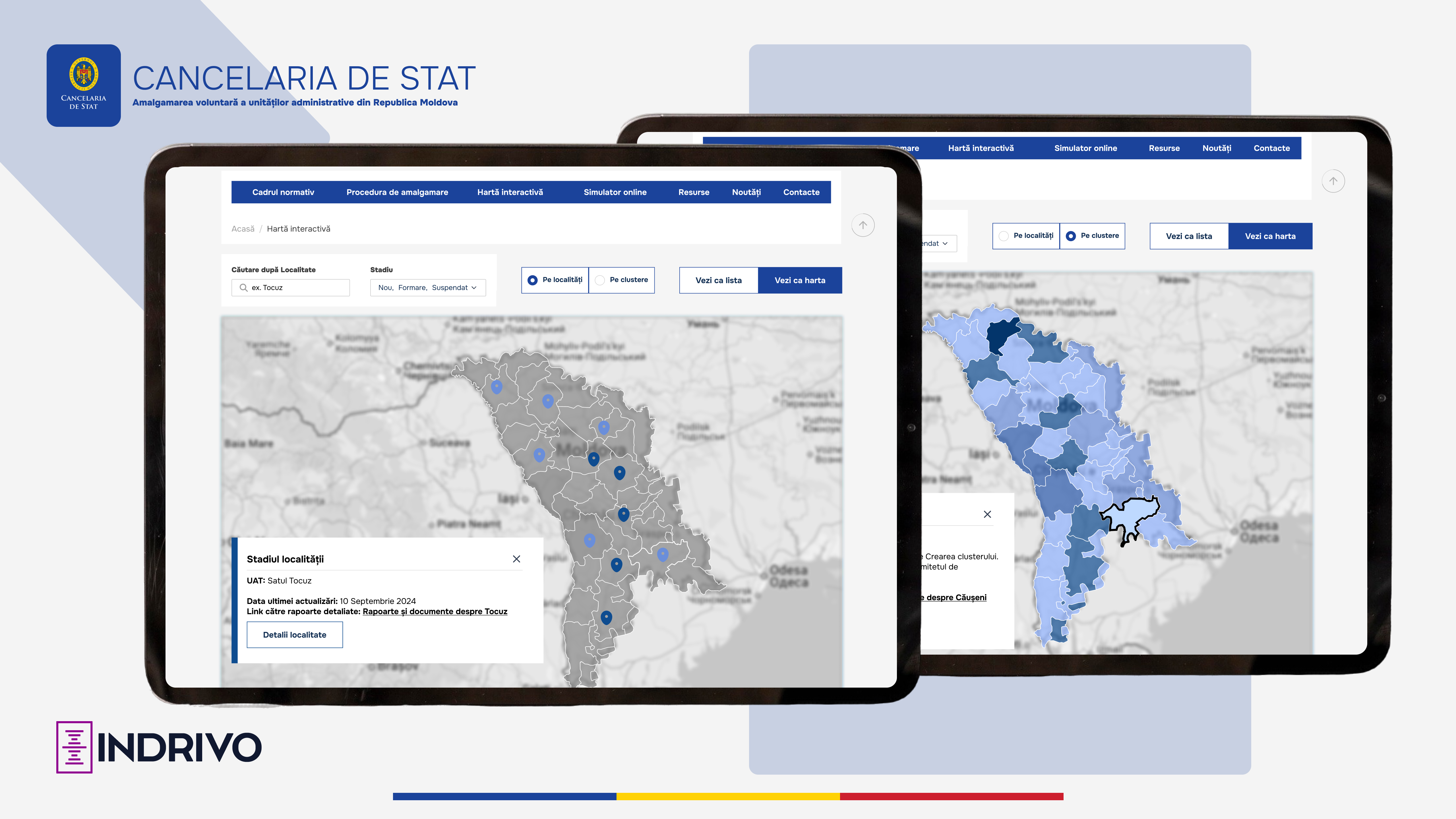
Facilitate monitoring through an interactive map that visualizes the progress of different localities.
-
Encourage citizen participation by offering consultation tools that allow communities to provide input.
-
Streamline administrative processes by digitalizing document management and progress tracking.
About the project
Goals
The project aimed to create a comprehensive and user-friendly platform that would:
-
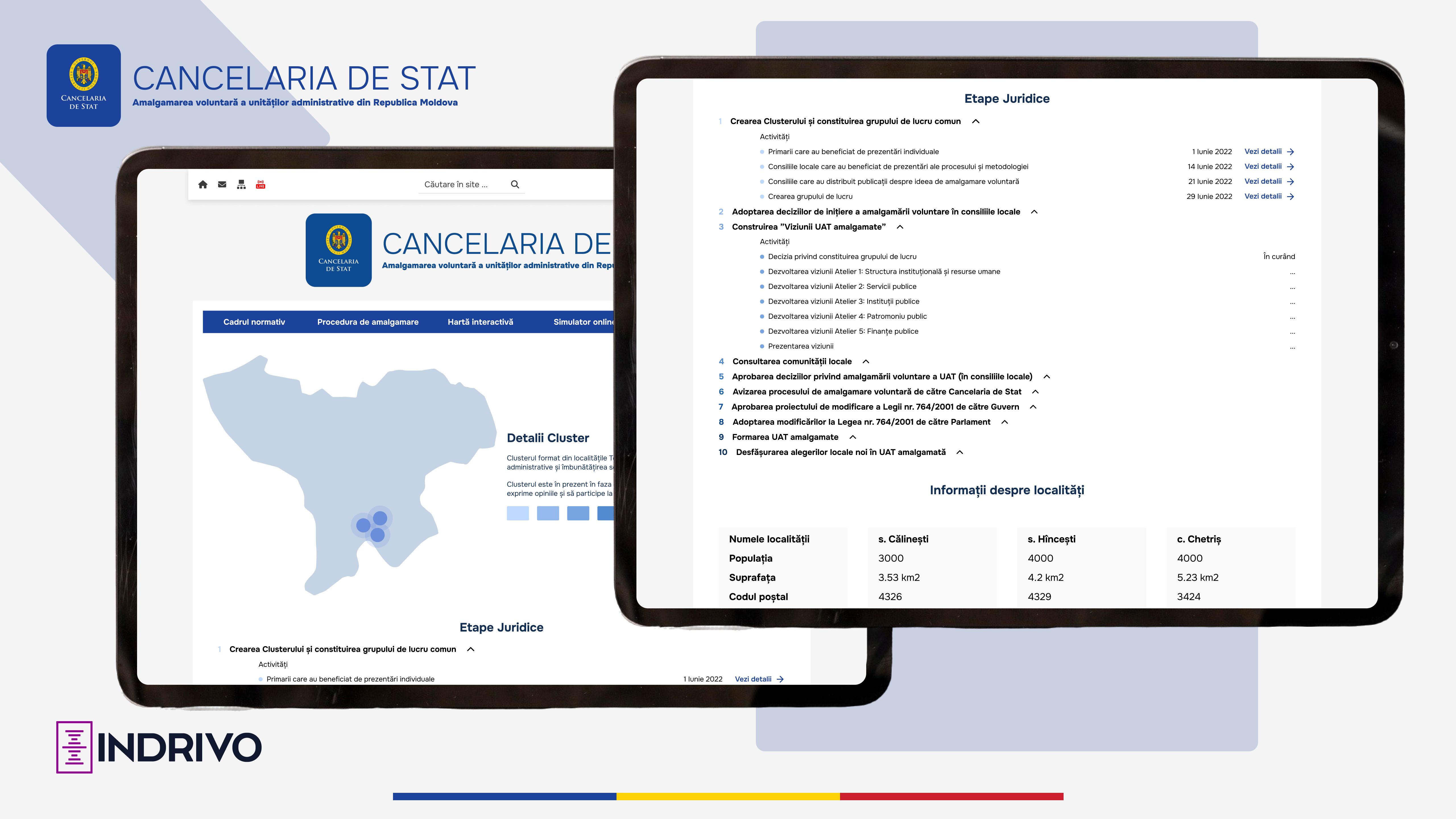
Offer a structured overview of the amalgamation process.
-
Provide an intuitive interface for authorities and citizens to track progress.
-
Enable easy access to downloadable documents and policy papers.
-
Allow for real-time updates on the status of different localities.
-
Foster active engagement from communities through a consultation mechanism.
Requirements
To achieve these goals, the following technical and functional requirements were established:
-
Interactive Map: A visually engaging representation of amalgamation progress.
-
Document Repository: A structured library where users can download relevant legal documents, presentations, and reports.
-
User Roles & Permissions: Custom access levels for local authorities, administrators, and citizens.
-
News & Updates Section: A dynamic module for publishing the latest developments and policy changes.
-
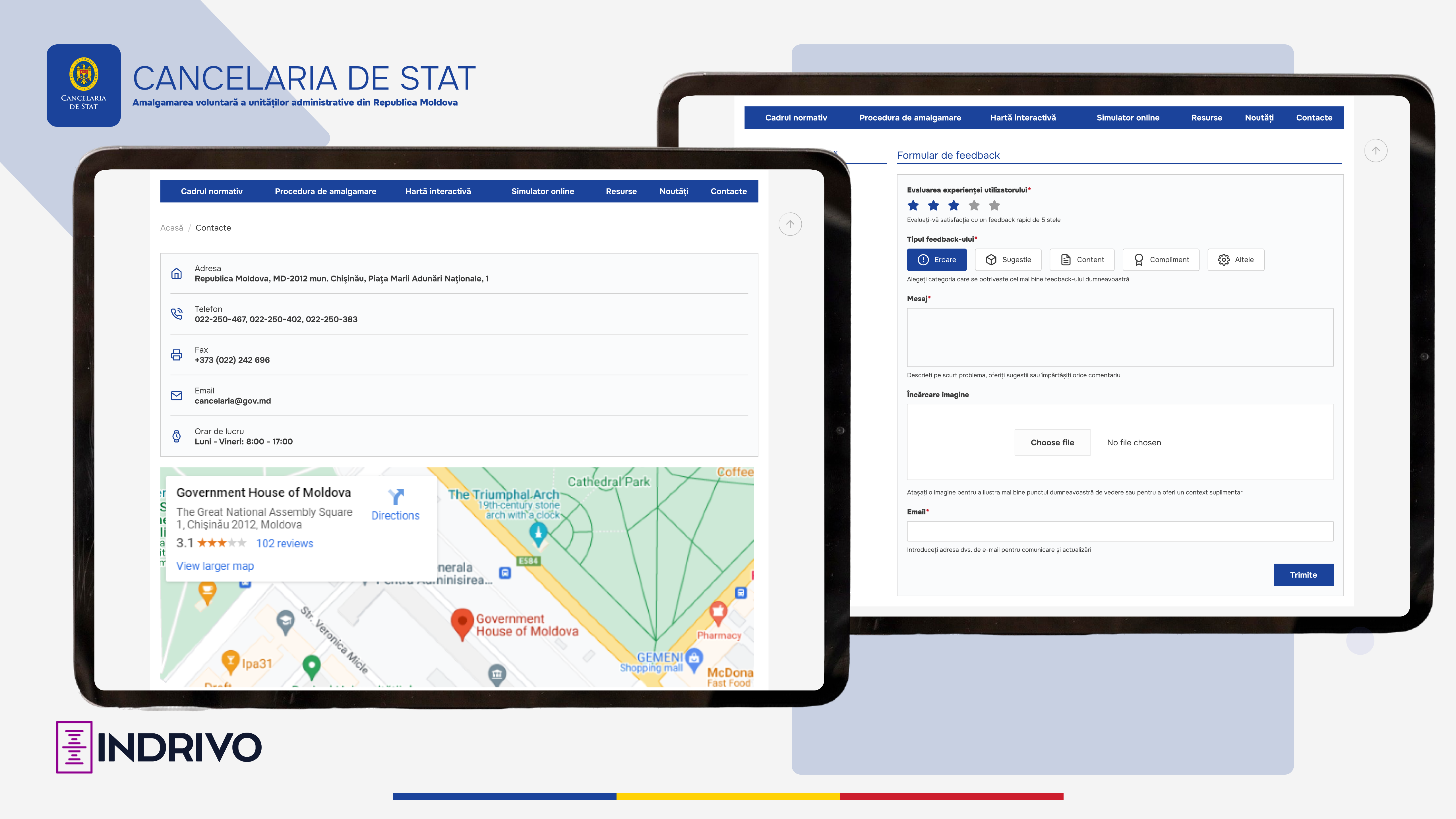
Public Consultation Feature: A feedback tool allowing citizens to voice concerns and provide input on the process.
Outcome
The platform successfully improved the transparency and efficiency of the voluntary amalgamation process in Moldova. Key achievements include:
-
Greater accessibility to information: Citizens and local authorities now have a clear and structured way to follow the process.
-
Enhanced monitoring capabilities: The interactive map allows users to track each locality’s progress in real-time.
-
Stronger community engagement: The consultation tool has encouraged more public participation in decision-making.
-
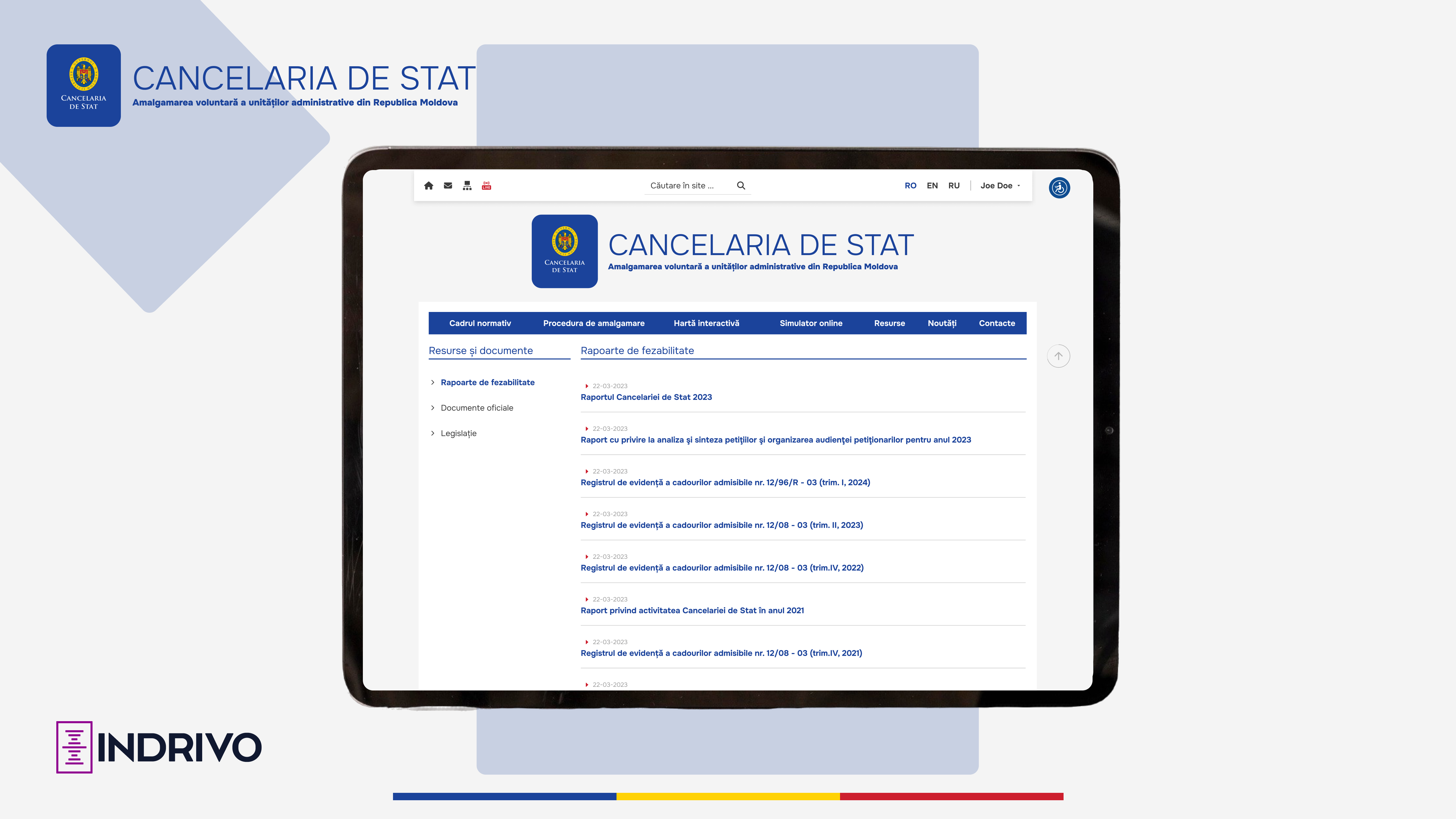
Efficient document management: Authorities and policymakers can now easily access and share relevant legal documents.
Conclusion
By leveraging Drupal’s flexibility and security, the Voluntary Amalgamation Platform has become a crucial tool in facilitating administrative reform in Moldova. The project has demonstrated how digitalization can improve governance, increase transparency, and empower communities in decision-making processes.
Future enhancements may include:
-
AI-powered chatbots for answering user queries.
-
Advanced data analytics for tracking the impact of amalgamation efforts.
-
Mobile application development to enhance accessibility on various devices.
Through continuous development, the platform will continue to support Moldova’s administrative modernization efforts and promote sustainable governance practices.
Why Drupal was chosen
Drupal was selected as the foundation for the platform due to its flexibility, security, and scalability. The key reasons for choosing Drupal include:
-
Robust content management capabilities: Drupal’s advanced content structuring allows for easy categorization and retrieval of documents, news, and process updates.
-
Highly customizable: The modular nature of Drupal enables the development of specific features such as the interactive map, document repository, and public consultation tools.
-
Strong security features: As an open-source platform widely used by governments and organizations, Drupal provides a secure environment for managing sensitive information.
-
Scalability: The platform needed to support a growing number of users, with potential for expansion and integration with other government services.
-
Multilingual support: Given Moldova’s linguistic diversity, Drupal's built-in multilingual capabilities allowed for seamless content delivery in multiple languages.
Technical Specifications
Drupal version:
Key modules/theme/distribution used: