For about 3 years Drupal Jedi team worked hard to bring to the life a web-to-print application to craft school and university yearbooks for our client.
The idea is to mix rich photo-edition and social networking capabilities at the same time.
It was a long path and finally, the project has been released spring 2019!
About the project
As it's frequently happening for startups, at the starting point we are not able to get the entire picture of the complete result. That's the place where our addiction to Agile methodology comes in play. Continuous collaboration, from sprint to sprint, with continuous delivery and evolution, made a picture complete step by step.
We split the project into 3 big milestones to build alpha, beta and stable releases.
The project was published at the beginning of 2019. And first real users came to the site to build their yearbooks. And that's only the beginning – there are a lot of things to polish and evolve to increase the traction.
Work together
The collaboration was key to the project success.
While the organization of distributed collaboration became our challenge=)
In the process of yearbook designing, users can simultaneously work with materials provided by photographers and students in each yearbook project.
At the same time, the multi-role access model allows building a group to organize students into classes and work with designers.
It allows them to manage roles and access, group students into classes, collect materials from them (photo, name, person introduction).
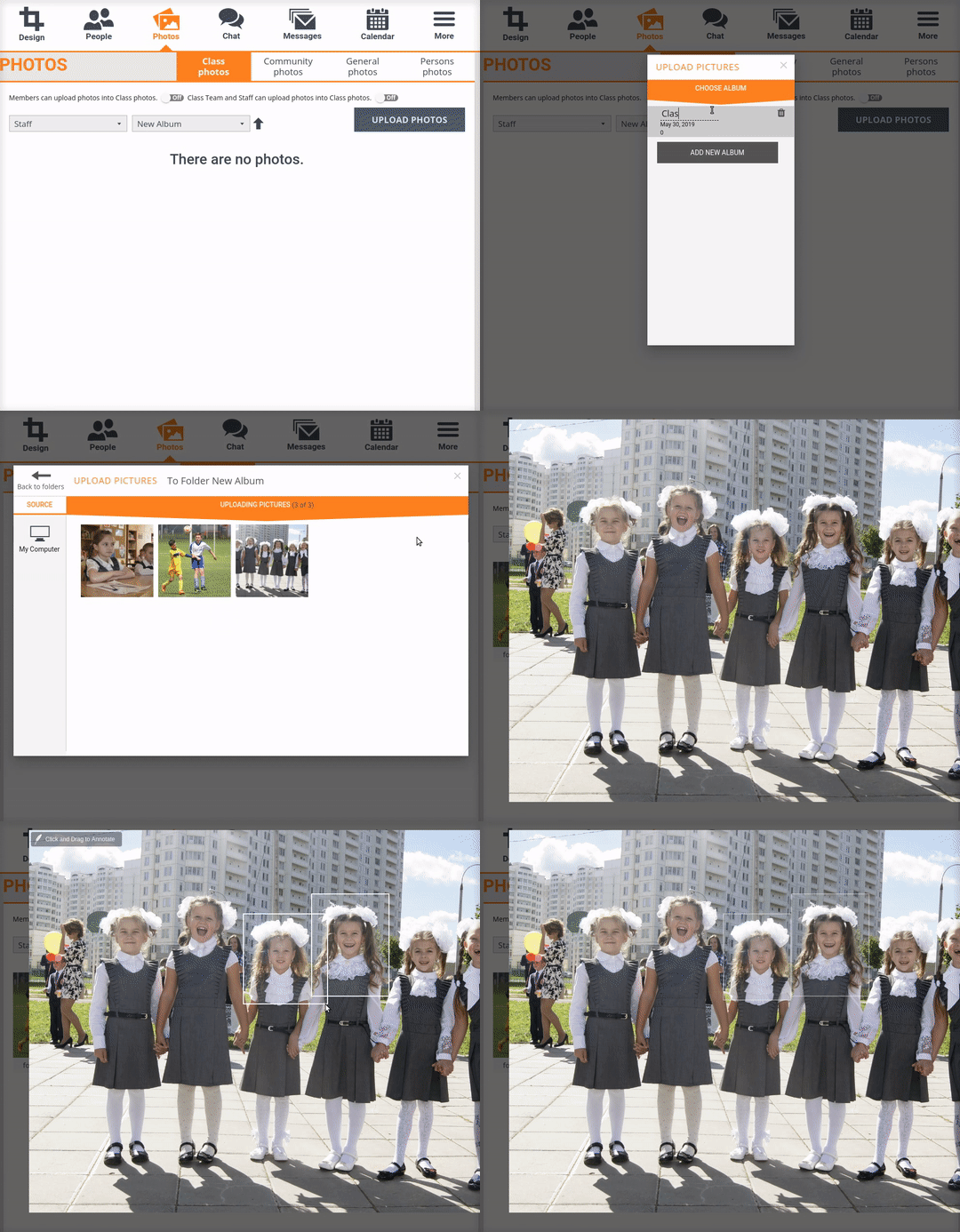
People can communicate using chat & messages.
Students participate in the creation of a personal page and enjoy by looking at overall progress. They're creating events, uploading photos, editing their personal text, tagging people on the photo.
It's the entire community around each yearbook.
Large toolbox
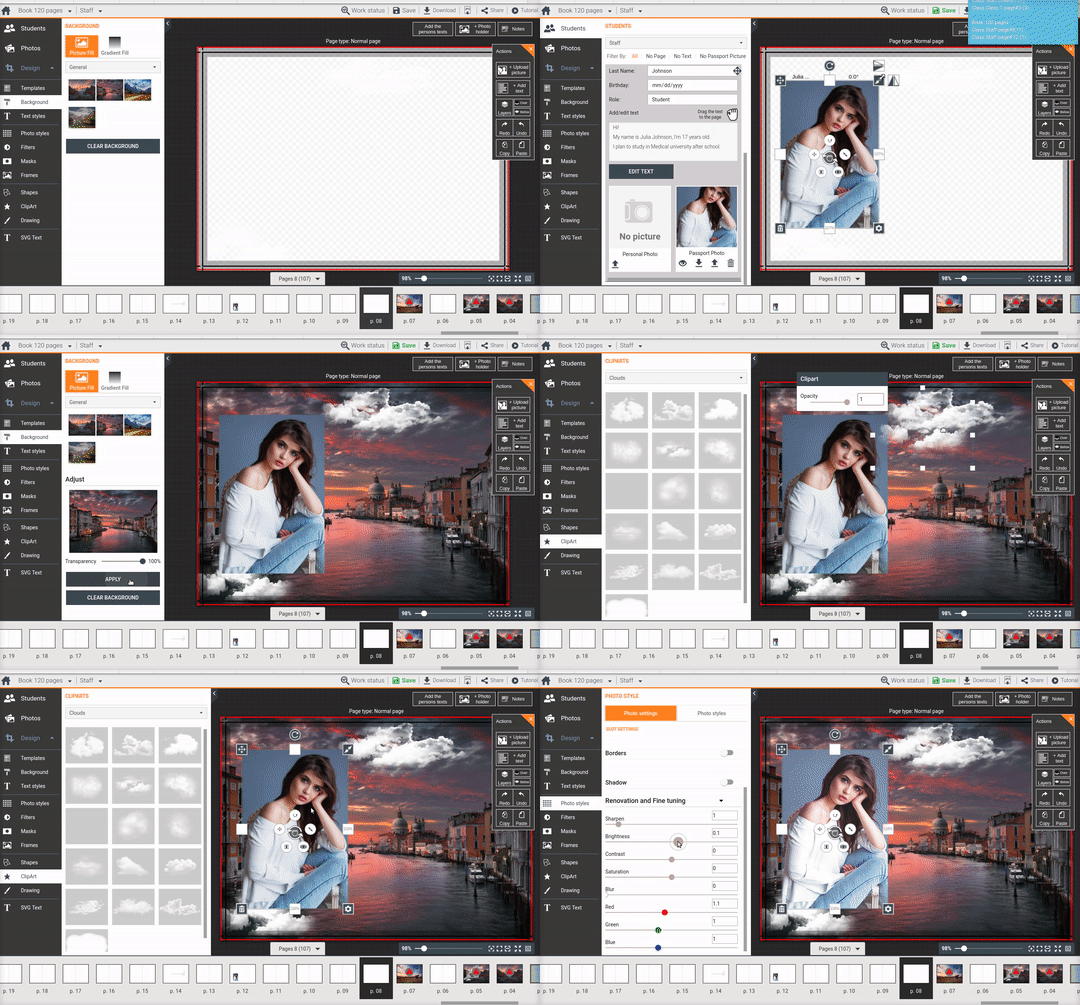
The important part of the application is a handful of rich tools to express your creativity within the yearbook.
At the same time, we need to organize the interface in a clear and intuitive manner. We re-used well-known UI perception patterns from solutions like Photoshop and Sketch.
Key features
- Online Design editor with different tools
- Export design as high-quality pdf
- Groups and access management for organizing people
- Communication tools
- Material collecting and storage
Key technologies
- Drupal 8
- Angular
- Fabric.js
Click here to see more about this project.
Why Drupal was chosen
Drupal 8 is enough flexible + supporting headless. It provided us a stable base for a complex application. Initial requirements were not fully defined at the beginning, Drupal let us avoid the redo system every time when some requirements changed.
From one point headless supporting allows us to use the modern approach in front-end development, that's important for projects with a complex front-end part.
From another point Drupal lets us organize content management, which also important because of a lot of content generated by users.
Moreover, the client already had a positive experience with Drupal, so it was an additional point to choose Drupal.
Technical Specifications
Drupal version: