Sector(s)
- Agriculture
- Arts
- Banking and Financial
- Beauty and Fashion
- Blogging
- Community
- E-Commerce
- Education
- Enterprise
- Entertainment
- Government
- Healthcare
- Legal Industry
- Localization
- Manufacturing and Energy
- Media
- Music
- Non-profit
- Publishing
- Real Estate
- Religious organizations
- Retail and Distribution
- Small business
- Social Networking
- Sports
- Startups
- Technology
- Telecommunications
- Travel and Hospitality
- Urban planning
Team Members
Project Team
Built and maintained by the team at NETNODE AG.
Visit the site
Visit the siteOrganizations Involved
Community contributions
NodeHive is 90% the nodehive_core module which holds all NodeHive specific functionality like Spaces, Visual Editor, etc. The module is created and maintained by NETNODE AG, the company behind NodeHive.
As part of the solution creation, we extended and contributed other modules including Content Planner, jwt, Dashboard and others.
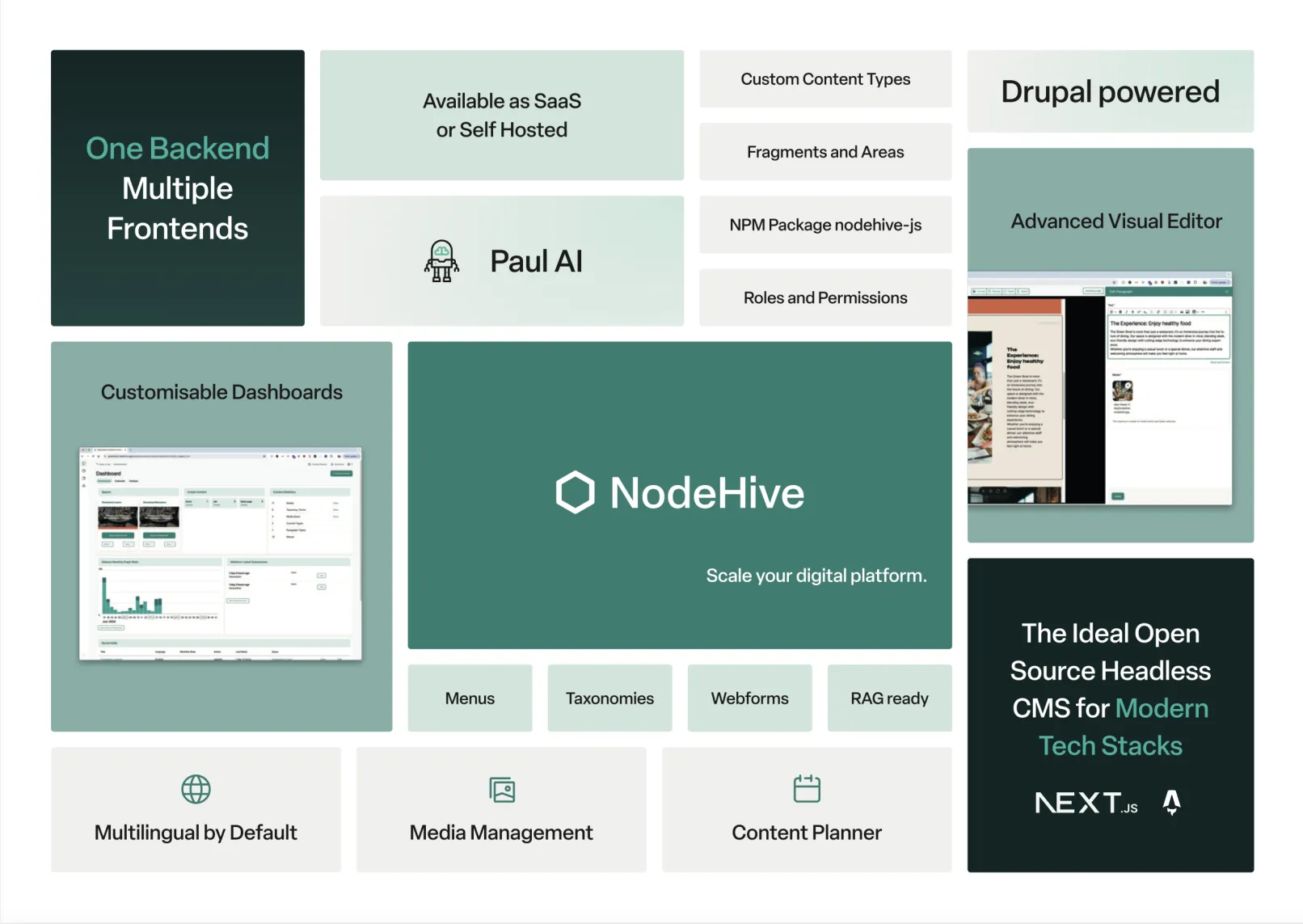
NodeHive Headless CMS is an innovative, open-source platform built on Drupal that redefines how organizations manage and optimize their digital presence. Developed by NETNODE AG, NodeHive combines Drupal’s robust core with additional modules tailored for headless development, enabling businesses to manage multiple websites and apps from a single platform. NodeHive is the solution to bring Drupal content to modern frontends built with Next.js and Astro.
NodeHive Headless CMS is redefining how modern, decoupled frontends are built on Drupal, positioning itself as the ultimate solution for developers and innovators.Lukas Fischer, Founder of NodeHive Headless CMS.
NodeHive is fully open source (docs.nodehive.com) but also available as a hosted SaaS version (www.nodehive.com) run by the creators of NodeHive.
Videos:
- Overview of NodeHive: https://www.youtube.com/watch?v=Sa6fZzXvYgw
- RAG with NodeHive: https://www.youtube.com/watch?v=dV-Yvultkoc
- NodeHive Visual Editor: https://www.youtube.com/watch?v=utwogoSx-zk
- all videos in this playlist
About the project
Goals:
Building headless solutions with Drupal is not easy. We try to change that with NodeHive Headless CMS, which is basically a replacement of Contentful but built with open source Drupal. NodeHive targets organisations and agencies which want to use modern frontend technology like Next.JS, SvelteKit, Nuxt, Astro to build digital experience but still want to rely on Drupal with it's powerful CMS feature.
- To create a best-in-class headless CMS platform with Drupal tailored for modern development needs.
- To enable centralized management of multiple digital properties.
- To provide an intuitive interface for developers and content managers.
- To ensure the platform is open-source, extensible, and scalable.
Requirements:
- JavaScript/Typescript compatibility to follow modern frontend development.
- Advanced content management with dashboards, analytics integration, content planning
- Advanced visual editor to manage multiple website directly from the frontend from one place
- Support for multiple websites (Spaces) within a single instance.
- Flexible content modeling with custom content types, taxonomies, and paragraph types.
- Seamless integration capabilities with third-party systems.
- A user-friendly backend interface for non-technical users.
- Optimal performance and scalability for high-traffic websites.
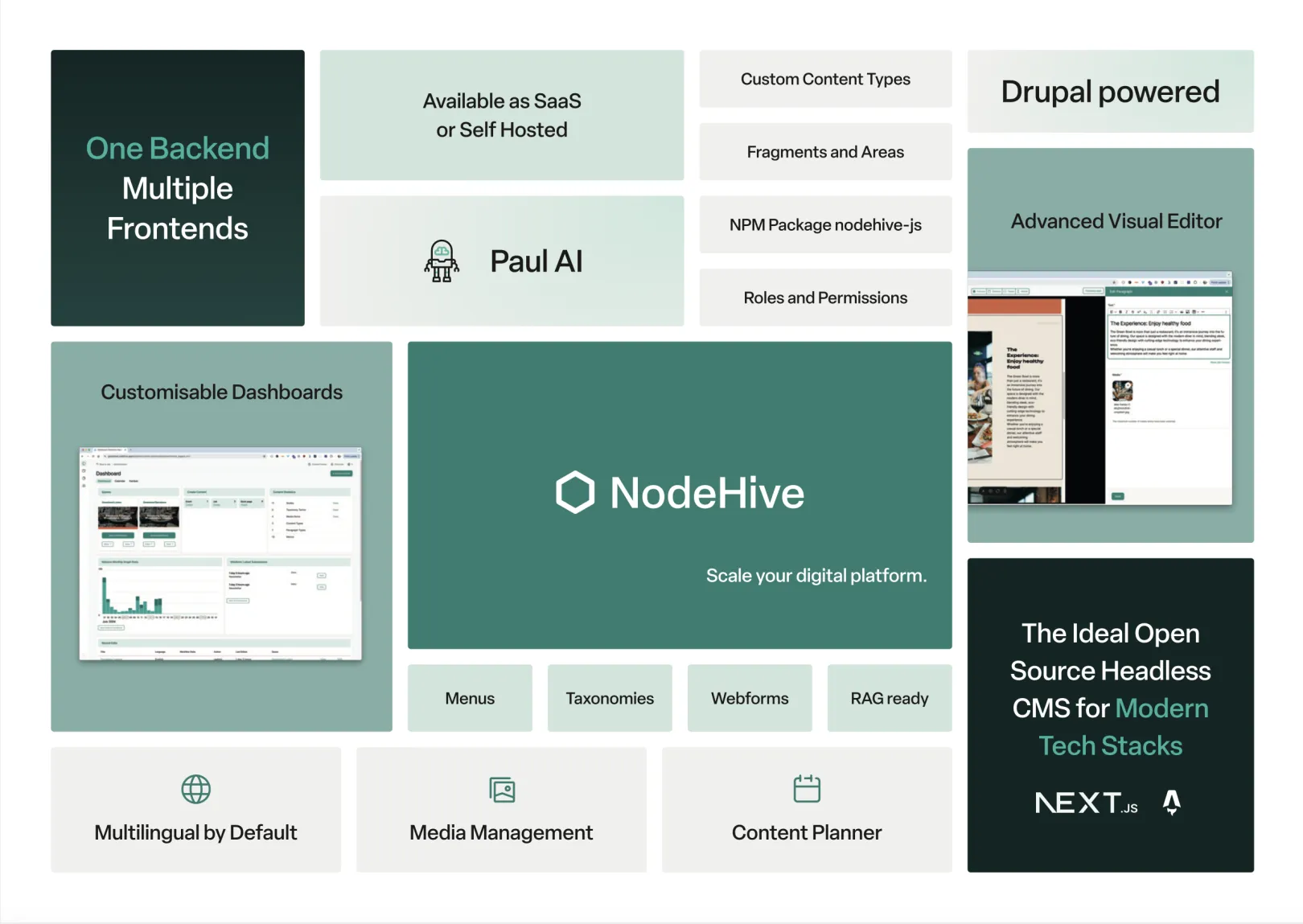
Outcome: NodeHive Headless CMS achieved its objectives by introducing key features:
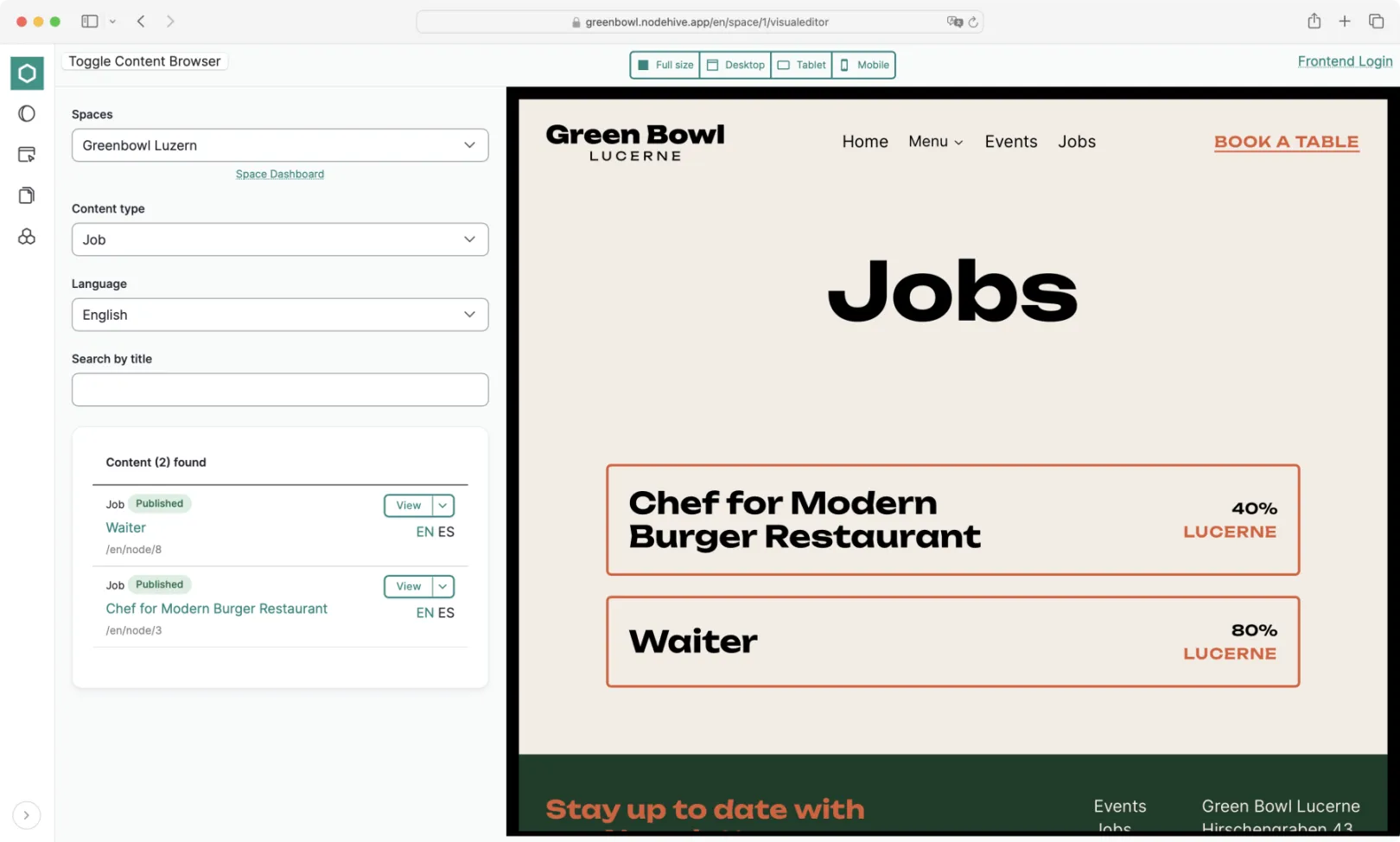
- Visual Editor: Edit pages, paragraphs, fragments, menus directly on the frontend
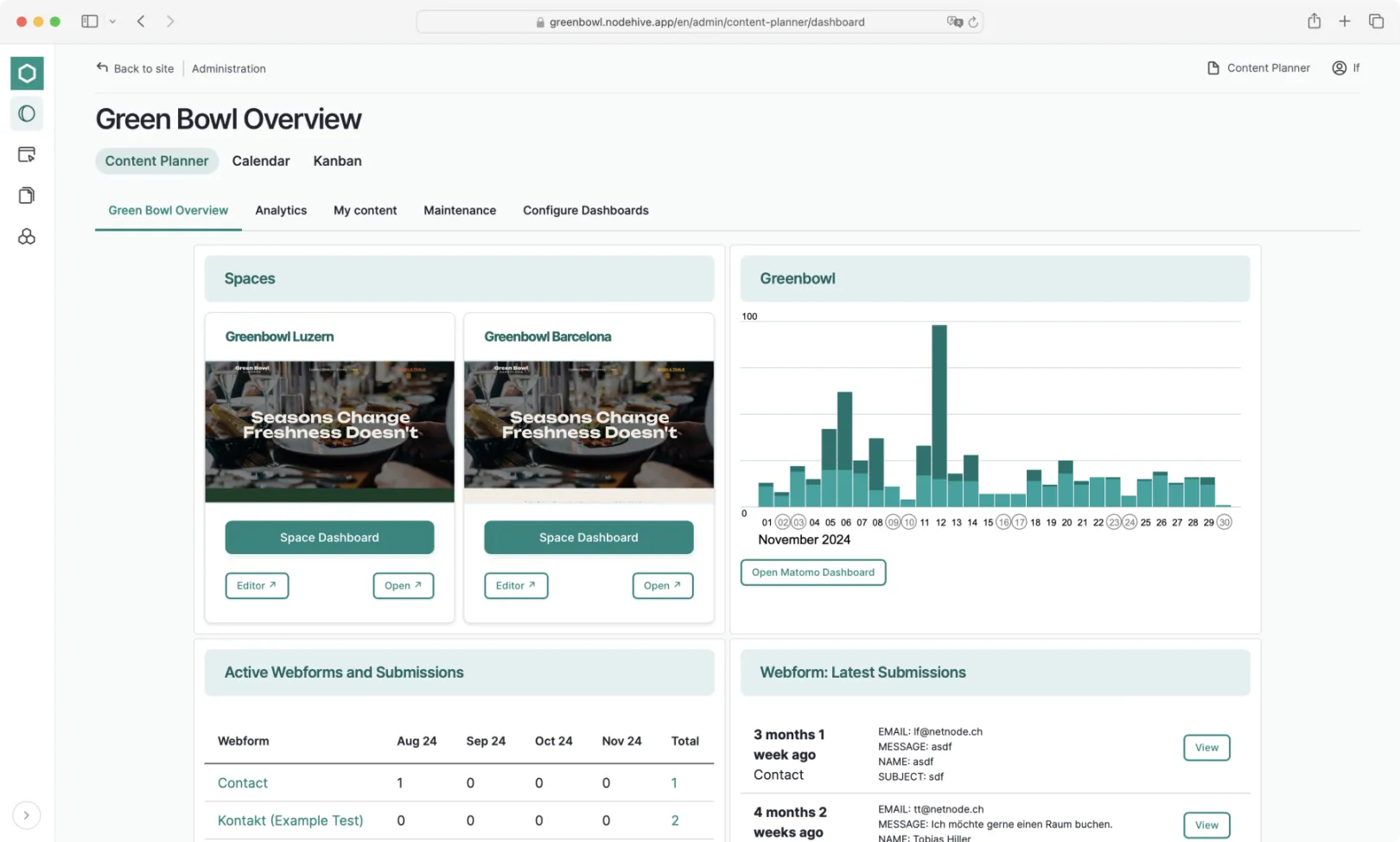
- Dashboards: Manage multiple dashboards with 30+ widget including Activity, Analytics, Webform stats and more
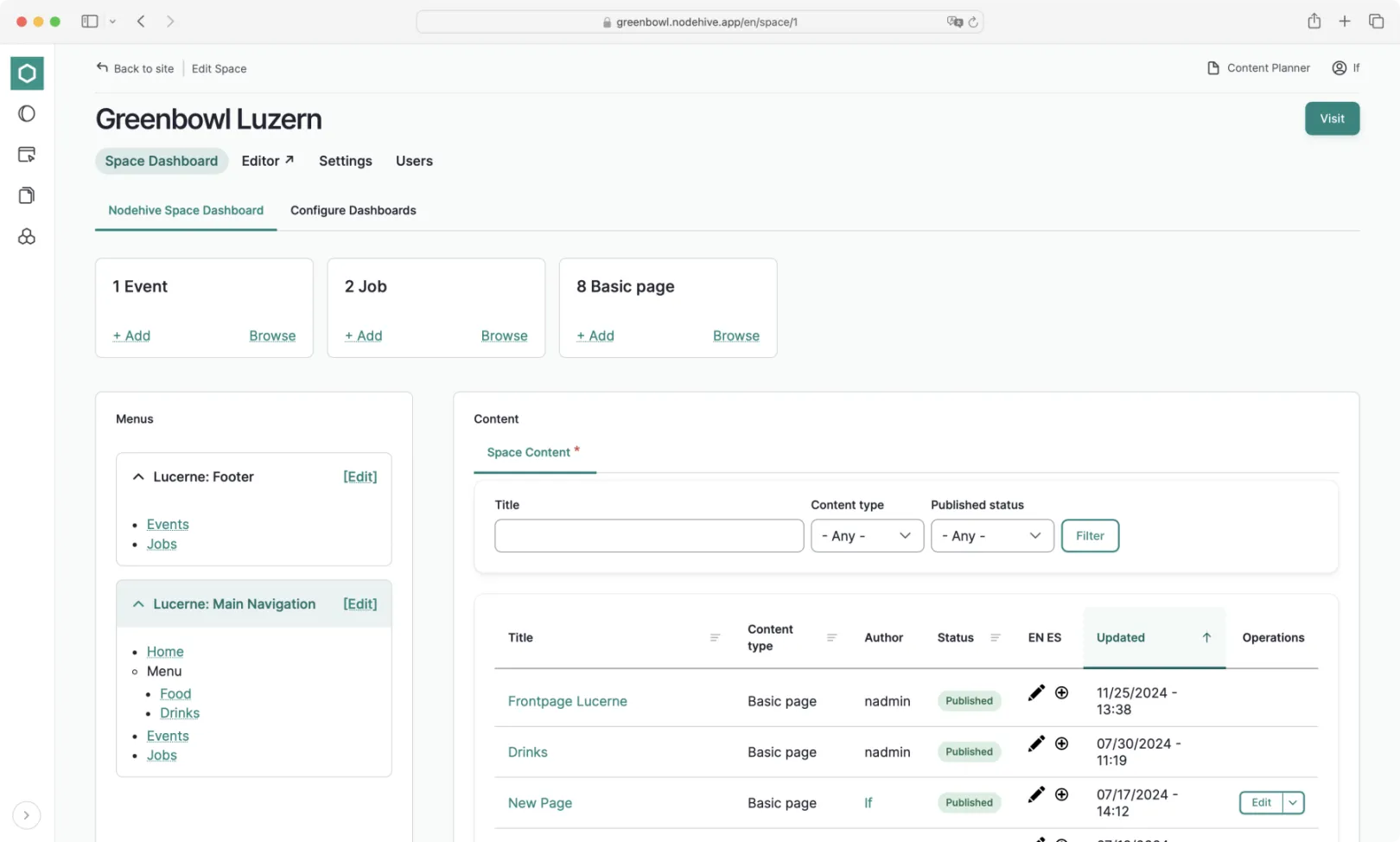
- Spaces: Manage multiple websites with shared or isolated content, permissions, and configurations.
- Content Types and Paragraphs: Customize content structures to suit specific business needs.
- Fragments and Areas: Modular content editing for reusable design and functionality.
- Scalability: A centralized platform capable of hosting enterprise-level websites and applications.
- nodehive-js: A javascript library to
- Frontend starter templates: Creation of frontend starter templates and reference implementation to kick start frontend development
NodeHive empowers organizations to streamline digital operations while ensuring an exceptional user experience.
Why Drupal was chosen
- Advanced Access Control: A sophisticated roles and permissions system ensures precise content governance.
- Robust API Capabilities: Drupal’s API-first approach makes it a strong candidate for headless implementations.
- Community Support and Contributed Modules: Drupal’s open-source ecosystem offers an expansive library of modules and a vibrant, supportive community.
- Proven Security: Drupal has a long-standing reputation for high security, essential for business-critical applications.
- Seamless Integrations: Its flexibility allows easy integration with CRMs, ERPs, and other third-party tools.
Technical Specifications
Drupal version:
Key modules/theme/distribution used: