Sector(s)
Team Members
Project Team
Lotte Merkl, Wiebke Ewering, Henning Hoff
Visit the site
Visit the siteOrganizations Involved
Community contributions
- Rebuild multilinguality for profiles
- New module CIDR IP-Login
- Module port + maintainership: Metis (VG Wort integration), Implementation of Metis SOAP API Library
- Core patches (3083379, 2605218)
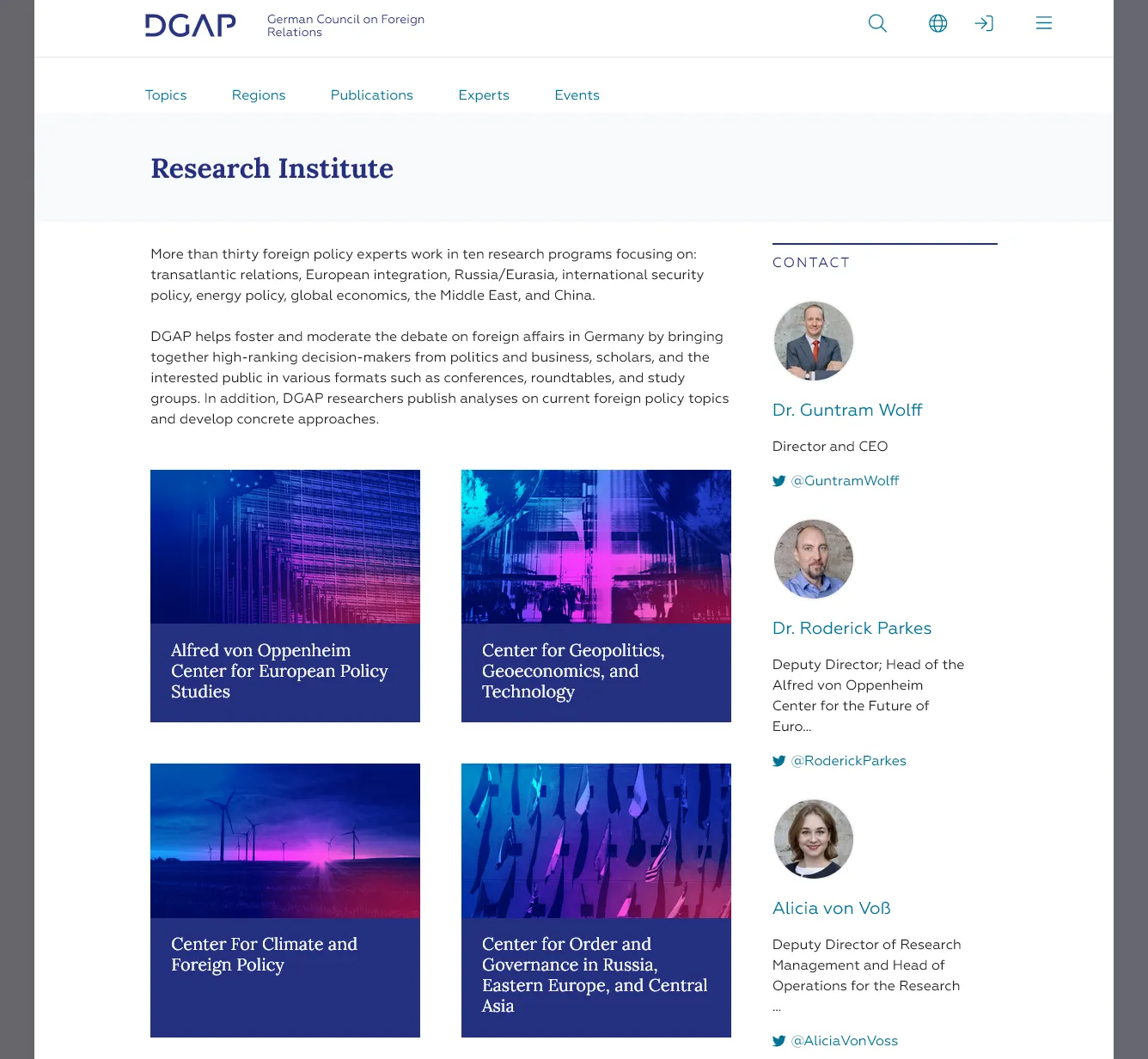
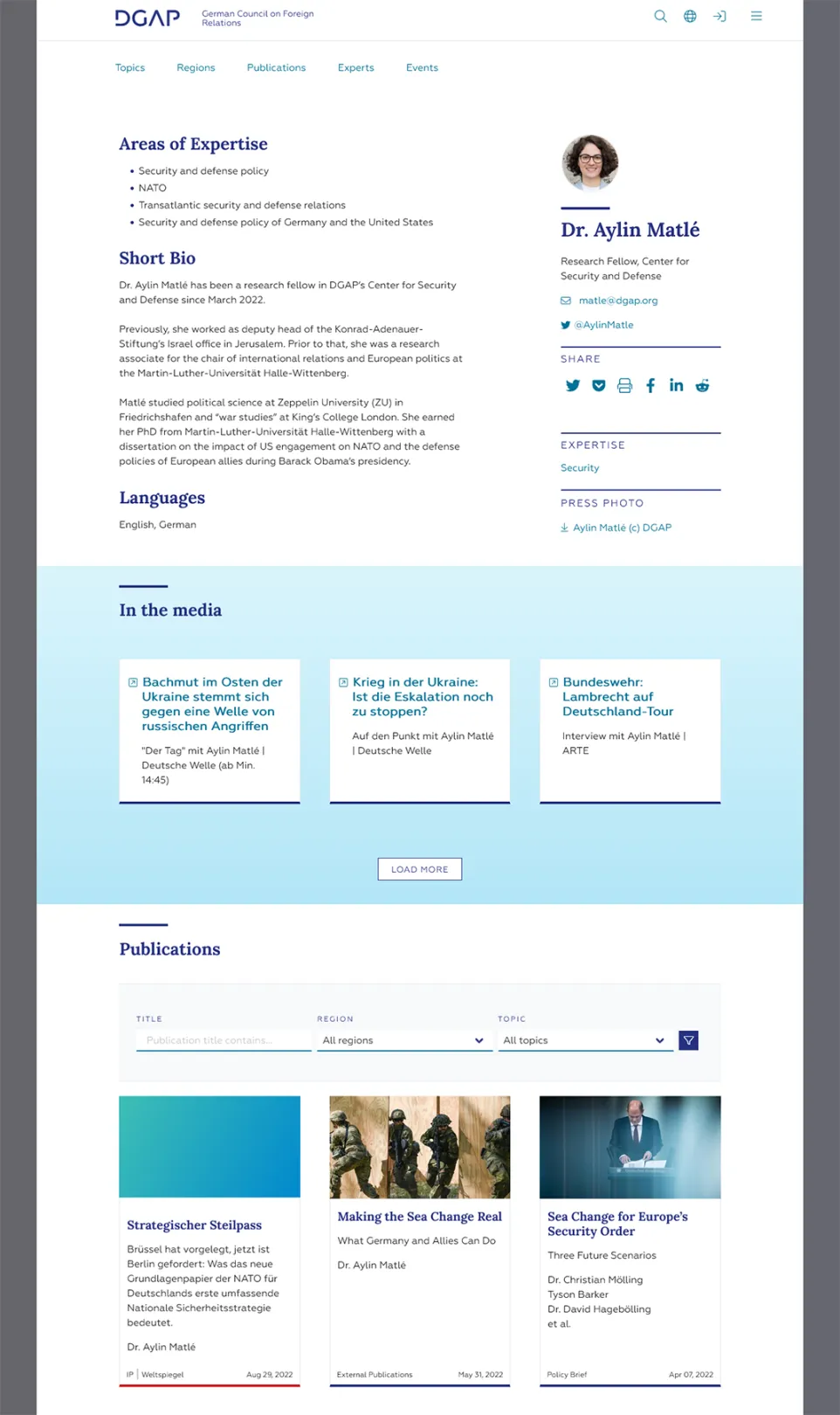
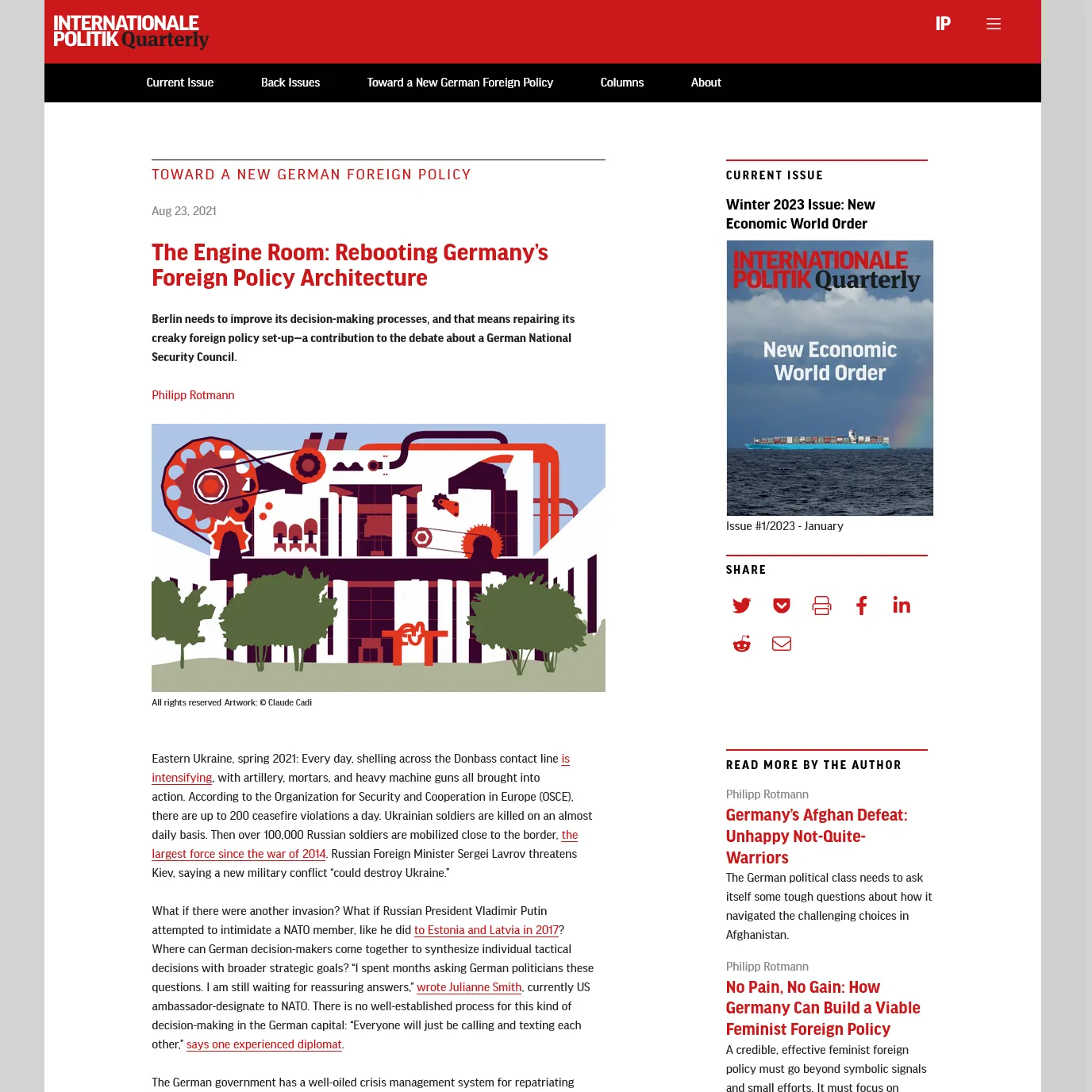
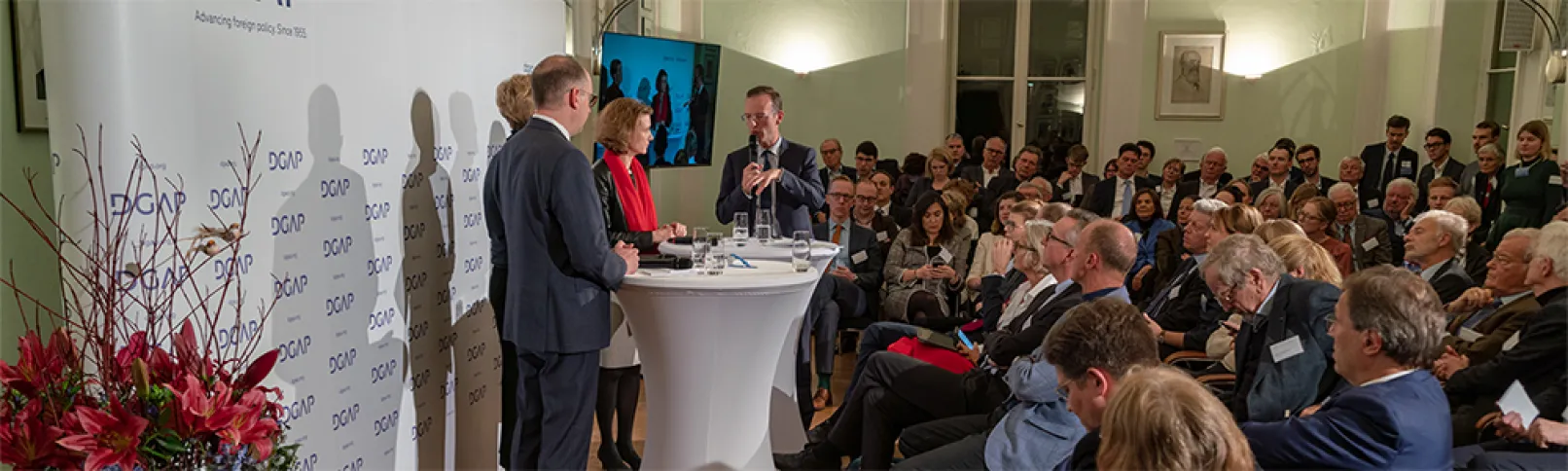
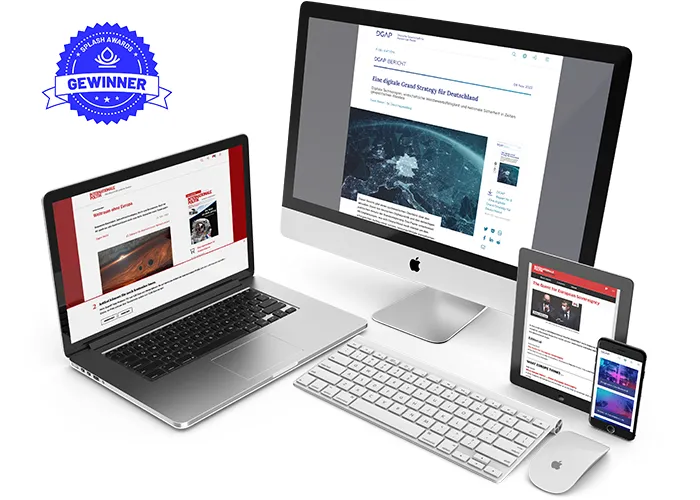
The German Council on Foreign Relations (DGAP) is a renowned think tank that has shaped the debate on foreign policy issues in Germany and Europe since its founding in 1955. Committed to promoting democracy, peace, and the rule of law, the non-partisan organization provides decisionmakers in politics, business, and civil society with strategic advice on topics related to global affairs and trains young professionals in international leadership programs. The accessible websites reflect the diverse topics and activities of DGAP, which include its research programs, experts, and the independent foreign policy journal Internationale Politik, which is published in German and English.
The accessible websites reflect the diverse topics and activities of DGAP, which include its research programs, experts, and the independent foreign policy journal Internationale Politik, which is published in German and English.
About the project
In the course of an overall repositioning (content-wise as well as visually), the websites had to be completely modernized. A good 3,500 user-profiles and 30,000 articles had to be migrated, along with restructuring. Accessibility and SEO had to be improved and the new design, of course, had to be device-adaptive. The editors asked for more flexibility in content creation and layout.
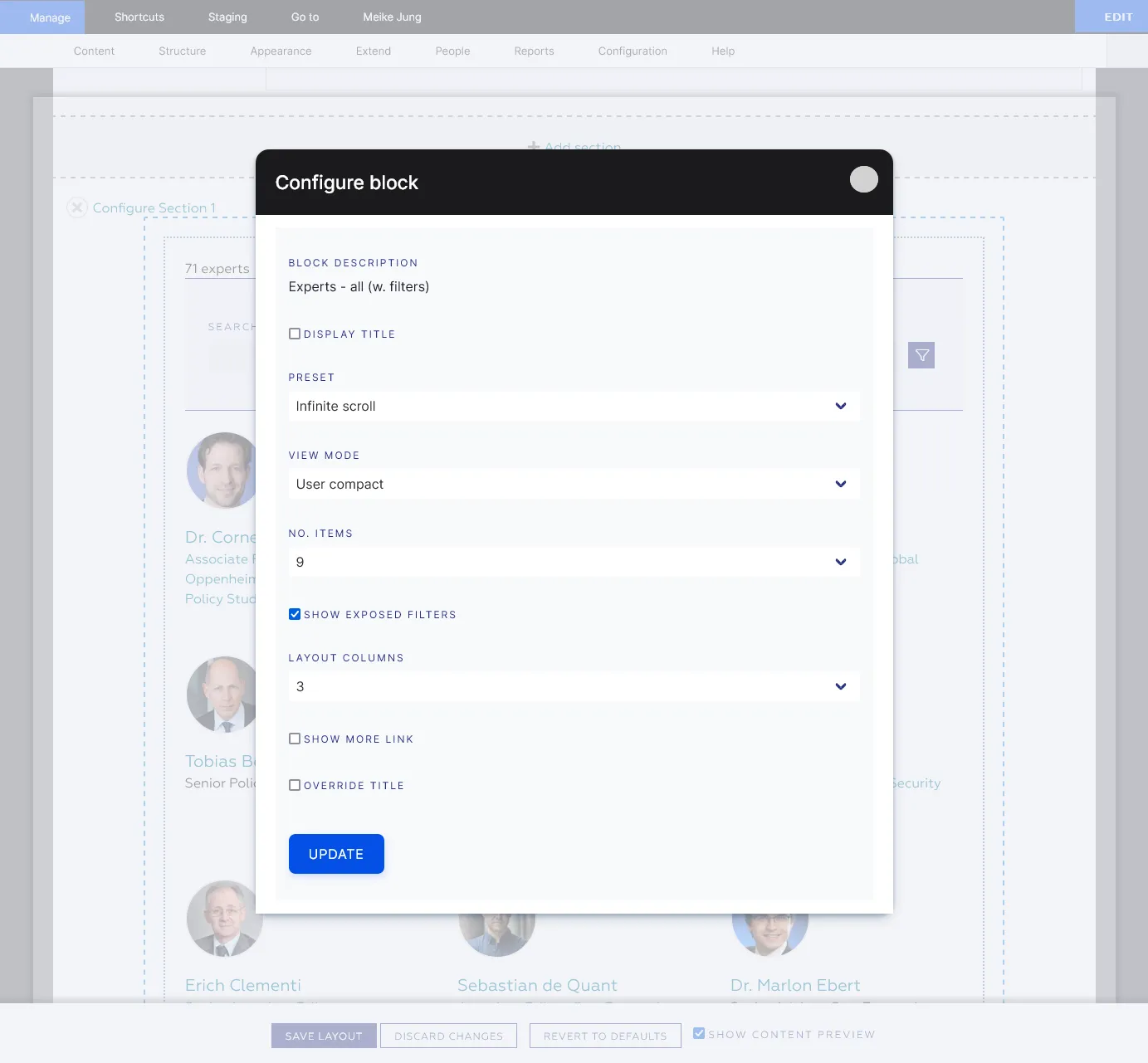
With regards to the latter, we decided against Paragraphs in favor of Drupal Core’s (at the time being still very fresh) Layout Builder. Some modifications allow reusing views with adjusted settings like choosing the number of items to display, the pager type, the view mode, or the display of exposed filters.
Thus, an editor can decide whether to display the most recent articles as large teasers in a slider and later change it to display 12 recent articles with a load more button and an exposed filter to narrow down the results. The same principle works for nodes, media assets, and user lists.
The layout section can be highlighted with a predefined set of background colors. Section headlines are automatically aggregated in an on-page navigation at the top of each page.
With the customer knowing about continuous deployment principles, it was possible to provide the migrated bilingual content for two domains early on a pre-live server so that the editors were able to enrich the content with fresh imagery and to adjust the modified taxonomies. At the same time, further development and theming happened.
With the customer knowing about continuous deployment principles, it was possbile to provide the migrated bi-lingual content for two domains early on a pre-live server so that the editors were able to enrich the content with fresh imagery and to adjust the modified taxonomies. At the same time further development and theming happened.
A special challenge was the asynchronous launch of two websites. The journal website internationalepolitik.de had to stay alive on Drupal 7 while dgap.org was launched 3 months earlier. APIs to external services (Navision, Mailchimp, Metis) had to work seamlessly and two Apache Solr search servers had to be managed with an overlap.
The multidomain setup uses variations of a content edit form, hiding certain fields that are not relevant for the current domain. Correspondingly, the full page view mode can be configured per domain and node bundle.
The legacy functionality handling an IP-based login for trusted networks was reviewed and ported to a contributed module.
Registered users (members of DGAP and subscribers of the journals) find exclusive content, their bookmarks (articles, users, events), and personal invitations to events on their individual dashboard. The media center detects privileged users and includes exclusive media assets (such as event recordings) when they have appropriate access. Media assets can have dedicated stand-alone pages to deliver details like a transcript or a detailed (accessible) infographic explanation.
Why Drupal was chosen
DGAP is fond of open source software and appreciates Drupal's flexibility to custom-tailor a content management system to their requirements. It goes without saying that Drupal was chosen again for the relaunch.
Technical Specifications
Drupal version: