Manifesto’s collaborative approach delivered a fantastic new website and also helped us to change how we approach digital projects as a business. Their wide range of expertise in all things digital helped us to deliver a product which has been fantastically well received by customers and colleagues.”
Aaron Cue, Digital Manager at Genesis Housing
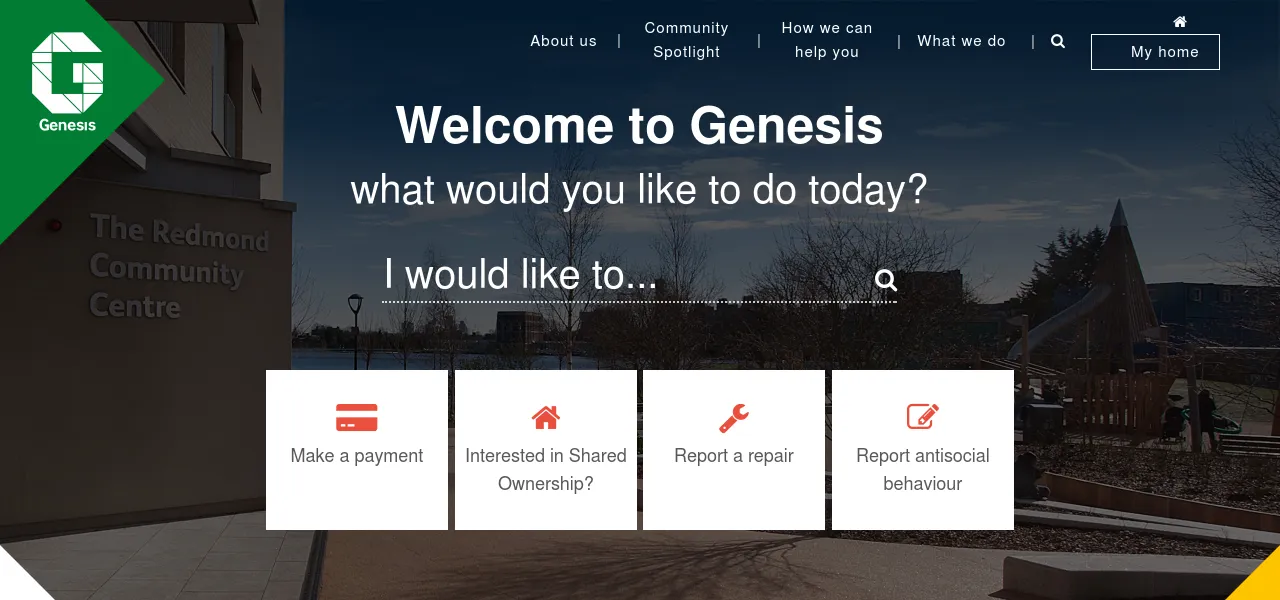
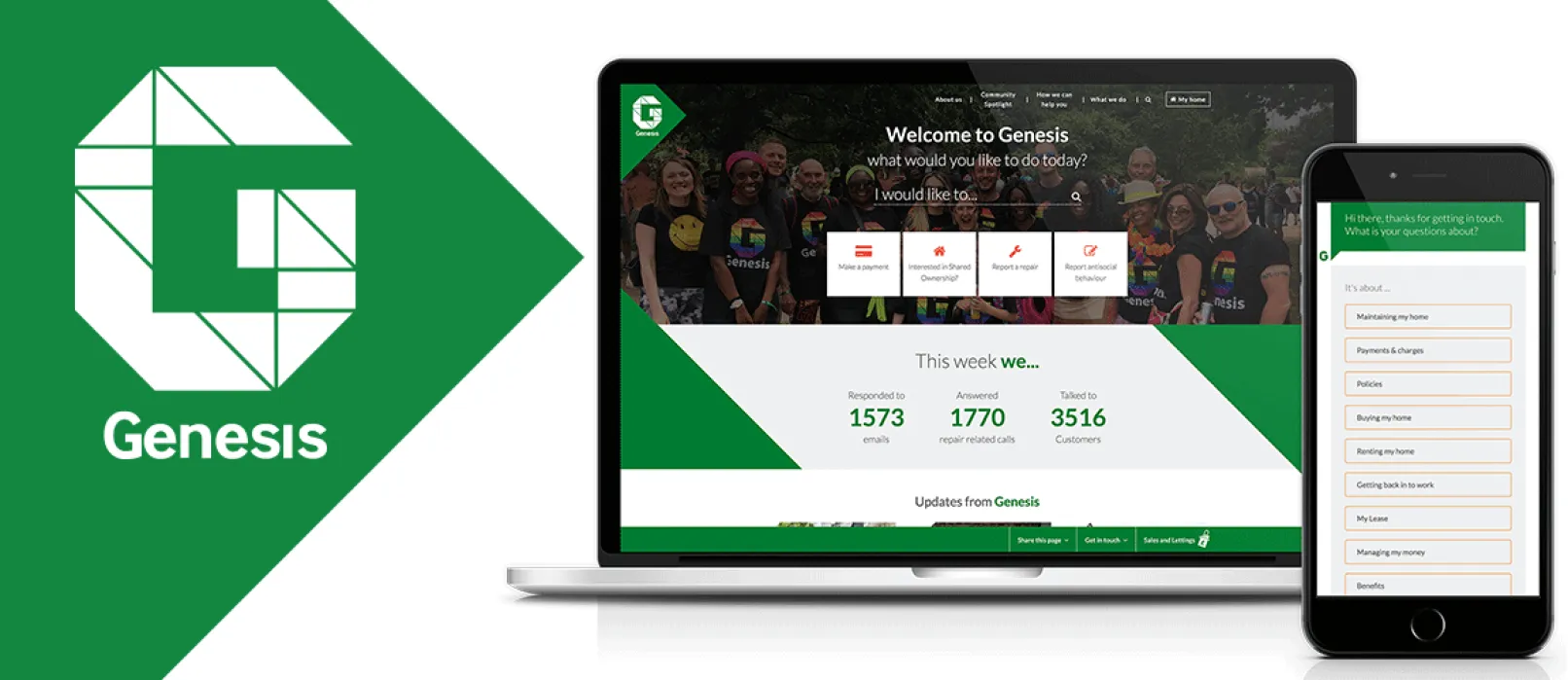
One of the UK’s leading housing associations, Genesis Housing owns or manages around 33,000 homes across London and the east of England, and provides homes for around 100,000 people. They wanted to redesign their website to help residents get to the information they need quickly, and log repair requests easily and efficiently.
To best serve their customers, Genesis Housing Association were determined that residents should be heavily involved in the design of the new site, and that the planned content and features came directly from research conducted with real users.
They engaged London agency Manifesto to conduct extensive user research before designing and building a website which delivered superlative user experiences for the association’s residents.
About the project
Manifesto’s collaborative approach delivered a fantastic new website and also helped us to change how we approach digital projects as a business. Their wide range of expertise in all things digital helped us to deliver a product which has been fantastically well received by customers and colleagues.”
Aaron Cue, Digital Manager at Genesis Housing
The Genesis Housing website had grown organically over time and so, while it contained lots of relevant content for residents, it wasn’t very easy to navigate. Genesis Housing also wanted to provide a quick, easy way for residents to report repair requests that would mirror the experience of calling a staff member, while relieving some of the pressure on the contact centre.
Manifesto kicked off the design journey with a user research stage. This consisted of two workshops with residents, a resident survey which garnered over 800 responses, and site visits to the contact centre and care and support teams. The aim was to determine the needs and preferences of multiple kinds of user, to design journeys which would help them access required information quickly and easily.
They also conducted one-to-one interviews with 12 stakeholders from around the business to build an understanding of what they did, their current ways of working, and their ambitions for the future.
Making essential content easier to find
The organisation’s website was heavily populated with content but, because the site had grown organically over time, this content was often hard for users to find. Manifesto used insights from user research to redesign the site’s information architecture, helping residents find answers to common queries, and retrieve essential documents with minimum effort. The agency also worked closely with the Genesis Housing digital team to help editors prepare content for the new site.
Creating a faster way to report repairs
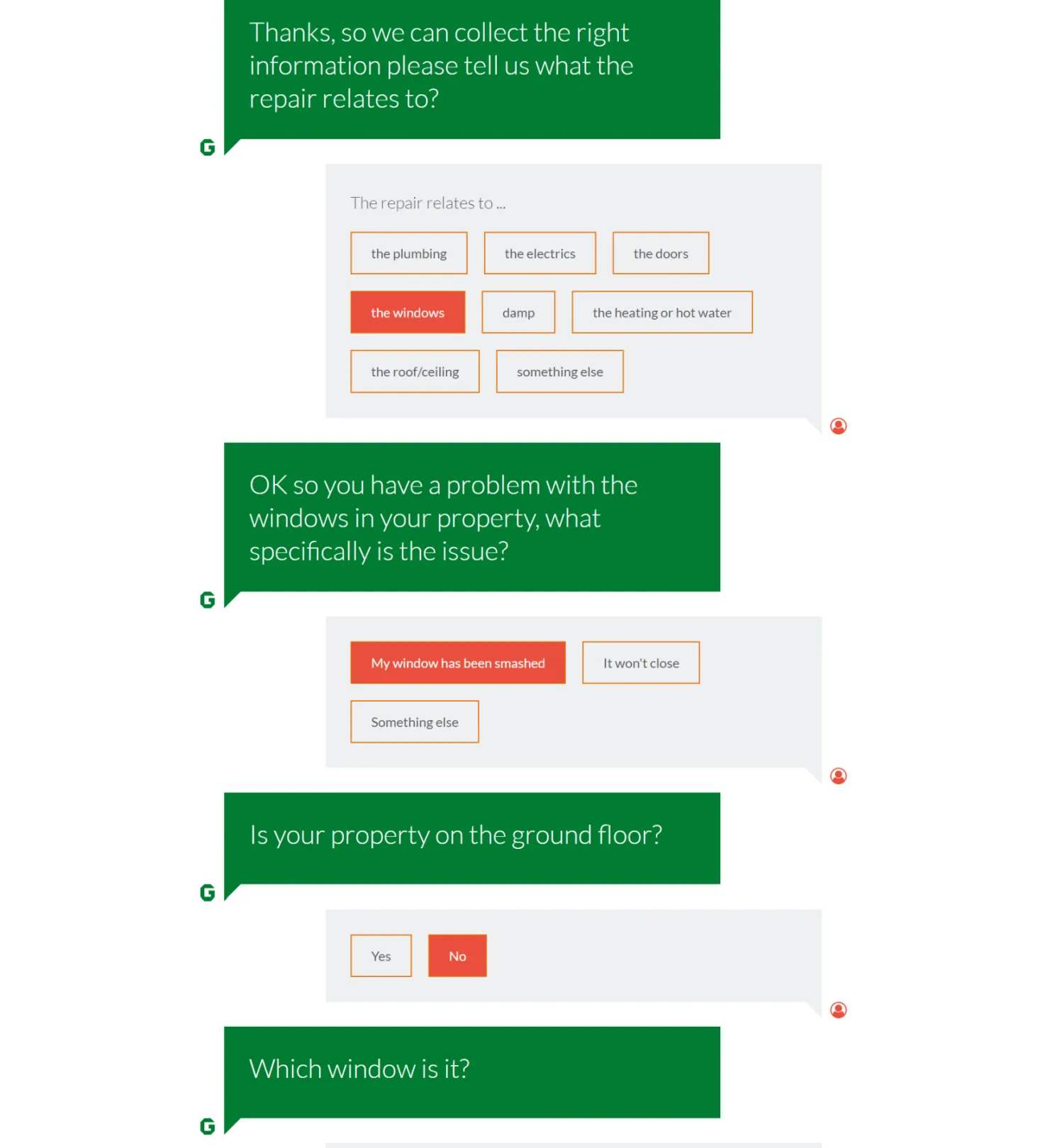
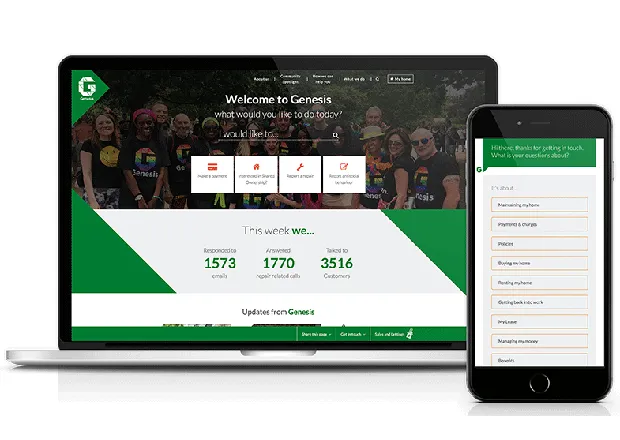
An innovative new feature for requesting repairs uses a conversational interface to help guide tenants towards the actions that will get them help fastest. Condensing thousands of decision tree options down into a simple conversation with a human-like assistant, the ‘report a repair’ feature attempts to mirror the experience of the contact centre, and help tenants get fast access to the information they need.
The Report a Repair form leverages the native functionality of Drupal 8. Individual questions on the form are custom Drupal entities. They include, for each possible answer, a reference to the next question that should be displayed. This chain ends with a conclusion (which is also a custom entity) for each possible path through the form. Administrators can build up a form entirely via the Drupal admin UI, with no coding necessary. On the front end, Javascript is used to display the questions sequentially in a conversational style.
It is hoped that this new feature will not only improve the efficiency of the contact centre, but also reduce customer waiting times.
Improving accessibility for everyone
A great deal of diversity among users, and the necessity of complying with the Equality Act 2010, made it crucial that the new site was accessible to all. Designed to deliver a fast, convenient user experience on mobiles, tablets and desktop computers, the site has also been extensively tested for accessibility, ensuring that people making use of screen readers and magnifiers benefit from the same level of service.
Results
The new site launched on Wednesday 8th November. Built in just 11 weeks on Drupal 8, it marks the first phase of Genesis Housing and Manifesto’s efforts to deliver improved digital experiences for the housing association’s customers.
In the first month after launch, the new site, with its improved information architecture and redesigned user journeys, saw over 60,000 unique page views. The ‘report a repair’ form, mirroring the experience delivered by the contact centre, but using fewer resources, successfully fielded over 21,000 interactions. Important content that Genesis Housing wanted to highlight, including ‘Buying Your Home’ and the site’s financial advice section, also saw significant increases in the number of page views.
21k+ form actions per month
60k+ page views per month
Why Drupal was chosen
Drupal was a natural choice for the Genesis Housing website. The organisation has lots of content which it needs to make accessible to many users, necessitating a powerful and scalable CMS. Some complex use cases, like reporting repair requests across the organisation’s thousands of properties, demand additional functionality, which Drupal’s open, modular nature make it easy to deliver in a secure and reliable way.
Drupal 8’s concept of ‘Entity’ would also prove incredibly helpful when it came to creating a conversational form for fault reporting.
Technical Specifications
Drupal version:
Key modules/theme/distribution used:
Paragraphs provided an easy-to-use method for entry and display of editor-managed content.
Search API with Apache Solr integration (via Search API Solr Search module) allowed for site-wide indexing and search, with Solr search powered by Acquia’s cloud platform. Due to the large volumes of content, and the need for residents to be able to find what they were looking for quickly, this powerful search functionality was essential.
Drupal Console was used to create custom entity types for use in e.g. the conversational Report a Repair form.