Sector(s)
Team Members
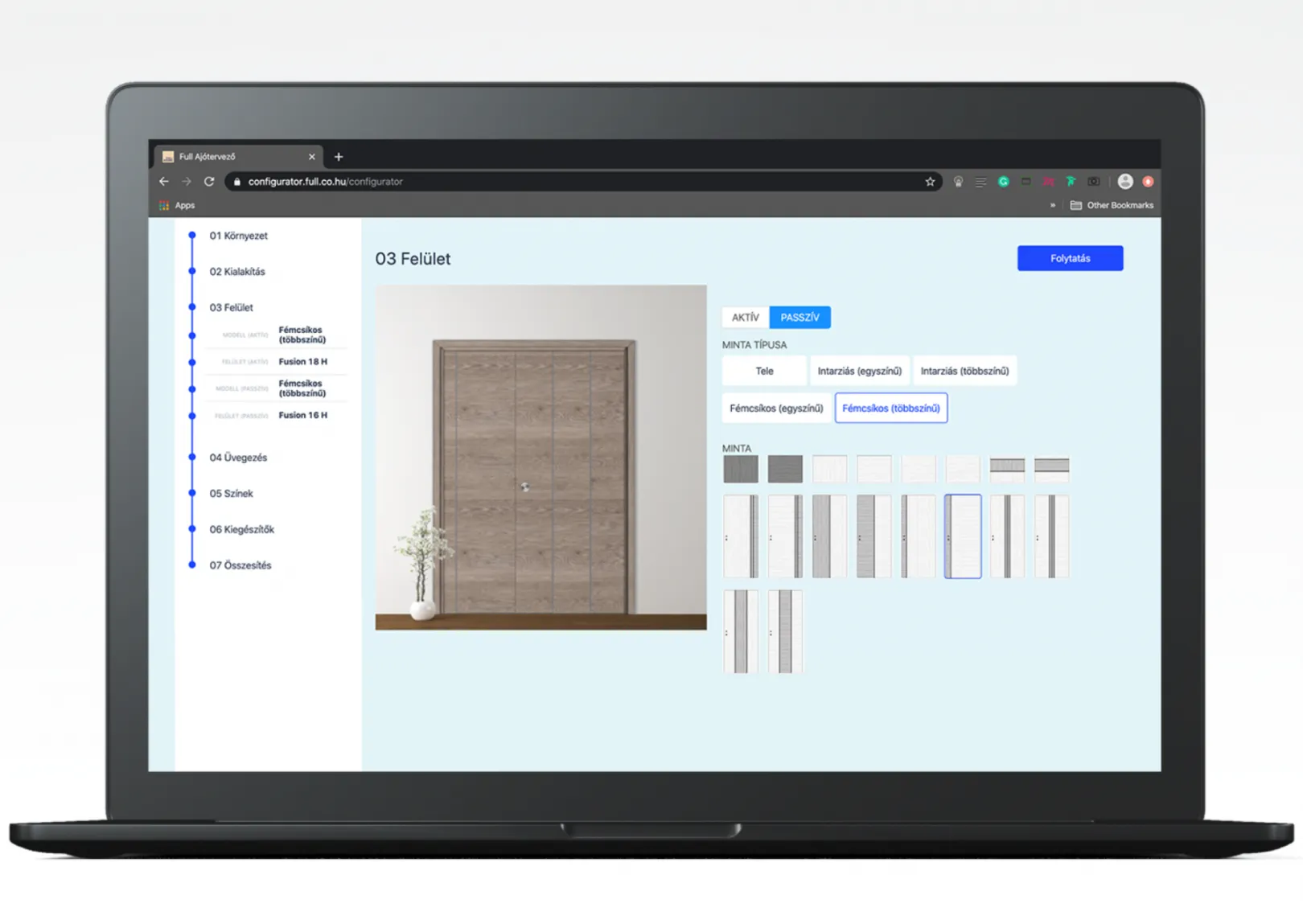
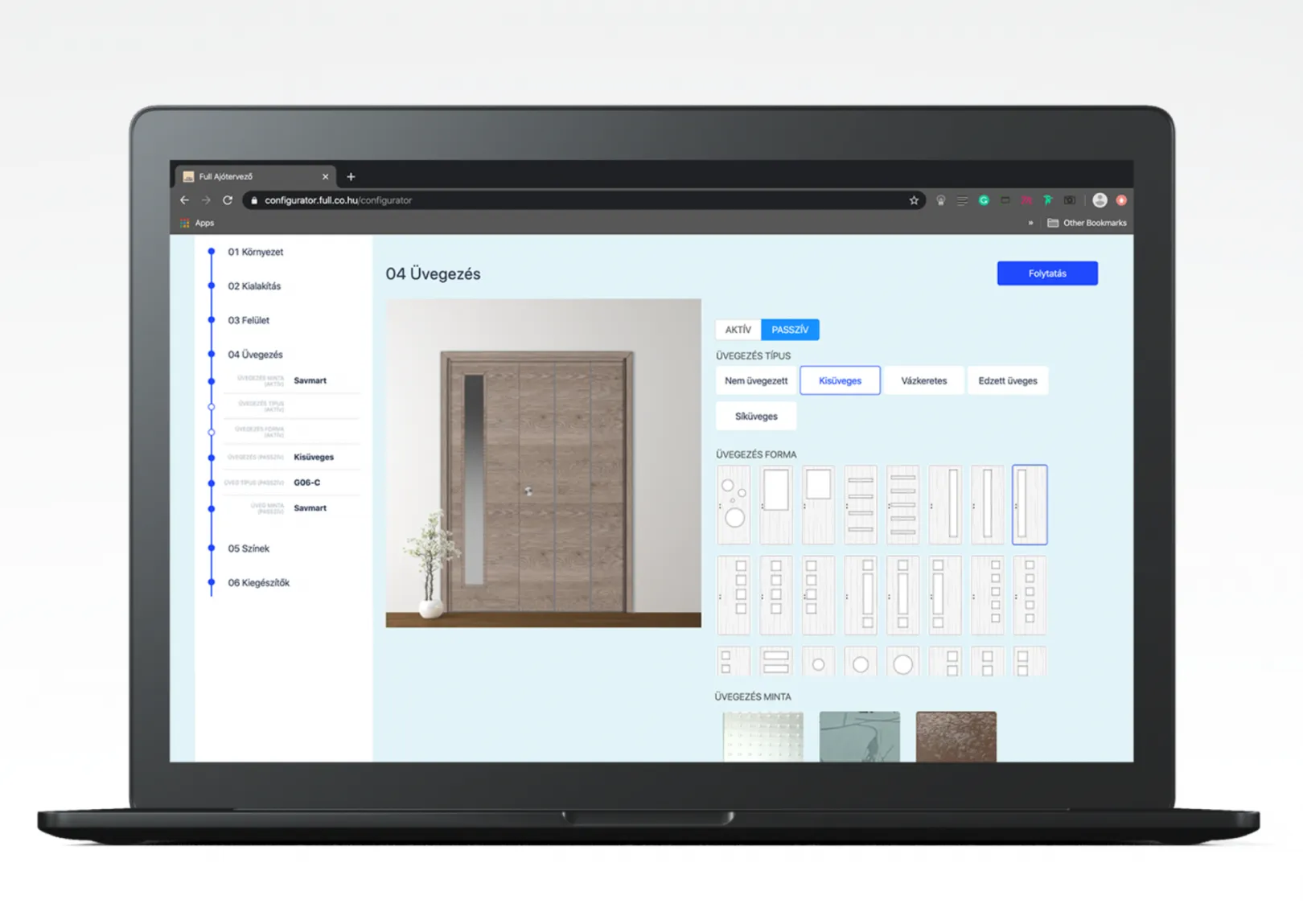
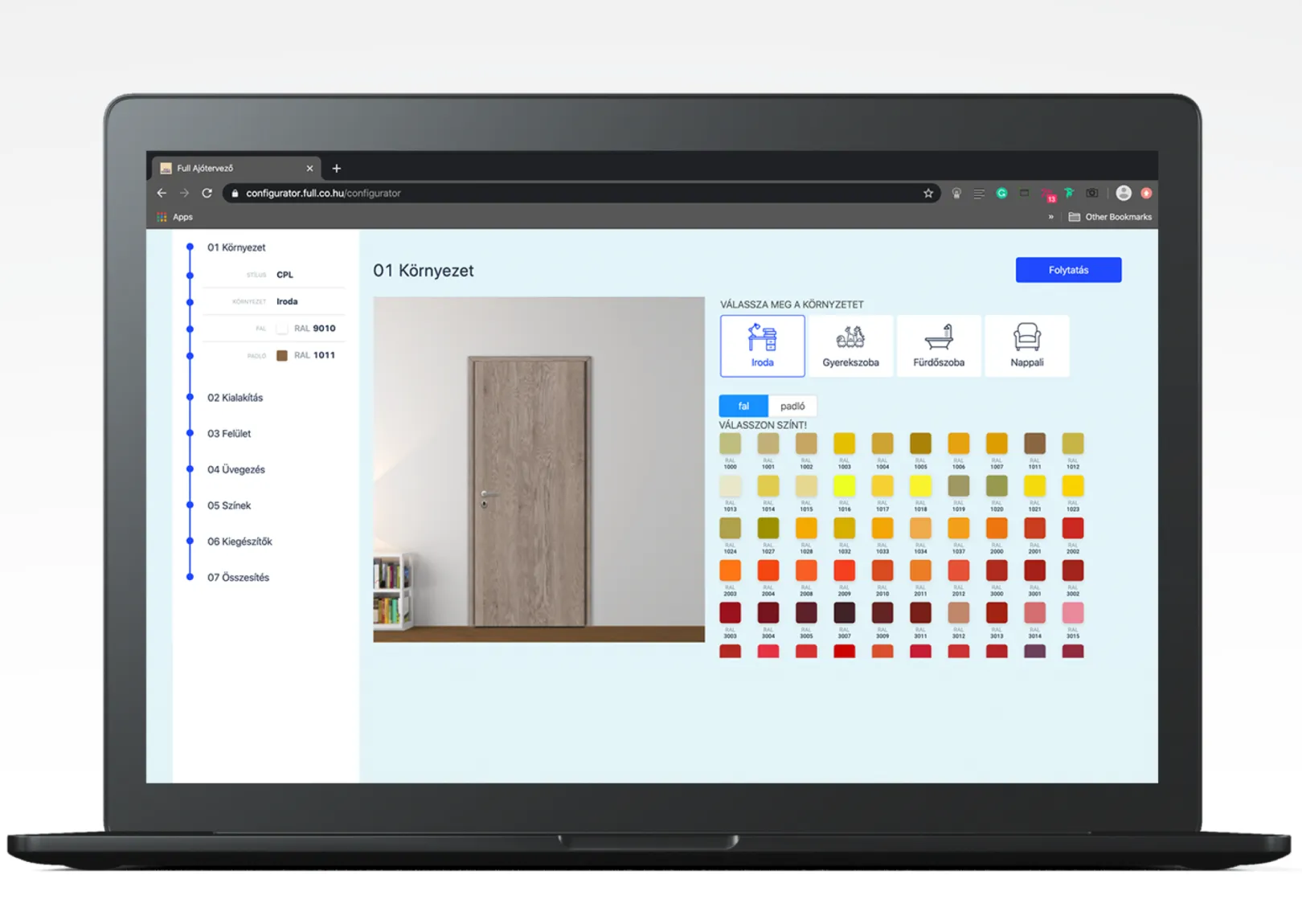
The client is one of the biggest custom made door factories in Hungary. As all their sales go through their retail partners, and there are endless possible combinations and door setups, it's essential that clients are able to use an online configurator in addition to the existing catalogue.
We rebuilt their website last year, which already contained a very simple, interactive presentation tool about the different parts of various door types.
About the project
The presentation tool, which was originally created around 2000 using Flash, has become extremely popular and highly leveraged throughout the Sales process. It was apparent our next steps to support this client was to redesign and extend capabilities of this feature within their application. Since Flash is a technology that is no longer supported, and the new functionality required a platform that can be used to implement more complex application logic, we suggested React.js as a modern alternative that has great support in a wide variety of browsers.
We conducted an extensive and thorough UX analysis to completely understand the needs of the user. Additionally, we leveraged existing clients and retail partners to test the complex door configuration process
In addition to the configuration functionality, we implemented a feature that would allow users to save their design on the partner sites prior to order submission. This laid the foundation for future capabilities to integrate with the manufacturers' systems.
Why Drupal was chosen
Drupal was chosen because it provided a simple solution to handle the contents like different door components or user configured door presets. Multi-site and multi-domain capabilities were necessary to be able to fulfill the requirements of this project as well as out of the box user and permission handling.
We decided to use a headless drupal solution because we needed a more flexible technology to be able to implement all the necessary front end features for the door configurator. For the front end our choice was React.js, which integrated nicely with the APIs provided by Drupal.
In the future, there are plans to implement a mobile application using VR, using the same headless Drupal back end.
Technical Specifications
Drupal version:
Key modules/theme/distribution used:
The role delegation module was a great fit to implement a granular permission model required by this project. For mail sending we decided to use mandrill. Authentication is done by the combination of simple OAuth and consumer modules. To be able to handle password reset requests with headless Drupal, we picked the rest password module.