Sector(s)
Team Members
Visit the site
Visit the siteOrganizations Involved
Community contributions
Several patches have been contributed to the community.
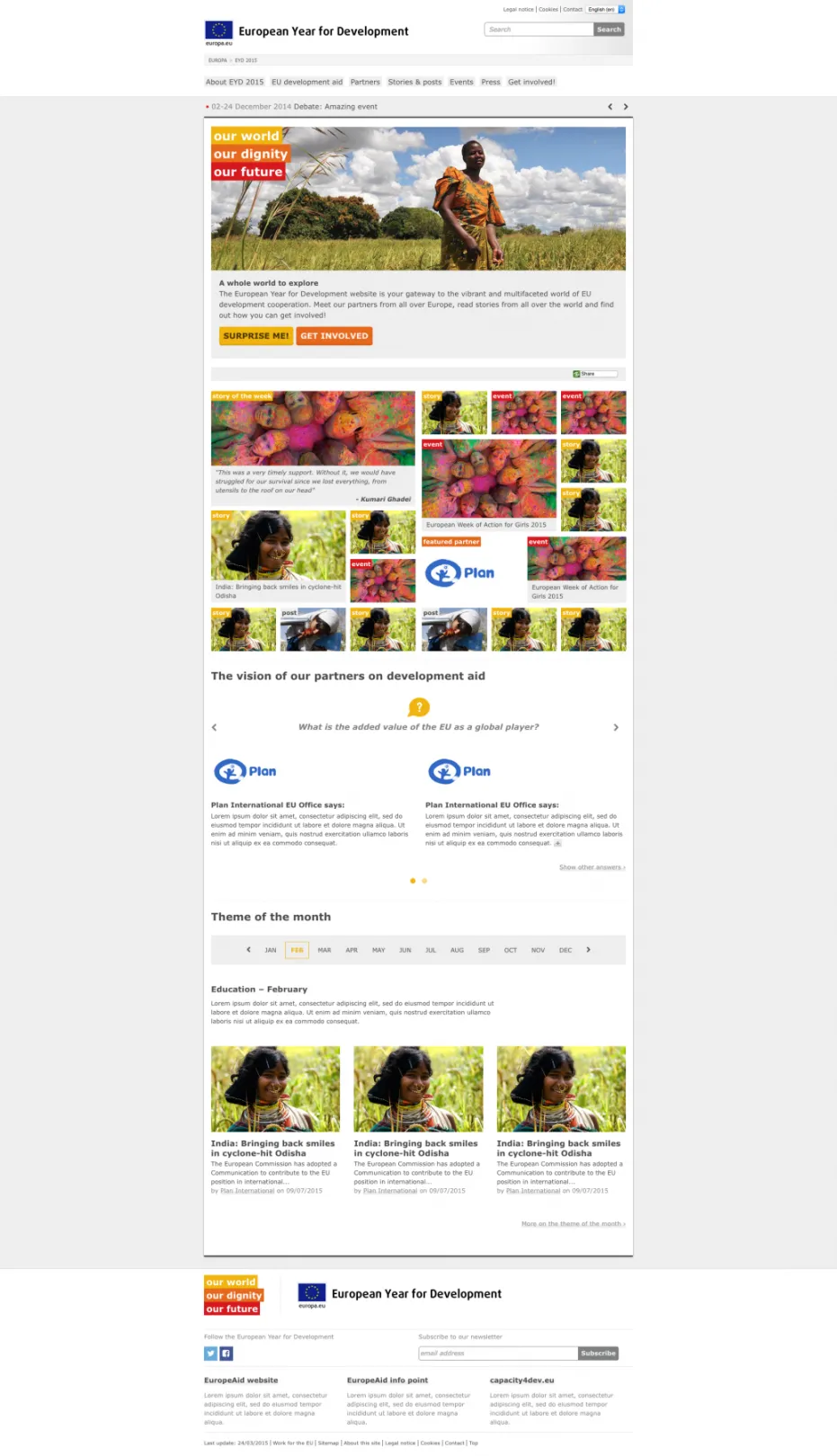
2015 is a special year for development. It is the first ever European Year to deal with the European Union's external action and Europe’s role in the world. For development organisations all over Europe it is an unparalleled opportunity to showcase Europe's commitment to eradicating poverty worldwide and to inspire more Europeans to get engaged and involved in development.
The European Year for Development website is your gateway to the vibrant and multifaceted world of EU development cooperation. Meet partners from all over Europe, read stories from all over the world and find out how you can get involved!
About the project
Challenge
Every year the European Commission chooses a theme to focus on. In 2015 the theme "Development" was chosen because 2015 is the last year to reach the Millennium Development Goals, set by the UN in 2000.
The European Year of Development 2015 will be a key opportunity to raise awareness of development across Europe, and to show European taxpayers that every euro spent on development benefits both people living in some of the world's poorest countries, and EU citizens themselves.
Unlike other inter-institutional EUROPA websites, this is not merely a promotional one-way communication website. The EYD2015 website should be a collaborative platform where partners, member states, but also NGO’s can contribute stories and events.
The Directorate-General for International Cooperation and Development asked Amplexor to design and build this yearly theme site on the europa.eu portal and to make it available in 23 languages within 5 months to allow content entry on the website by the different partners.
The INFORMATION PROVIDERS GUIDE (IPG) is for everyone who develops and publishes material on EU websites, including webmasters, editors, content providers, web developers and contractors. The guide covers all aspects of publishing on the EUROPA site, describing the relevant editorial, technical and presentation standards in force. The rules set out in the IPG are compulsory in order to ensure a coherent and user-friendly service to the users and required some customizations in Drupal.
Solution
In the design phase Namahn organized a number of workshops and interviews to define the information architecture. In a framing workshop the problem was better identified with a context map of all involved systems and personas with their user journeys. Classification workshops were held to define the sitemap and a content model. During design workshops sketches were turned into wireflows to detailed wireframes. Style tiles were created based on the official style guide and were used to further refine the wireframes into a graphical design prototype (ready-to-use front-end code).
To provide technical solutions for new ideas Amplexor implemented a Proof of Concept (e.g. partner contributions, multilingual search, IPG requirements) and created a product breakdown structure (PBS) to describe the solution.
The implementation phase consisted of an agile approach with 3 releases:
- release 1: content entry
- release 2: go-live
- release 3: extras
In total 7 sprints were performed and during each sprint the following meetings were organized:
- sprint planning: refined tasks from the backlog were added to start a new sprint
- sprint refinement: functionalities from the backlog are further refined
- daily stand-up: provide a status update and discuss items done, to do and impediments
- sprint demo: delivered functionalities are demonstrated and feedback is taken into account and added to the backlog for next sprints
- sprint retro: discuss what went well or what improvements could be made in the next sprints
Features
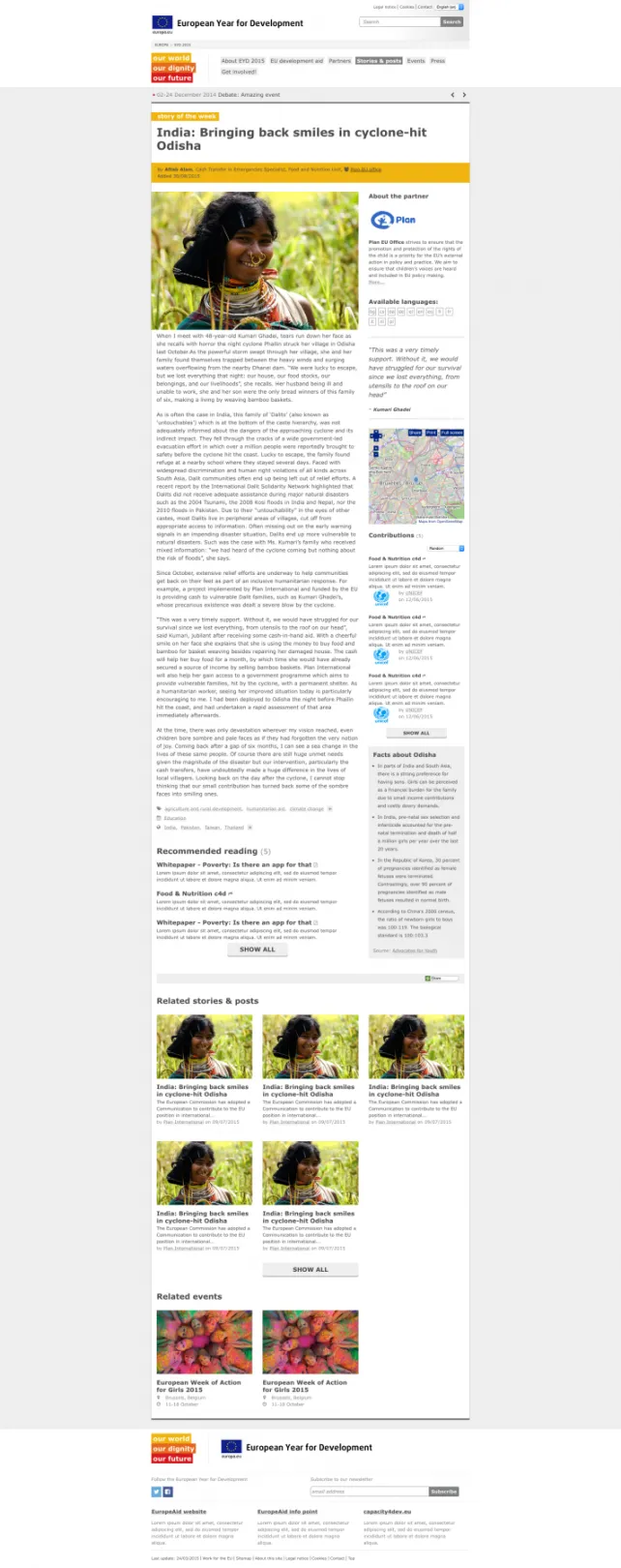
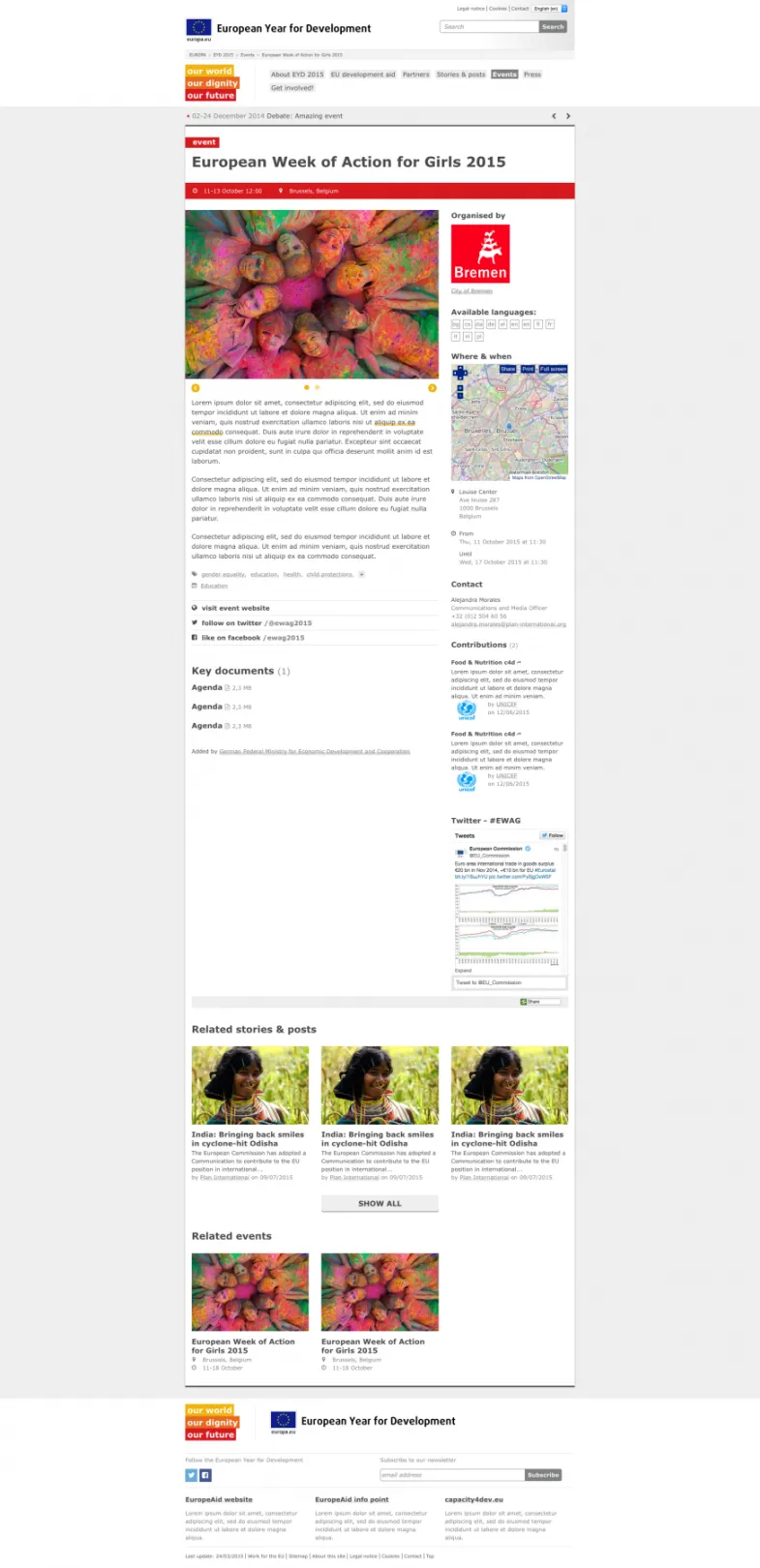
An online collaboration platform available in 23 languages where organizations (partners, member states, NGO's) can contribute events and documents, write stories & posts, inform about their news or vacancies and recommend content. Visitors can read interesting stories about development, get updates on the latest EU news, participate in events and search the website in all languages.
Benefits
The website is accessible to all audiences according to the WCAG 2.0 standard and is available in 23 languages with high quality content.
The agile approach allowed us to deliver maximal value before the deadline. Collaboration with a usability partner improved the consistency of the website and user experience for the contributors.
Customer quote
"What is really nice is the fact that this site was actually launched on time!"
Why Drupal was chosen
Drupal offers a flexible set of tools for various partners to contribute content.
Drupal makes it easy to organise and structure content according to keywords and metadata. This allows to easily connect, relate and classify the website's content.
Drupal core software is free and offers thousands of contributed modules and unlimited possibilities to integrate with other proprietary and third-party tools and platforms.
The Drupal community is strongly committed to making sure Drupal is an accessible tool for building websites that can be accessed by people with disabilities.
Technical Specifications
Key modules/theme/distribution used:
Entity translation was chosen to support content translation in 23 different languages.
Organic groups is used to allow contribution of stories & events for different partners.
Adminimal offers a responsive layout with a number of usability improvements to the administration interface.