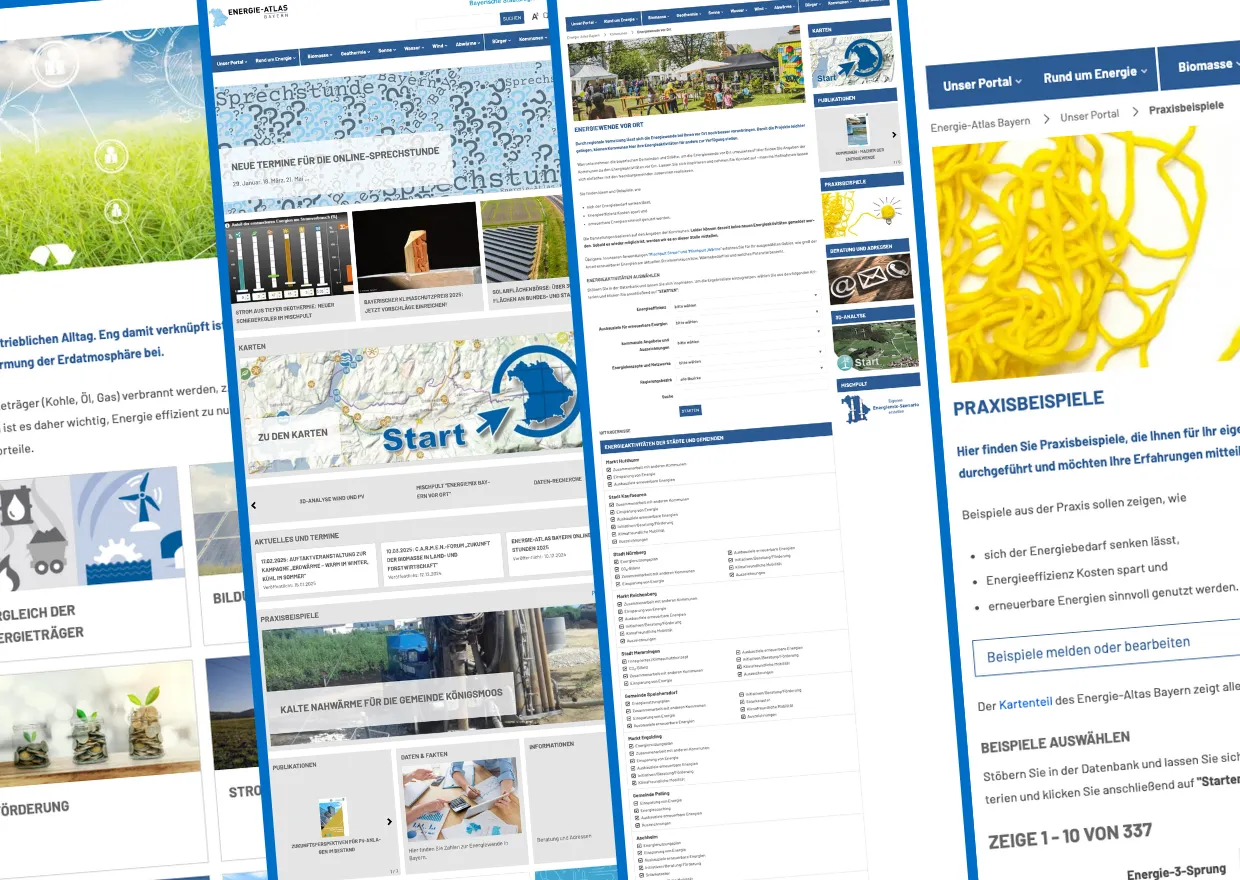
adesso partnered with the Bavarian Environment Agency (LfU Bayern) to transform the Energy Atlas Bavaria into a modern, accessible, and user-focused platform. Built on Drupal, the relaunch prioritized scalability, flexibility, and accessibility while seamlessly integrating data from external services. The platform now empowers users to explore detailed energy-related data and reference projects through dynamic, interactive maps and robust search features.
About the project
Phase 1: Foundation and Migration
The initial phase focused on laying the groundwork for the platform:
- The Energy Atlas was fully rebuilt on Drupal, ensuring stability and future-readiness.
- A WCAG 2.1-compliant, responsive design was implemented with optimized keyboard navigation, high-contrast visuals, and full screen-reader compatibility.
- Solr was integrated to deliver fast, precise, and filterable search results.
- The adoption of Storybook as a design pattern library ensured a unified and reusable component library for frontend development.
Phase 2: Expansion and External Integration
The second phase emphasized expanding functionality and integrating external data sources:
- Centralized data from external systems were connected via RESTful APIs and displayed in interactive maps, making geographic insights easily accessible to users.
- Paragraphs provided editors with a dynamic, modular page-building experience.
- Multi-step approval processes ensured high editorial standards.
- In collaboration with IT-DLZ Bayern, comprehensive security measures were implemented following a penetration test.
- The platform was hosted on a reliable eight-server setup, including dedicated Postgres databases and a GitLab server for efficient deployment workflows.
- Service Level Agreements (SLAs) were established to ensure high availability and rapid response times.
Phase 3: Agile Development and Modern Redesign (Ongoing)
Currently, the project is in its third phase, focusing on agile iterations and a cutting-edge redesign:
- Storybook continues to play a central role, ensuring reusable and scalable UI components.
- Drupal 10, along with modern frameworks such as Tailwind CSS and Alpine.js, is being leveraged to keep the platform up-to-date with evolving requirements, ensuring a modern and efficient user experience.
Why Drupal was chosen
Drupal was chosen as the core technology for the Energy Atlas Bavaria due to its unparalleled ability to meet the project’s diverse and complex requirements. Its modular and flexible architecture offered the perfect foundation for creating a scalable and future-ready platform that could accommodate the needs of a government-level project.
One of the key drivers was Drupal’s robust support for flexible content management. With tools like Paragraphs, editors were empowered to create dynamic, modular content with ease, reducing dependency on technical expertise. Additionally, the implementation of Workflows allowed the team to establish transparent and structured editorial processes, ensuring that all published content adhered to strict quality standards.
Accessibility was another critical factor in selecting Drupal. Its native support for WCAG 2.1 standards provided a strong framework for building an inclusive platform. Features such as optimized navigation, contrast settings, and compatibility with assistive technologies enabled the creation of a truly user-friendly experience for all audiences.
Drupal’s API-first approach played a pivotal role in integrating external systems. The project required seamless connectivity with multiple external services to deliver centralized data, such as reference project information, in an interactive and engaging way. Through RESTful Web Services, Drupal provided the reliability and flexibility needed for smooth data integration.
The platform’s scalability and ability to manage large datasets made Drupal the ideal choice. Its architecture ensured that the Energy Atlas could handle high volumes of data while maintaining performance and responsiveness. This scalability also positioned the platform for future expansions, aligning with the Bavarian Environment Agencys long-term vision.
Ultimately, Drupal’s ability to combine modular flexibility, accessibility, and integration capabilities made it the perfect solution for building a powerful and user-centric platform.
Technical Specifications
Drupal version:
Key modules/theme/distribution used:
- Paragraphs: Allows editors to create engaging, dynamic content without technical expertise.
- Search API Solr: Ideal for handling large datasets, offering precise and user-friendly search capabilities.
- Migrate API: Provides robust tools for migrating and synchronizing external data into Drupal.