Sector(s)
Team Members
Project Team
- Capgemini
- Netcompany-Intrasoft – IT systems ops & integration
- 52North
- Conterra - Geospatial and real-time data technology
- Ommax – Web analytics & SEO
- Fraunhofer Fokus – Data harvesting cataloging and publishing
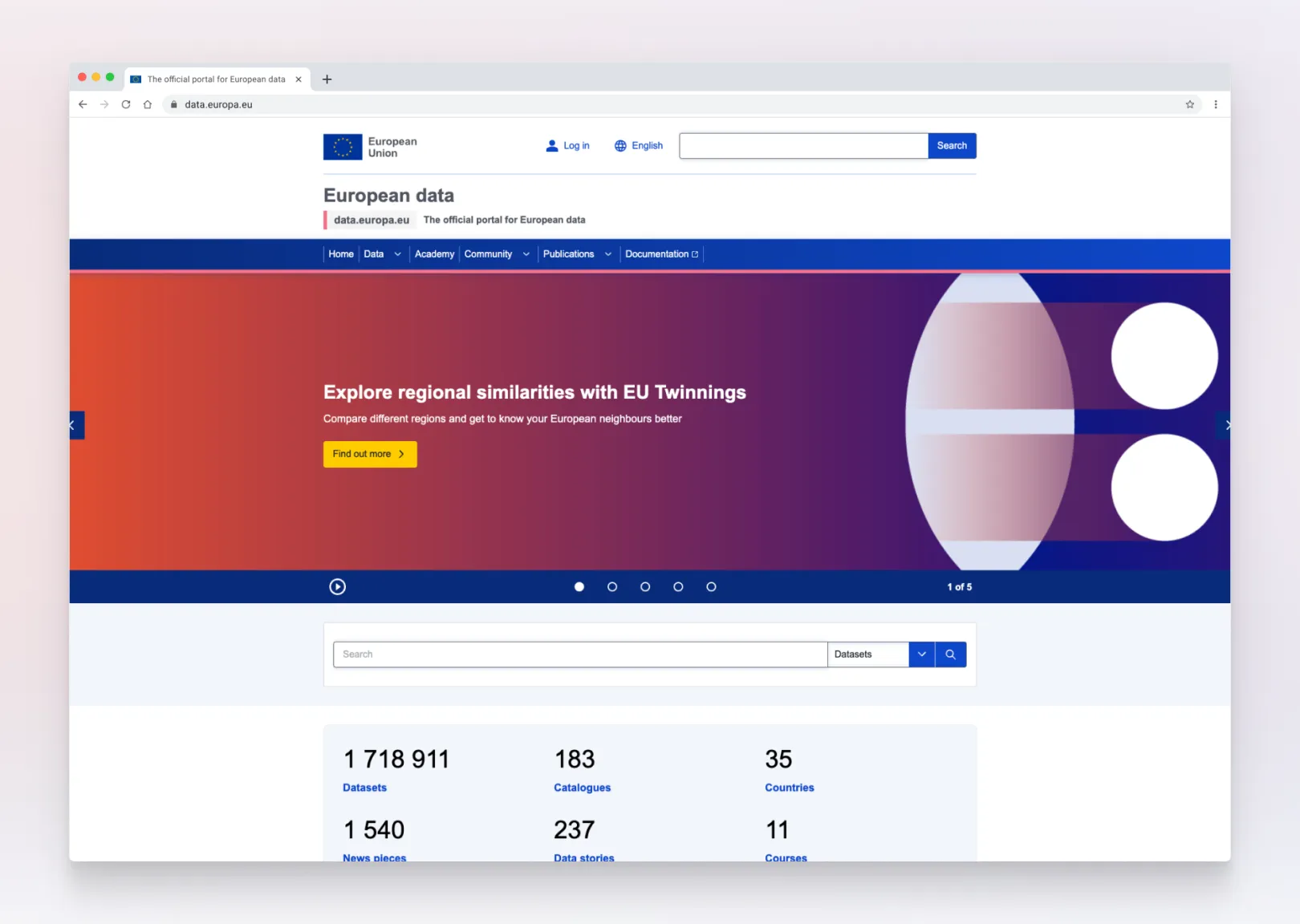
Consolidation of two existing European open data portals, EU Open Data Portal and European Data Portal into a single unified open-source platform, data.europa.eu
About the project
Project goals:
- Consolidation of two European open data portals: EU Open Data Portal and European Data Portal into a single project called data.europa.eu using European Data Portal as the basis for the combined project.
- Extending and improving the new project with additional functionalities.
Steps:
1. Analysis of existing projects:
- EU Open Data Portal was based on a Drupal 7 installation
- European Data Portal was based on a Drupal 8 installation
- Interviewing the existing project managers and analysis of general project functionalities
- Used entities, blocks and other features and functionalities for both portals
2. Preparing the combined and consolidated entity and features proposal
After the extensive analysis of existing projects, we prepared the documentation describing proposed combinations of content and content structure, functionalities and features that will be presented on the final data.europa.eu portal.
3. Technical analysis of both projects
- Technical analysis of both code bases
- Technical analysis of infrastructure requirements for both projects
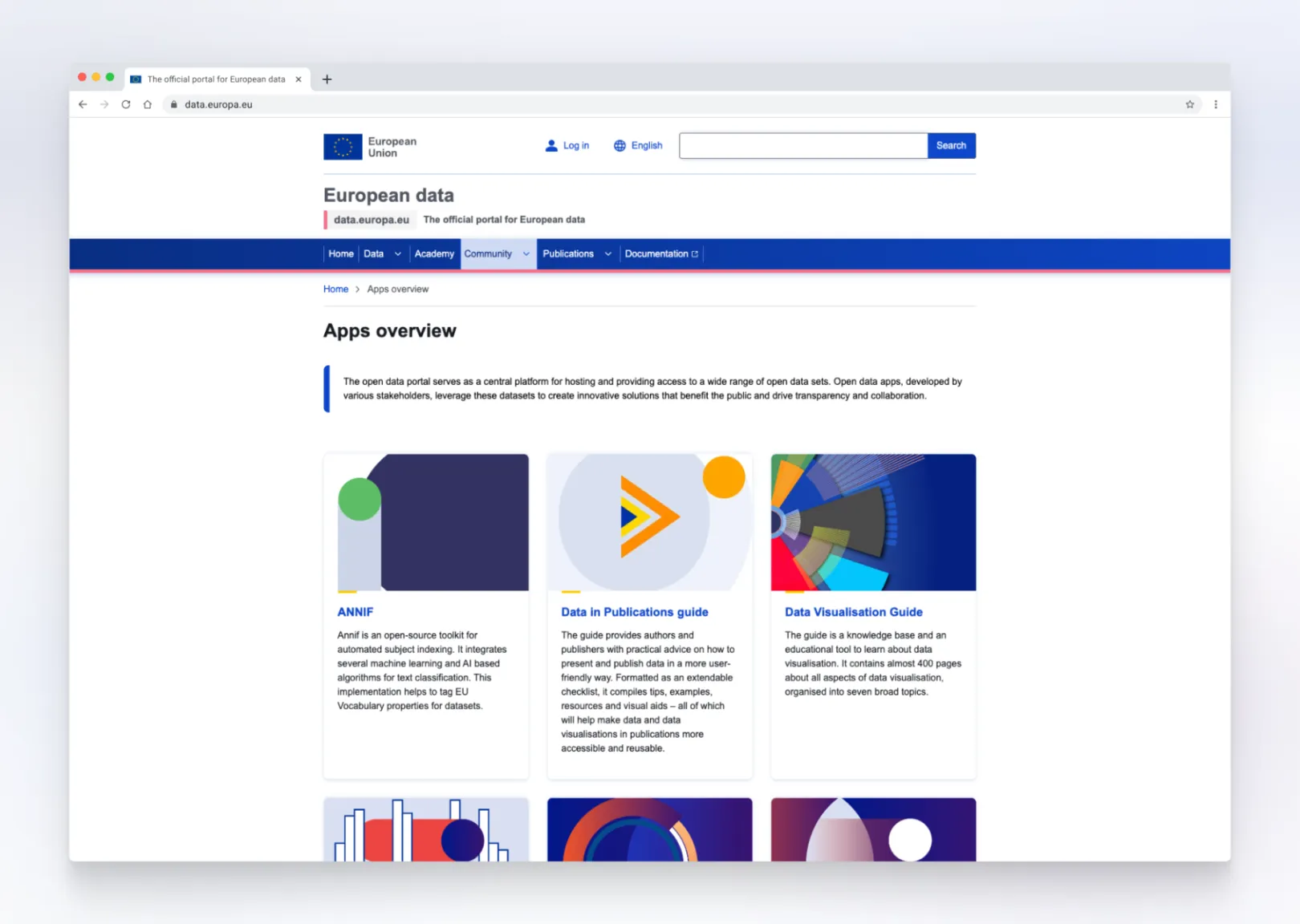
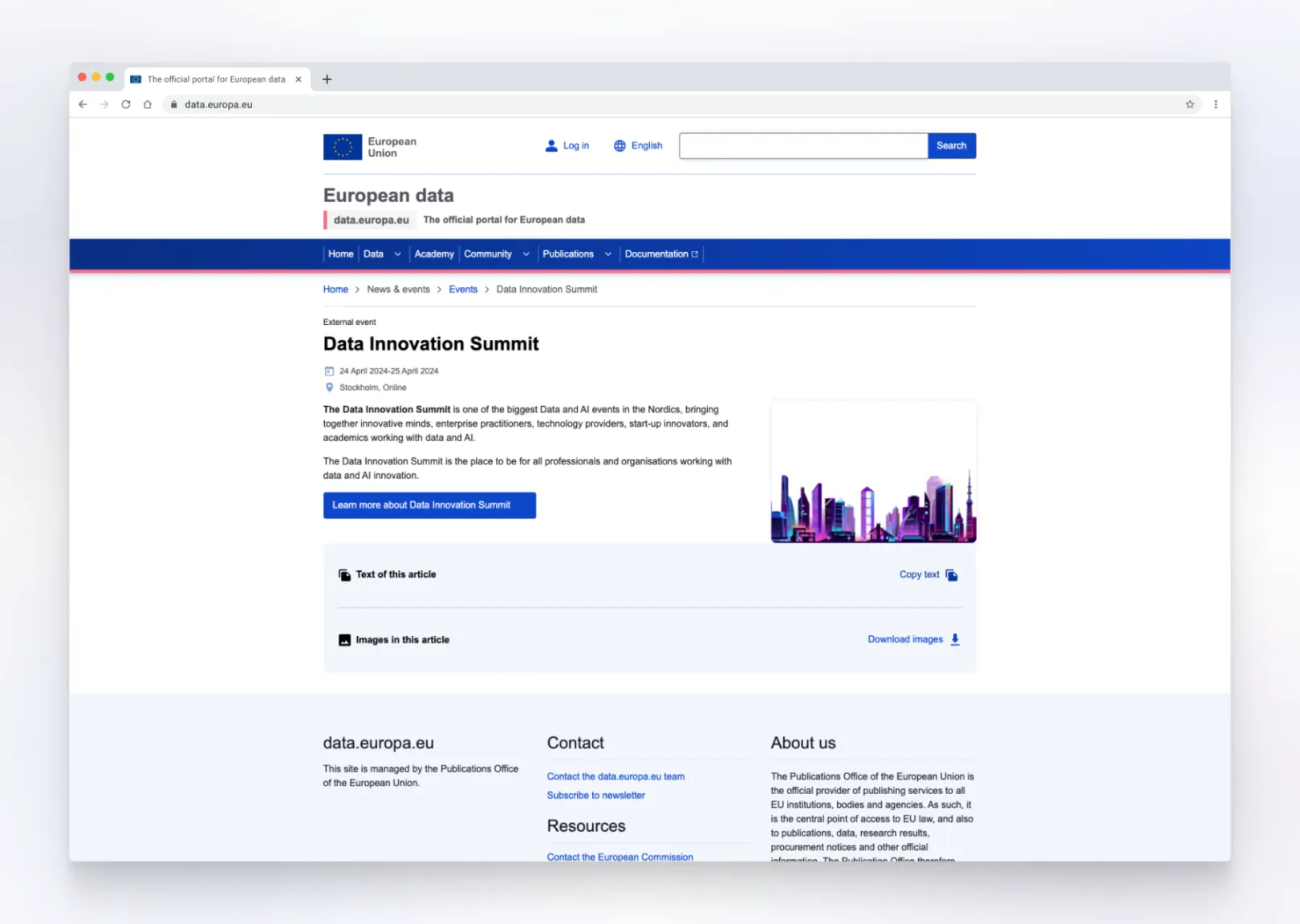
4. Extending the new data.europa.eu project with new functionalities
- Data.europa.eu Academy
This section of the portal aims to provide various courses and resources related to open data, targeting different audiences such as academia, civil servants, developers, journalists, non-governmental organisations, and the private sector.The content includes e-learning modules, webinars, reading materials, tools, etc. covering topics such as:
Introducing open data: Exploring the concept and benefits of open data, including its creative possibilities and innovation, and how data.europa.eu supports the use of open data.
Understanding the legal side of open data: Focusing on how legislation and regulations impact the publication and reuse of open data, including information on different types of open data licenses.
Incorporating open data into your application: Targeted at developers and businesses, this course teaches how to find hidden data on the web, use linked open data formats, and create or enhance applications using open data.
Creating your business with open data: Aimed at developers, this course highlights the value and benefits of open data, showcasing different business models and examples of initiatives that utilize open data.
Measuring the impact of open data: Examining the benefits of open data, methods to measure impact in Europe, and the importance of reuse and best practices.
Moving towards data spaces: Discussing data sharing platforms and data spaces, supporting data sharing across sectors in the single market of data.
Improving open data and metadata quality: Covering topics like cleaning data, choosing the right format, understanding quality open data, and the role of data.europa.eu in this process.
Understanding data governance with open data: Exploring the principles and practices of data governance, illustrating the role of data.europa.eu in different data spaces, and discussing the impact of open data governance in Europe.
Including data in your communication: Focused on improving data visualization in communications, showcasing how to communicate findings through interactive tools and meaningful visualizations.
Introducing data visualization: Teaching the design of state-of-the-art data visualizations, emphasizing the use of data to create inspiring and practical visualizations.
Inspiring through data visualization: A course that encourages rethinking how to inspire others through data visualization, using examples from various topics such as music, art, COVID-19, finance, environment, and economy.
And many more.
These courses and resources aim to educate and empower individuals and organizations to effectively use and benefit from open data.
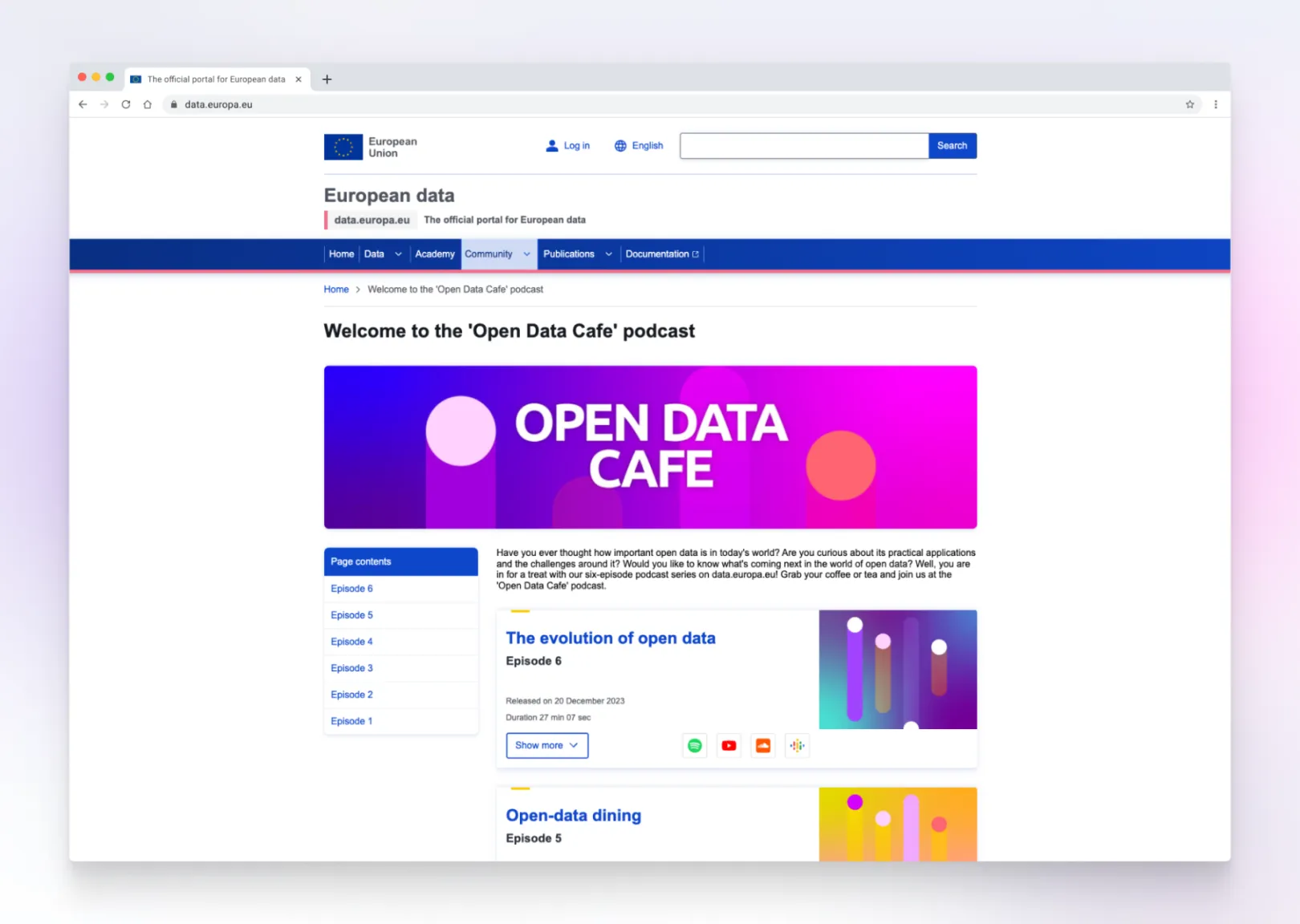
- Podcasts
The website is also used to facilitate the “Open Data Cafe” podcast, a podcast series that aims to educate the public about the importance of open data, the challenges and opportunities with gathering and using open data, and future developments in open data space.
- Implementation of Europa Component Library
We implemented the https://ec.europa.eu/component-library/eu/ component library to ensure that data.europa.eu adheres to all the stylistic and accessibility principles that run across the europa.eu websites.
Why Drupal was chosen
Drupal is a perfect CMS for public institutions that demand high security, stability, flexibility and ease of use. The two existing data portals that this project was based on were already built on Drupal.
Technical Specifications
Drupal version:
Key modules/theme/distribution used:
- paragraphs for modular content editing, combined with field group for nicer edit forms
- config split and ignore for development flow and in future multiste setup
- pathauto for nice url
- eu cookie compliance for easier cookie management
- components for using open europa template library and oe theme in the future
- simplenews for newsletter