20+Brands rolled out within a year 1 mn+Stories migrated 50% Drop in development cost
Our client is one of the largest privately-owned media companies with more than 50 leading business, trade and consumer brands in North America, Europe and Asia. It boasts of delivering news to more than 6 million global business leaders.
Managing a number of websites proved to be a challenge because each brand was operating on its own web platform. The new digital initiative was to ensure brand consistency and operational efficiency.
Providing a central governance model would help efficiently manage the different web properties while also lowering down the cost.
We rolled out 20+ websites onto the new platform from the various framework without compromising best practices across SEO, performance, and media management.
The central digital publishing platform was built on Drupal 8, reducing the development time by half compared to an earlier estimate (if websites were done independently).
What Our Client Wanted To Achieve
When the publishing conglomerate approached us, they had the sole objective of eliminating their digital sprawl and creating a unified, scalable and highly configurable digital platform. They wanted this platform to enable business teams to effectively narrate the distinct brand stories and offer a rich customer experience. And despite all the sophistication, they wanted the backend simplified enough so content editors can take control of the websites, reducing dependencies on their IT teams.
What We Delivered
|
We built a unified, scalable Drupal 8 platform that drives our client's digital presence. We rolled out 20+ websites onto the new platform, 4 of them within 6 weeks. We migrated 1 million+ stories dating from 1995 without compromising on best practices across SEO, performance, and media management. With a central publishing platform on Drupal 8, we reduced the development time by 50% compared to an earlier estimate (if websites were done independently) and at a much lower cost. |
About the project
How We Did It
Building a single Drupal 7 website for one of their lowest traffic brands had cost the client millions of dollars in a previous engagement. As is common in such cases, there was a doubt being cast on Drupal’s capability itself and proprietary CMSs were being considered.
Along with our technology partner, Acquia, we changed this. Acquia’s thought leadership helped clear all doubts about Drupal’s capability as the platform of choice in such large scale digital transformation projects. Our time-tested execution process, component-based architecture approach, and the wide media-industry experience won the mandate of the house's CIO.
And then we got to work:
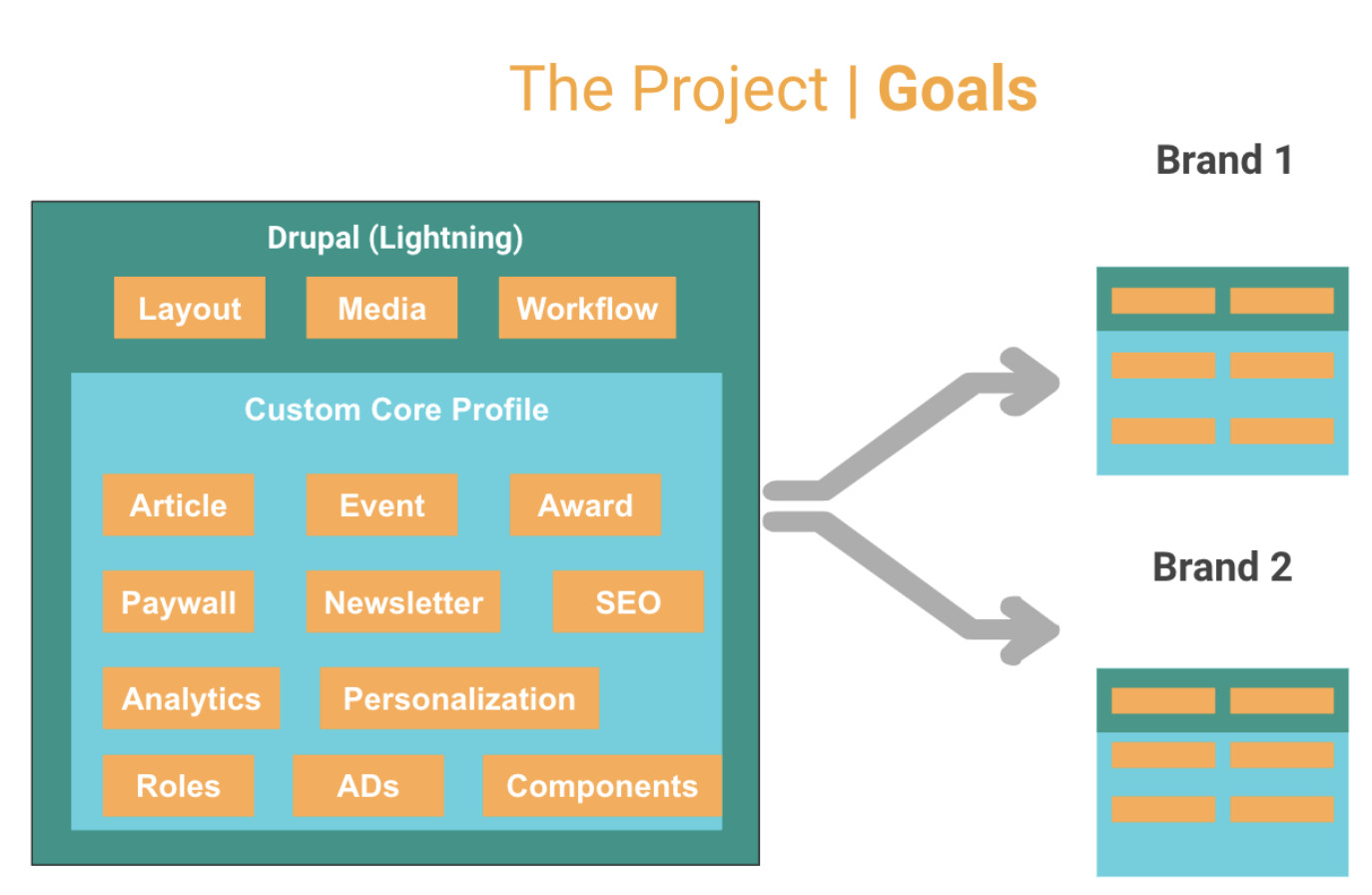
Rolling out 20+ New sites on a Drupal 8 platform
The approach was to leverage Acquia Lightning, a Drupal 8 distribution, to enable component-based development, as well as deploy a Lightning sub-profile on a multi-site architecture for all the brand sites.
We successfully built the custom core profile with 60%-80% of all brand features available out-of-the-box. With this core profile in place, we could rapidly roll out new sites just by adding the elements that make each brand distinct - theming, UI/UX, additional features etc.
This also made the organization future-proof to roll out any new brand site within days, instead of months.
Migrating 1 million+ stories
We developed the migration code The migration strategy was the same as for D8, and the code was developed as reusable plugins to process the data. These re-usable plugins were developed as part of the core profile of the client, which was extended/overridden at the brand level to satisfy brand-specific use-cases. This helped the team migrate multiple brands in parallel, efficiently.
Reduce development time for new sites and pages
The idea behind component-based development (CBD) was to build and follow a global style guide applicable to all websites. Each component had a set of configurations and view/display modes, allowing brands to customize their sites according to their needs. This included anything from a button to drop-down to something more complex. This reduced development time on the project by 50%.
Empowered Editors
With a ready bank of components in the global style guide, editors could now choose a layout and components from the library for a new page they want to create without being dependent on the developers. This ensured a better editorial experience, increased re-usability of the sub-components, and maintained consistent user experience.
To set things in motion, we leveraged Acquia's enterprise cloud solutions to support a large multisite approach. Further Acquia BLT sped up our development and deployment pipelines extensively by providing an automation layer for testing, building, and launching D8 applications.
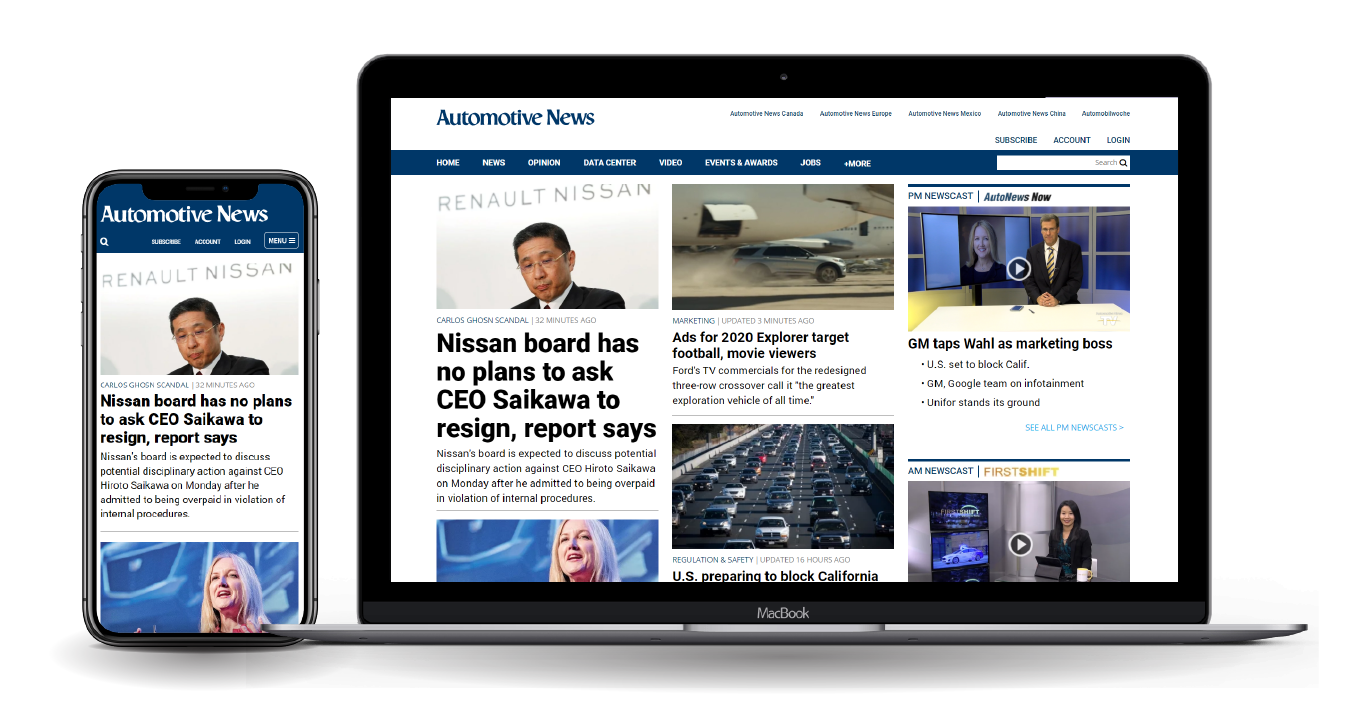
Process
With 30+ developers working across timezones, multiple tracks running in parallel (live sites under development sites on the same shared core codebase), continuous integration and continuous development were effectively followed. Better governance and have a tighter grip to the architecture while ensuring a documented process is approached towards components. The return on investment increased as more brands are on-boarded onto the platform.
The component approach worked at two levels:
- The Block entity defines how independent, non-structured content works.
- The Content entity defines how structured content such as an article or a story work. So instead of building an article entity as a single monolithic entity, the content entities were divided into components using the Paragraph or Media Entity modules. This provided better editorial experience and also increased the re-usability of the sub-components.
Once the core profile was ready, the brand websites could be built up more quickly.
We leveraged Acquia's enterprise cloud solutions to support a large multisite setup. The combined unique site visitor traffic across websites is pretty significant and the shared multisite setup meant that we needed the ability to scale up on-demand as new brands go live.
Acquia BLT was also utilized to build and launch the tool, that provides an automation layer for testing, building, and launching D8 applications. We used BLT extensively to set up our development and deployment pipelines.
The new component-based development helps editors have full control over how they can work with content and layouts.
Empowering Editors: Editors can now choose a layout for new pages they want to create and choose the components from the library which are available.
These list of components could be any, an article with a thumbnail, a list of articles with a featured article and image, a promo box, or a panel of social media icons to enable sharing. All these have been built using the Blocks as Entities module, which pulls the template information from the Pattern Library.
Content Quality and Categorization: Over time the websites saw a huge number of categories being created. This impacted the quality of search results as well as created confusion for editors. The categories were reviewed, filtered and the legacy articles were migrated with the new categorization rules.
With every phase of migration, we had to ensure that the unique content IDs for the content being pulled into the components remained the same. This was done using the Migrate module.
GD2 image manipulation toolkit was utilized to optimize image size without degrading the image quality while also considering retina displays
Reusable migration code across brands: The migration strategy was the same as for D8, and the code was developed as reusable plugins to process the data. These re-usable plugins were developed as part of the core profile of the client, which was extended/overridden at the brand level to satisfy brand-specific use-cases. The approach helped the migration team in running the migration of multiple brands in parallel with less and reusable code, and better efficiency.
Since reducing costs was a major goal for the client’s team, we also moved their storage setup to Amazon S3 from their existing setup.
With 30+ developers working across timezones, multiple tracks running in parallel (live sites + under development sites on the same shared core codebase), continuous integration and continuous development were effectively followed.
Outcome
The core profile was built in nearly seven months.
The first four sites went live within 6 weeks of each other. Investing seven months on building the core platform paid out with the first four launches itself. Reducing the development time by half (done independently).
Editors could now choose a layout for a new page they want to create without being dependant on the developers.
The return on investment increased as more brands are on-boarded onto the platform.
Check Out Our Work
You can browse our work here:
Why Drupal was chosen
- Client’s past experience with Drupal.
- With a set of foundational modules, Drupal's content management and workflow capabilities aligned well with the needs of the client.
- The vision of building and rolling out a component-based approach was easier with Drupal 8.
Technical Specifications
Drupal version:
Key modules/theme/distribution used:
Acquia Lightning: To provide a lightweight framework, enabling developers to create great authoring experiences, and empower editorial teams.