Sector(s)
Team Members
Project Team
ITCare team is a trusted partner in web infrastructure, DevOps, and Drupal development. We specialize in hosting, maintenance, and platform automation, with a focus on helping mission-driven organizations stay secure and up-to-date.
If you're looking to simplify and scale your Drupal upgrades, let’s talk.
Please, contact support@itcare.company or the management team:
- Dmytro Lavrinenko - Project Manager dmytro.lavrinenko@itcare.company
- Zhanna Khoma - Communications Manager zhanna.khoma@itcare.company
- Andrii Podanenko - CEO, CTO andrii.podanenko@itcare.company
Visit the site
Visit the siteOrganizations Involved
Community contributions
We actively share our experience building CI/CD automation for Drupal, document our workflows, and plan to release parts of our automation tooling for the community. This helps strengthen the open-source ecosystem and enables other organizations to streamline their Drupal upgrade processes.
Maintaining and upgrading Drupal sites — especially at scale — can be a time-consuming and error-prone process. When a new core version is released, teams often face the challenge of manually updating dozens of websites, each with its own custom modules, configurations, and dependencies. The process is complex, and even a small mistake can lead to broken layouts, functionality issues, or downtime.
Traditionally, upgrading a Drupal site to a major version like 10.x involved multiple manual steps and could take anywhere from 8 to 40+ hours per site (including QA and bugfixing), depending on the site’s complexity.
At ITCare, we successfully automated this process using CI/CD pipelines in Jenkins, significantly reducing the time, effort, and risk involved in upgrading Drupal websites.
By automating the routine, we improved reliability and freed up our engineers’ most valuable resources: their time and intellect. Now, instead of spending hours on manual updates, they focus on solving complex architectural challenges and building meaningful innovations for our partners.
This case study highlights our approach and the measurable benefits it brought.
About the project
Goal: Build an automated, reliable, and scalable Drupal core upgrade process that saves time and reduces risks.
Implementation: ITCare created Jenkins-based CI/CD pipelines to fully automate the upgrade process, from staging updates to production deployments.
Key Benefits
- Significant Time Savings
Manual upgrades took between 8 and 40+ hours per site, depending on complexity. With automation, the full upgrade cycle now takes approximately 1.5 to 2 hours.
- Faster Deployment Workflow
- Staging update: ~15 minutes
- Testing: ~1 hour
- Production deployment: ~15 minutes
- Reduced Human Error
By automating routine steps—such as code updates, dependency management, and environment setup we minimized the risks of manual mistakes.
- Scalability
The automated approach can be easily replicated across multiple websites, enabling fast rollouts of critical updates and security patches.
CI/CD Upgrade Workflow
The upgrade process begins in the staging environment, which is a critical safety step before any production deployment. Staging is used as a controlled test area to identify potential issues early, before they can affect the live site.
Automated Code Update on Staging:
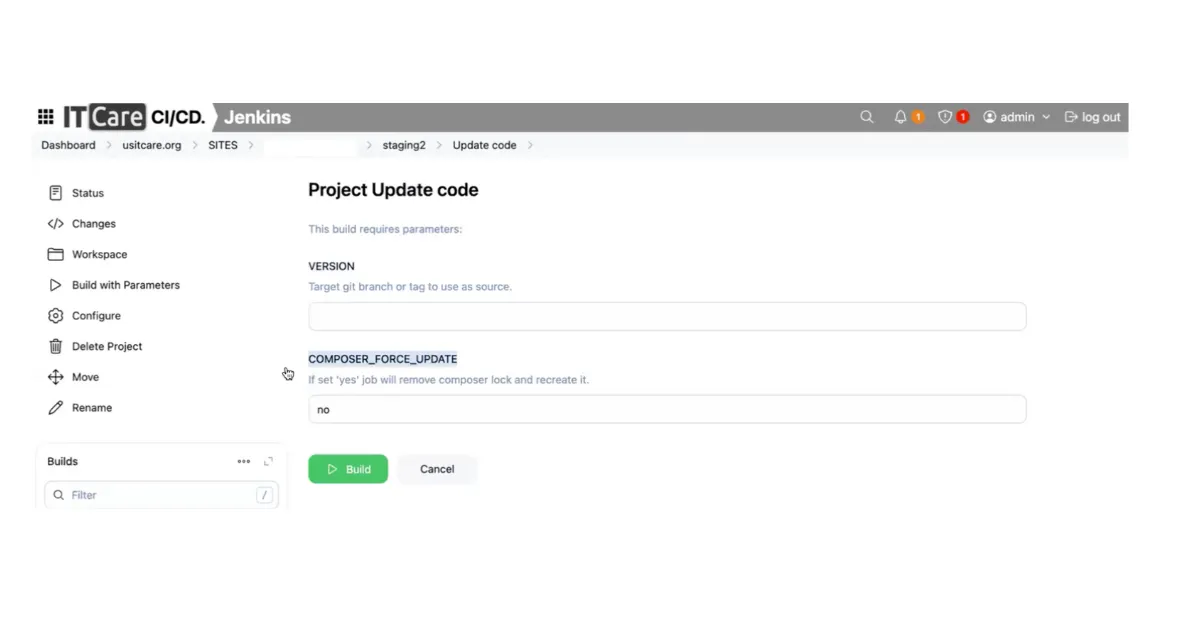
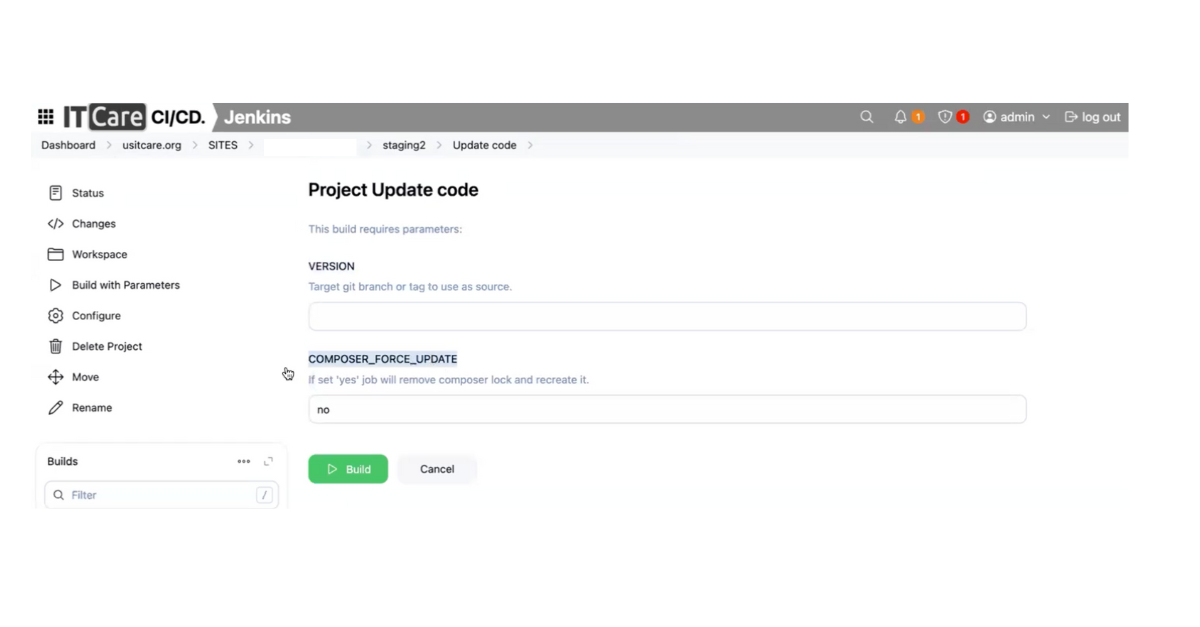
- Each site is first updated in staging using an automated Jenkins job called “Update code.”
- This job replicates previously manual actions such as codebase updates, saving time and effort.
- To run it, we choose the Drupal version we want to upgrade to.
- The job runs for about 5 – 10 minutes and then automatically creates a Pull Request (PR).
- We copy the branch name from that PR and launch the "Build" process in Jenkins to apply the changes.
Testing in the Staging Environment
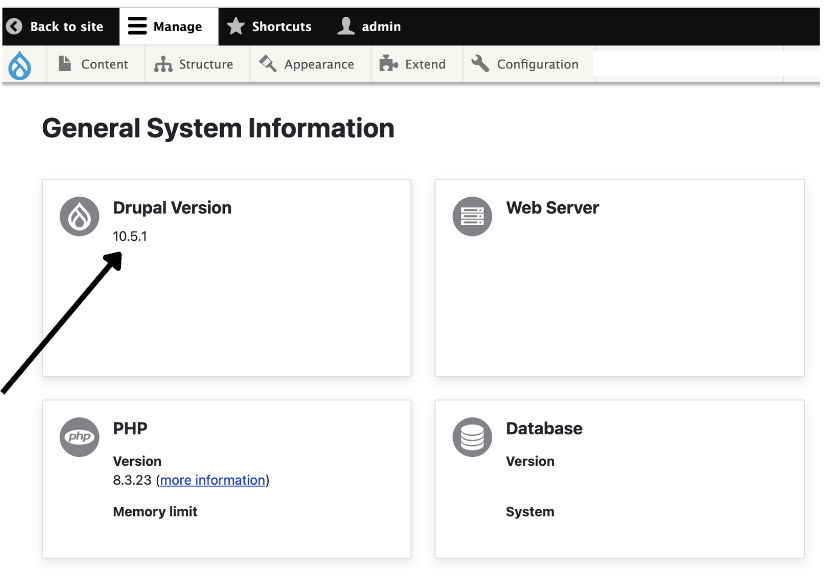
- After the build is complete, thorough testing is performed.
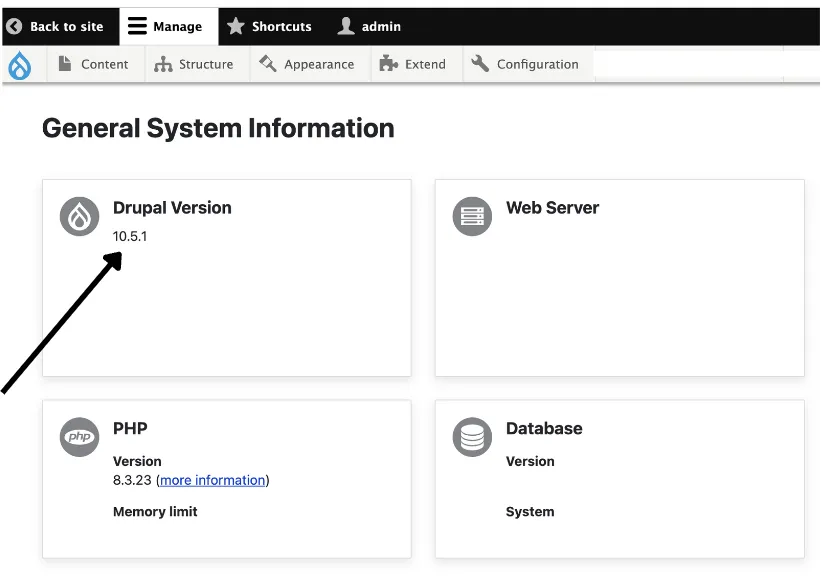
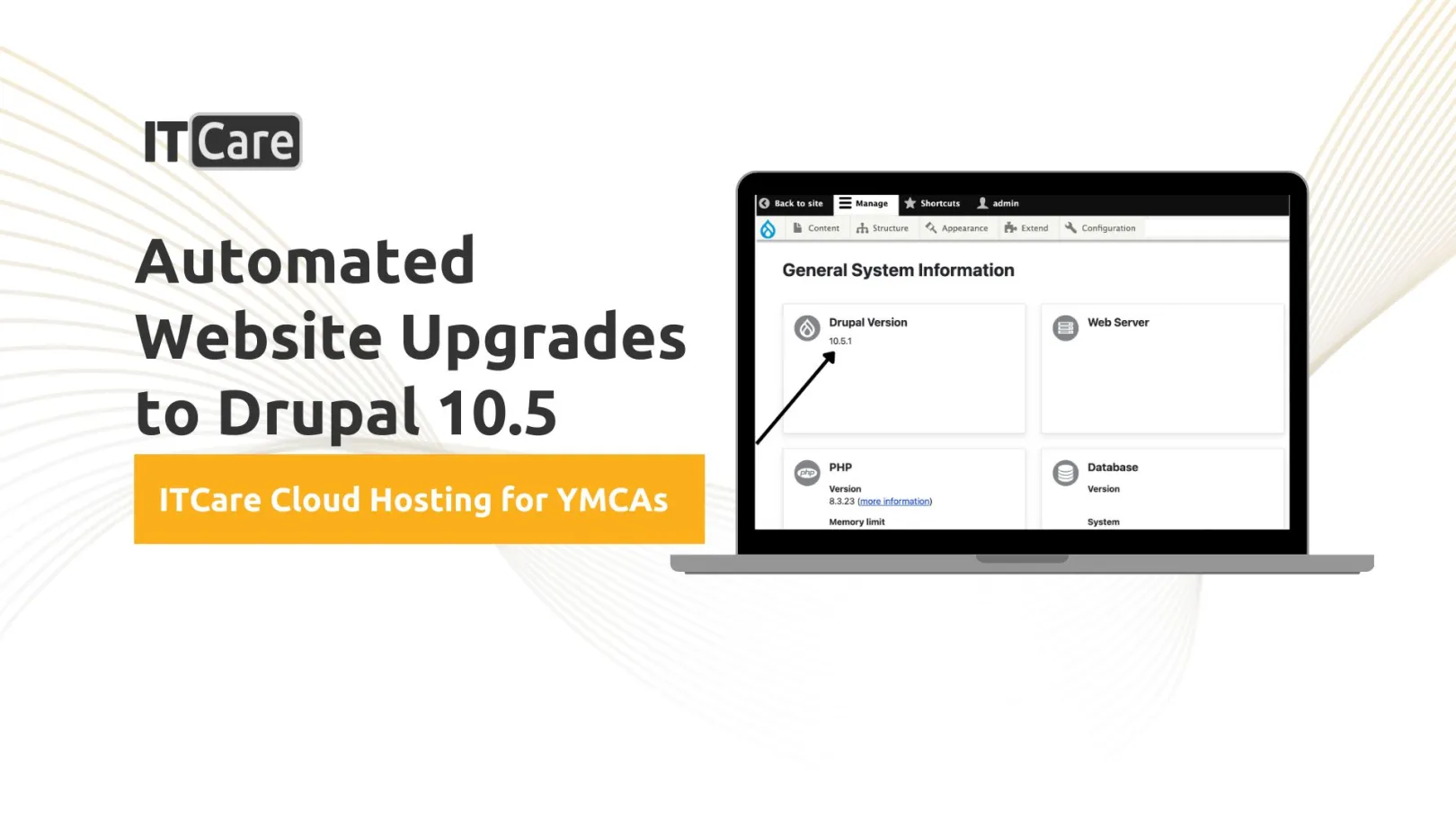
- A key check is the Drupal core version. It must reflect the upgraded version (e.g., 10.5).
- Here, QA makes sure all changes are properly integrated and work stably before moving them to the live site.
Production Deployment (Live Environment)
- If staging passes testing and no bugs are found, the task moves to the project managers and developers for production deployment.
- The team selects the approved Pull Request and creates a new release.
- Then, in order, they run the steps: generate, publish, and deploy — which safely push the update to production.
This automated approach not only speeds up Drupal version upgrades but also reduces human error and ensures a more stable and reliable site maintenance process.
Outcome: Upgrades now take just 1.5–2 hours, testing is more stable, and our teams can focus on solving complex challenges and driving innovation instead of routine maintenance.
This automation isn’t just about solving yesterday’s problem. It’s a foundation for the future. By building a reliable and fast upgrade process, we’ve cleared the path for something bigger — bringing innovation safely into production. With this system in place, we're now integrating AI-powered tools, smarter monitoring, and advanced deployment strategies into the Drupal ecosystems of our partners.
Why Drupal was chosen
Drupal remains a stable, flexible, and scalable platform for our partners’ websites. Its strong ecosystem and active community support make it possible to implement automated upgrade workflows, ensuring that dozens of sites can be kept secure and up to date quickly and safely.
Technical Specifications
Drupal version:
Key modules/theme/distribution used:
Jenkins provides highly customizable pipelines that can scale across dozens of sites, while Drupal core 10.5 offers a modern, stable foundation. The use of staging environments and automated Pull Requests ensures that no upgrade goes live without thorough verification, significantly reducing risks.